How to make the “Impossible” possible - Saving Alexei Navalny’s life
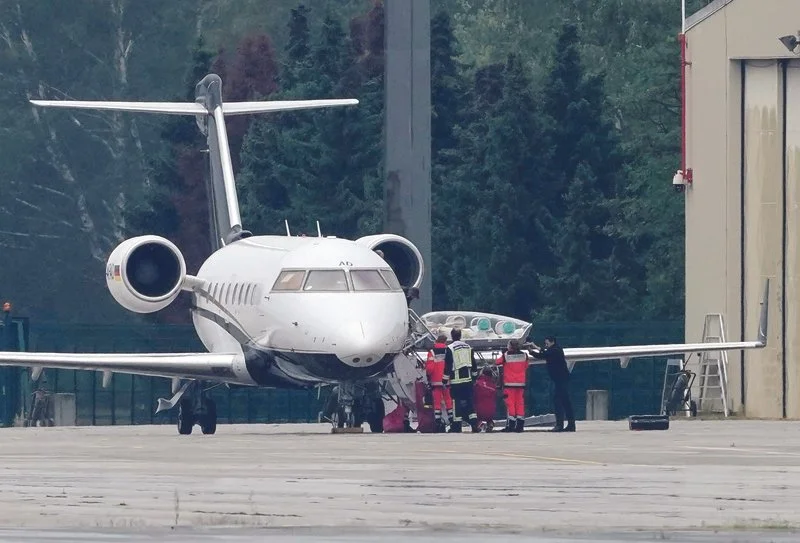
Cinema for Peace brought Alexei Navalny to Berlin for treatment.
More than five years after saving Navalny's life, Cinema for Peace discloses information on what we did, how we did it, and what we could not do a second time. We hope it inspires and motivates other NGOs when they get the call.
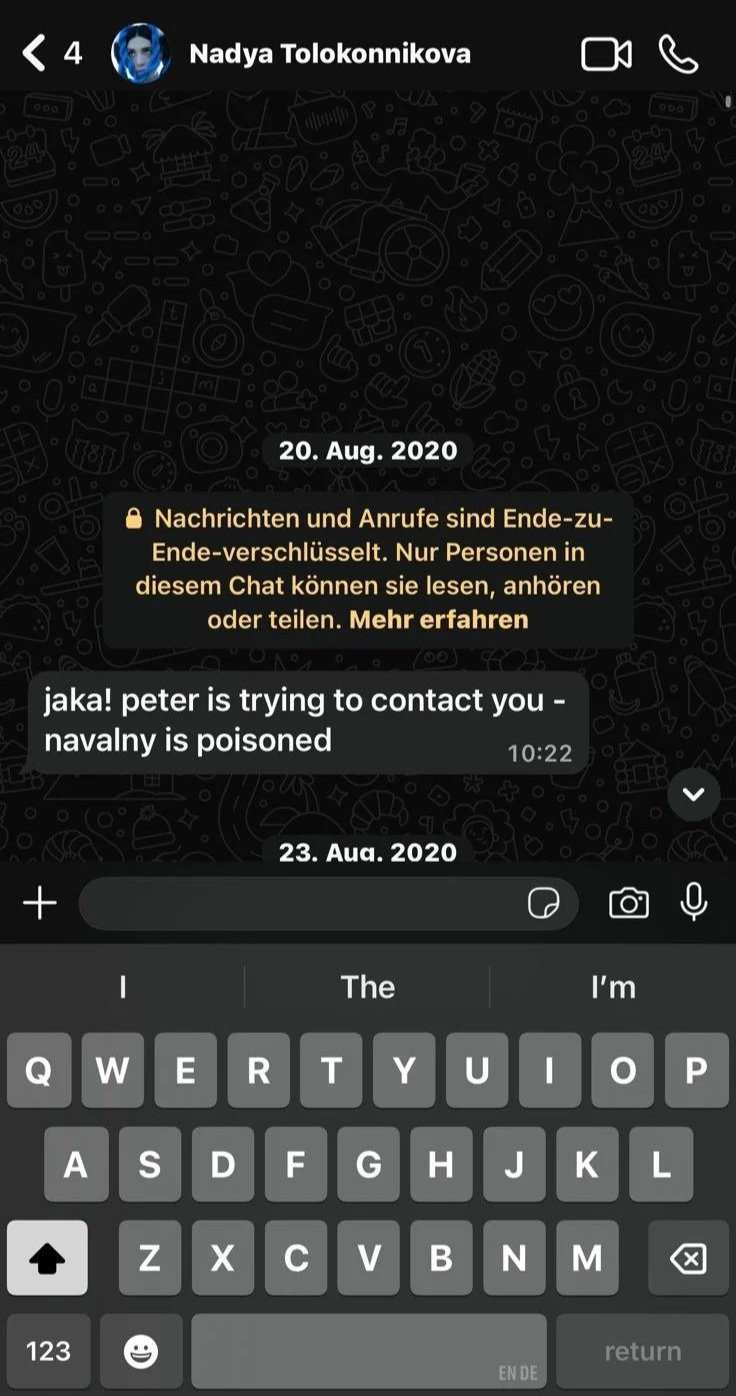
Five years ago, on the morning of 20 August 2020, I received a WhatsApp message from Nadya Tolokonnikova of Pussy Riot: "Jaka! Peter is trying to contact you, Navalny is poisoned."
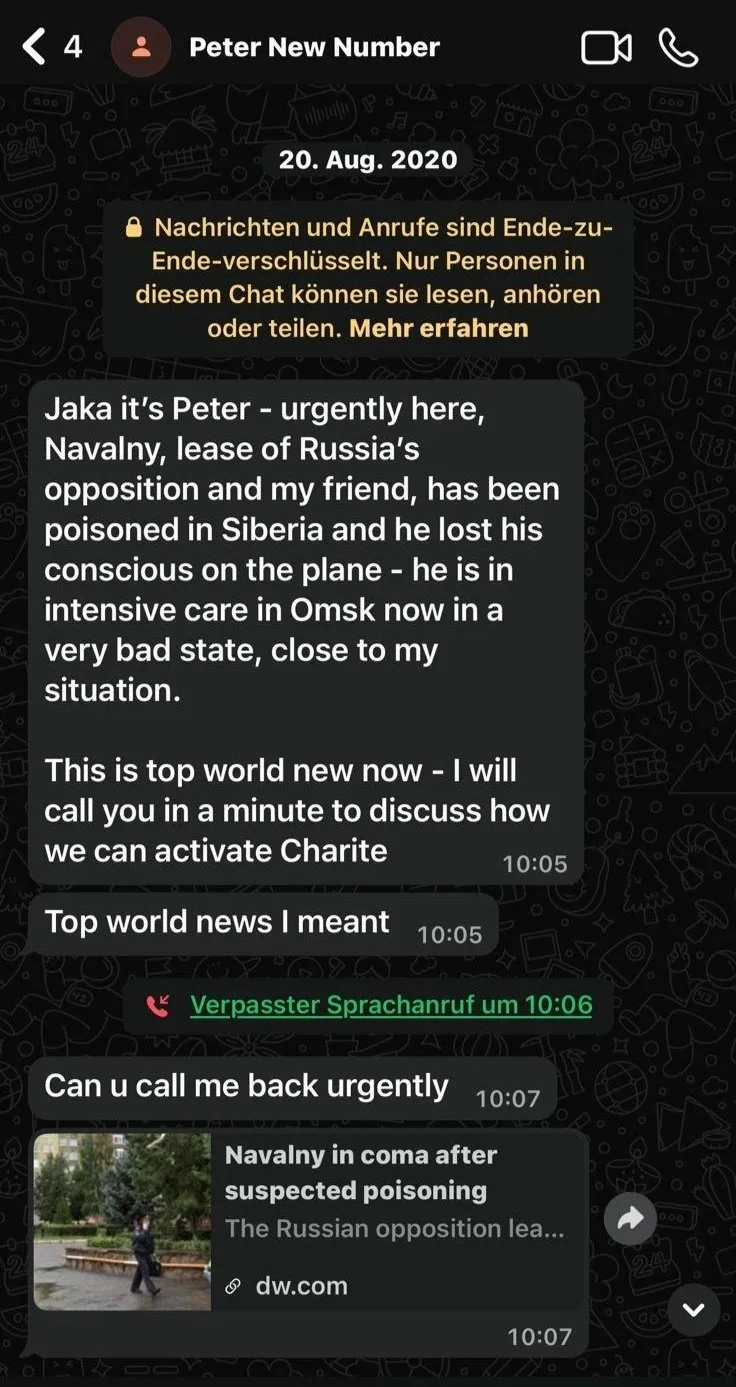
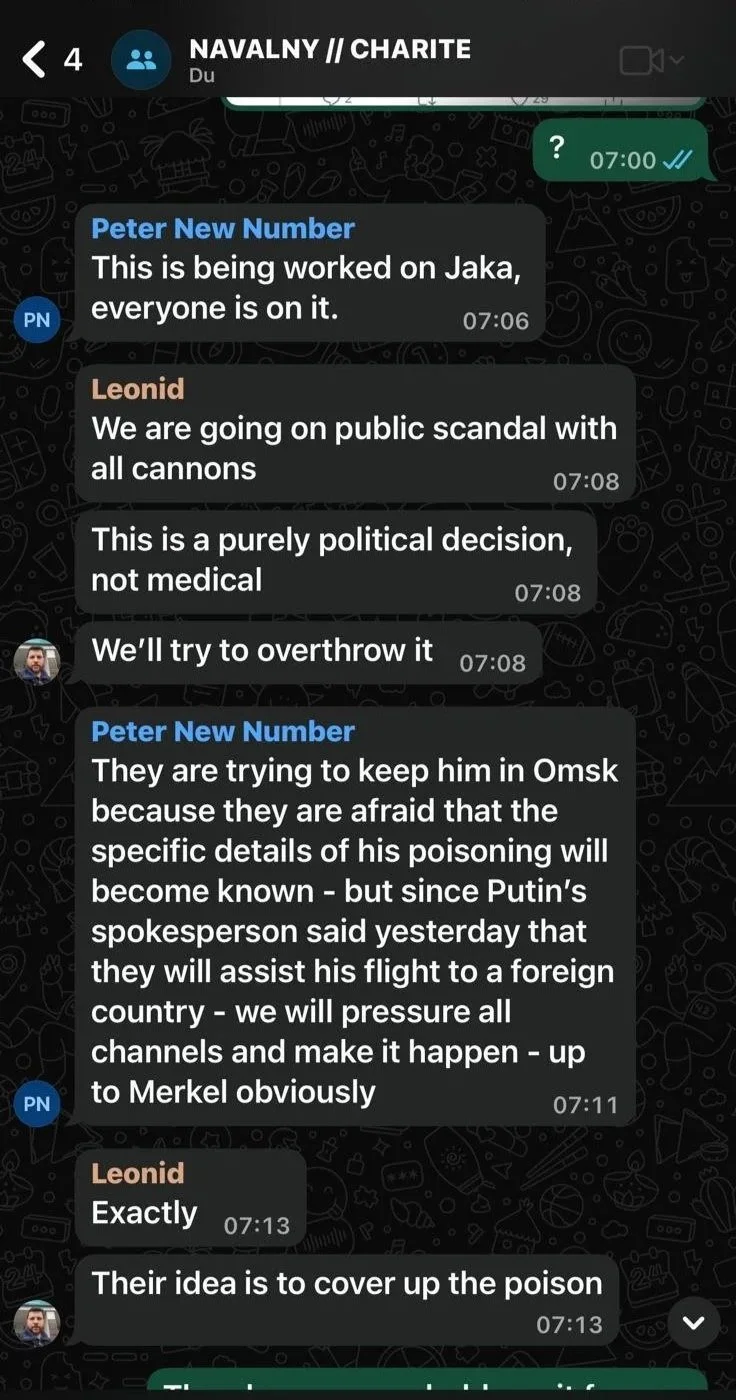
Minutes later, Peter Verzilov wrote directly: Russia's most prominent opposition leader had lost consciousness mid-flight over Siberia. He was now in a coma, on artificial ventilation, in a hospital in Omsk - thousands of kilometres from any specialist care, surrounded by doctors who would not release him, in a city where the FSB was present and watching.
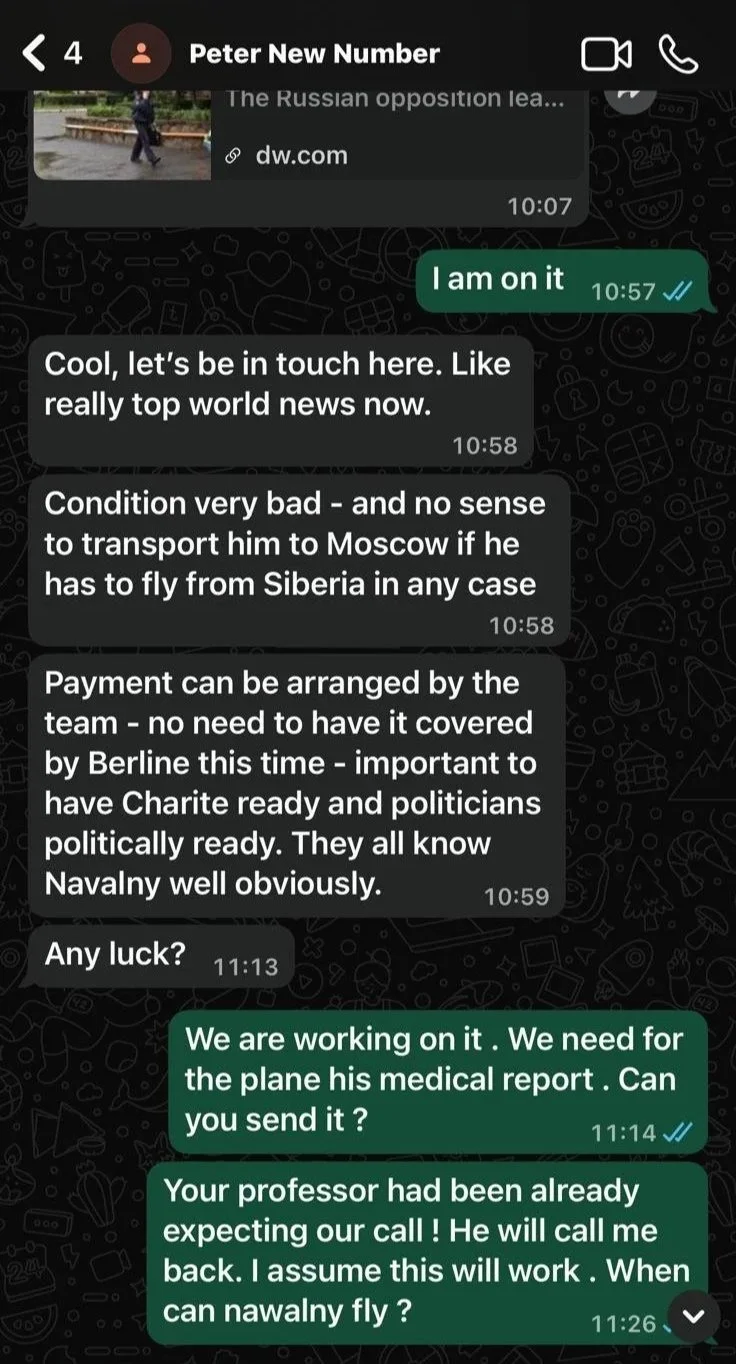
I replied: "I am on it."
What followed was a breathless thriller over 48 hours without sleep or distraction.
The Steps for an Emergency Evacuation
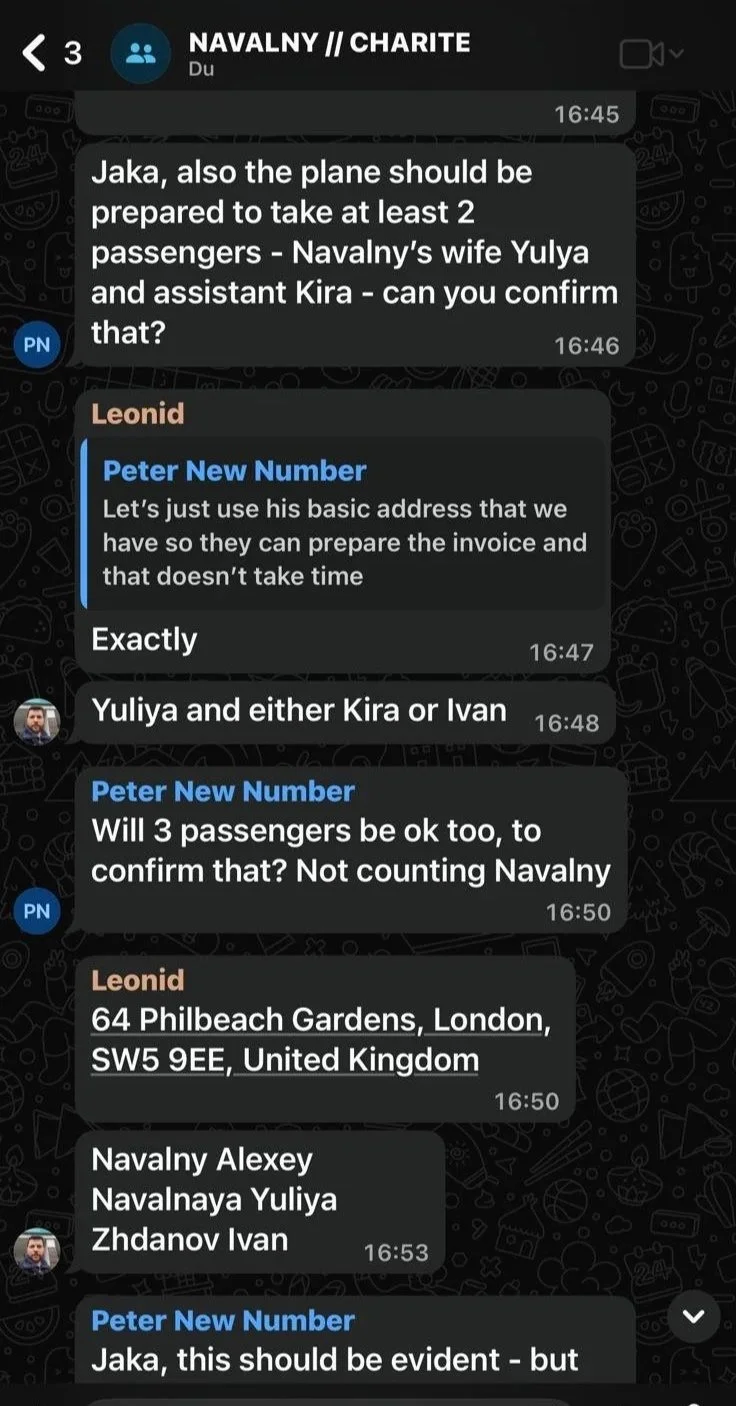
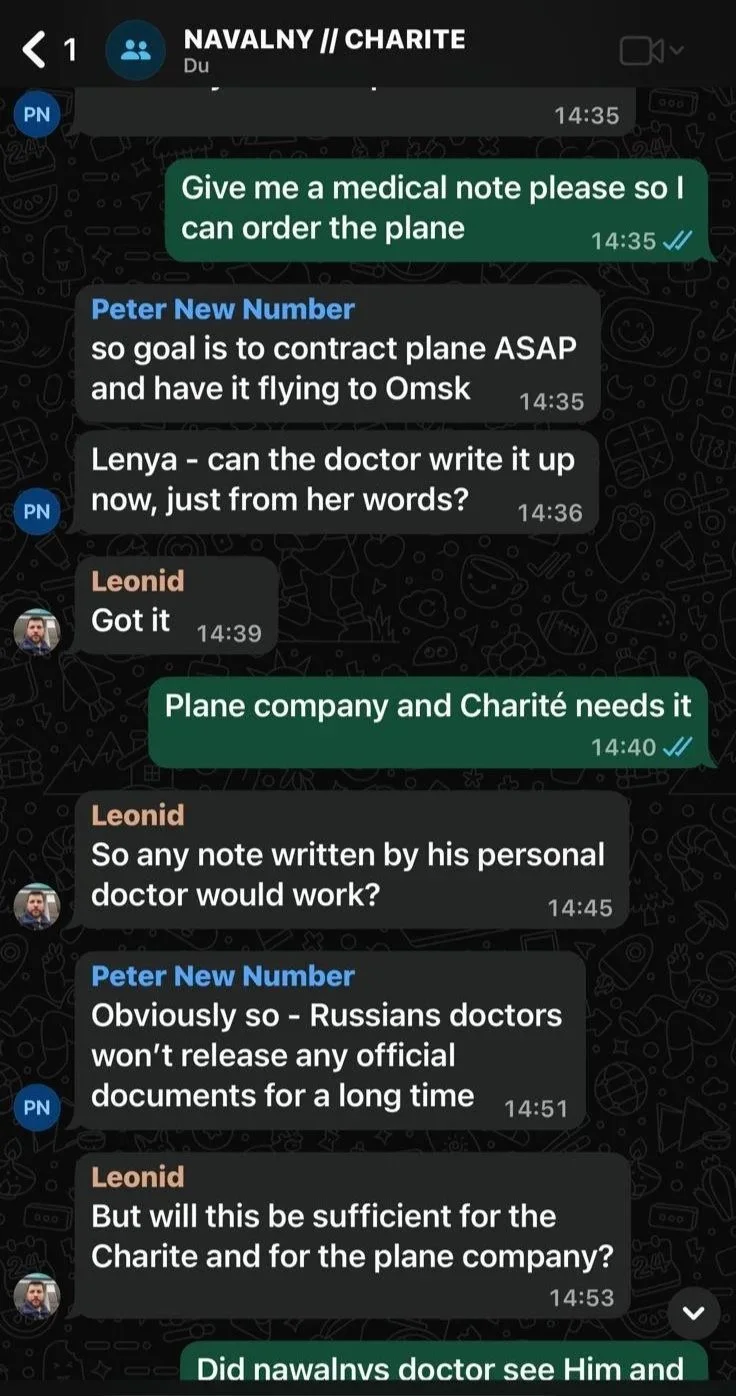
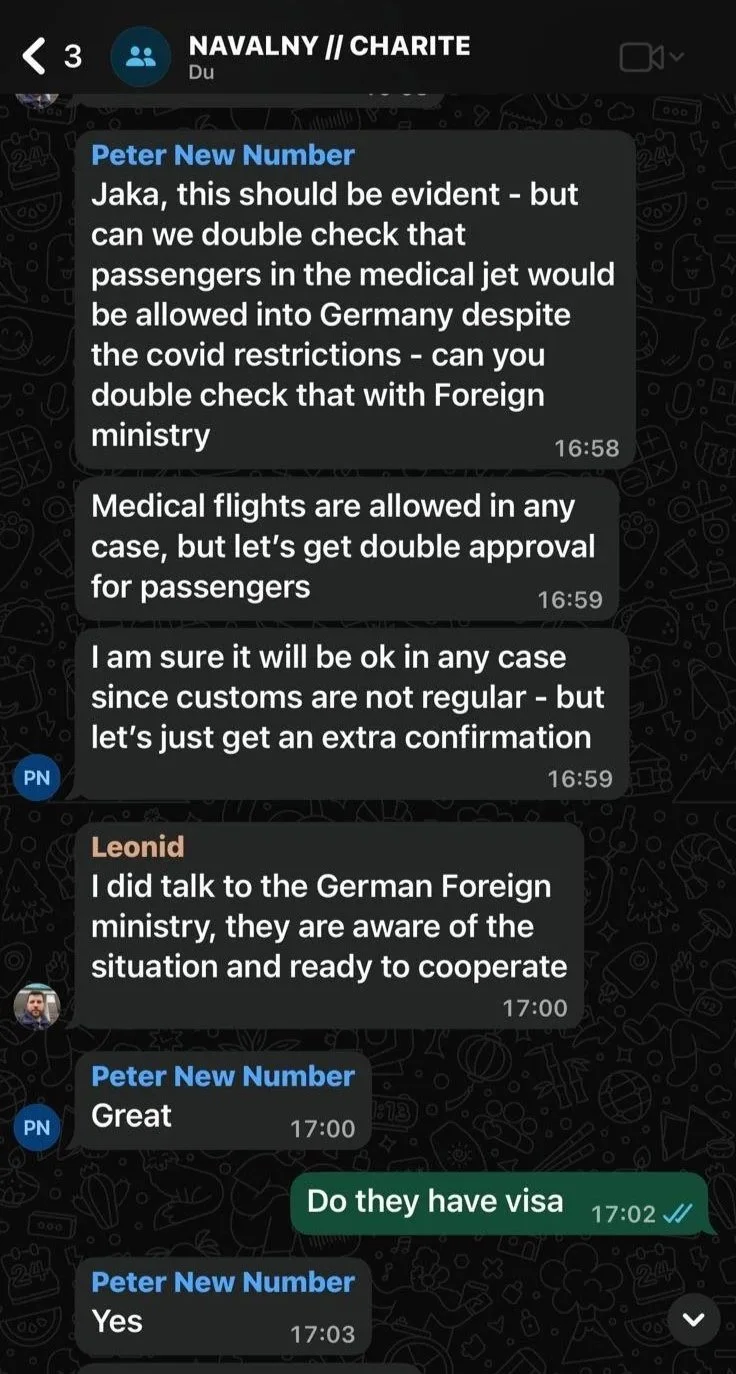
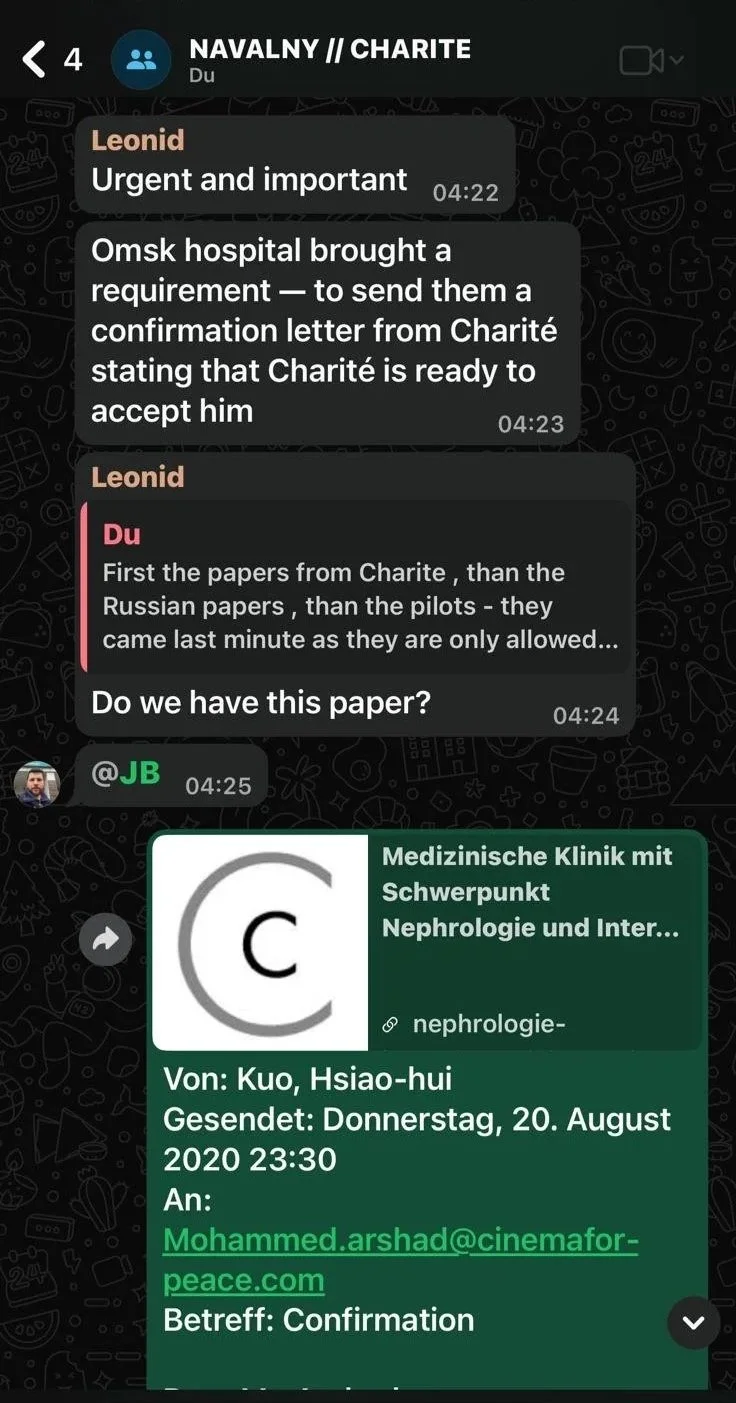
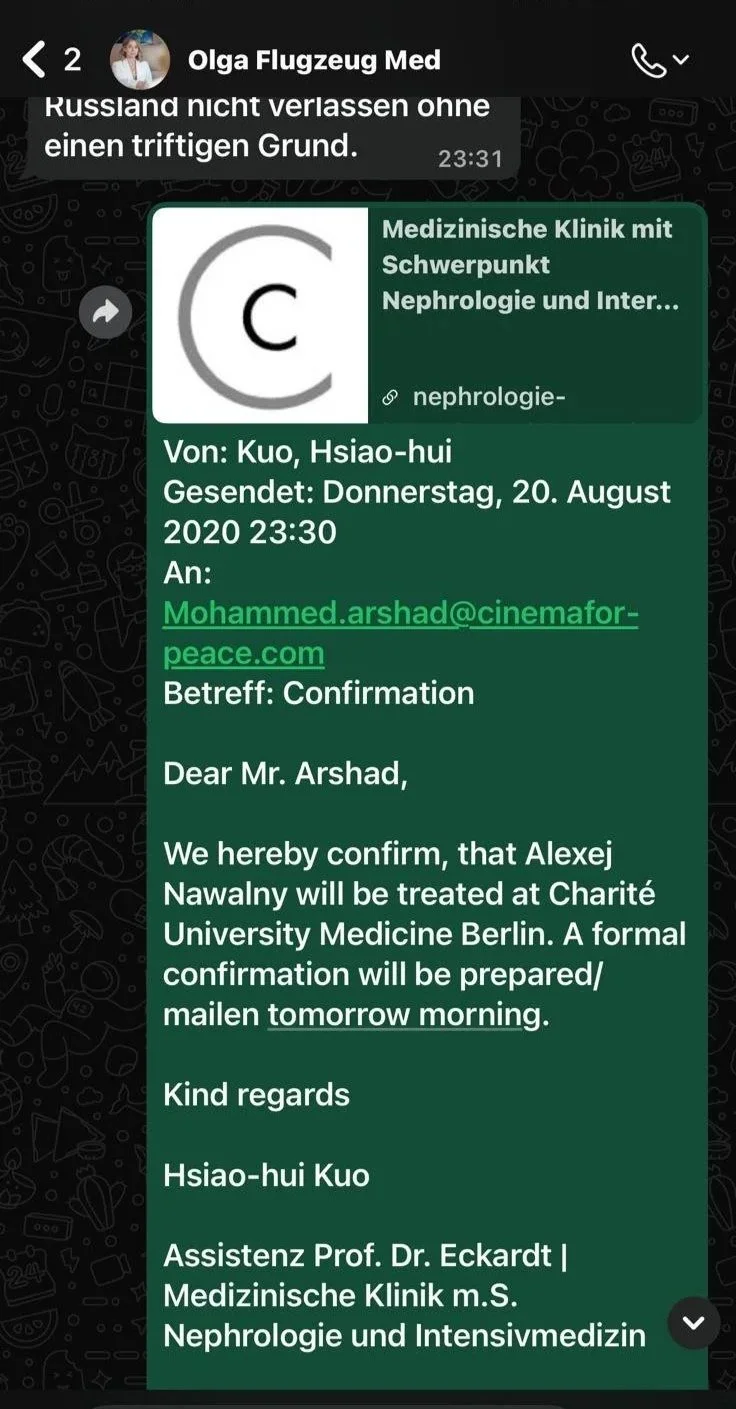
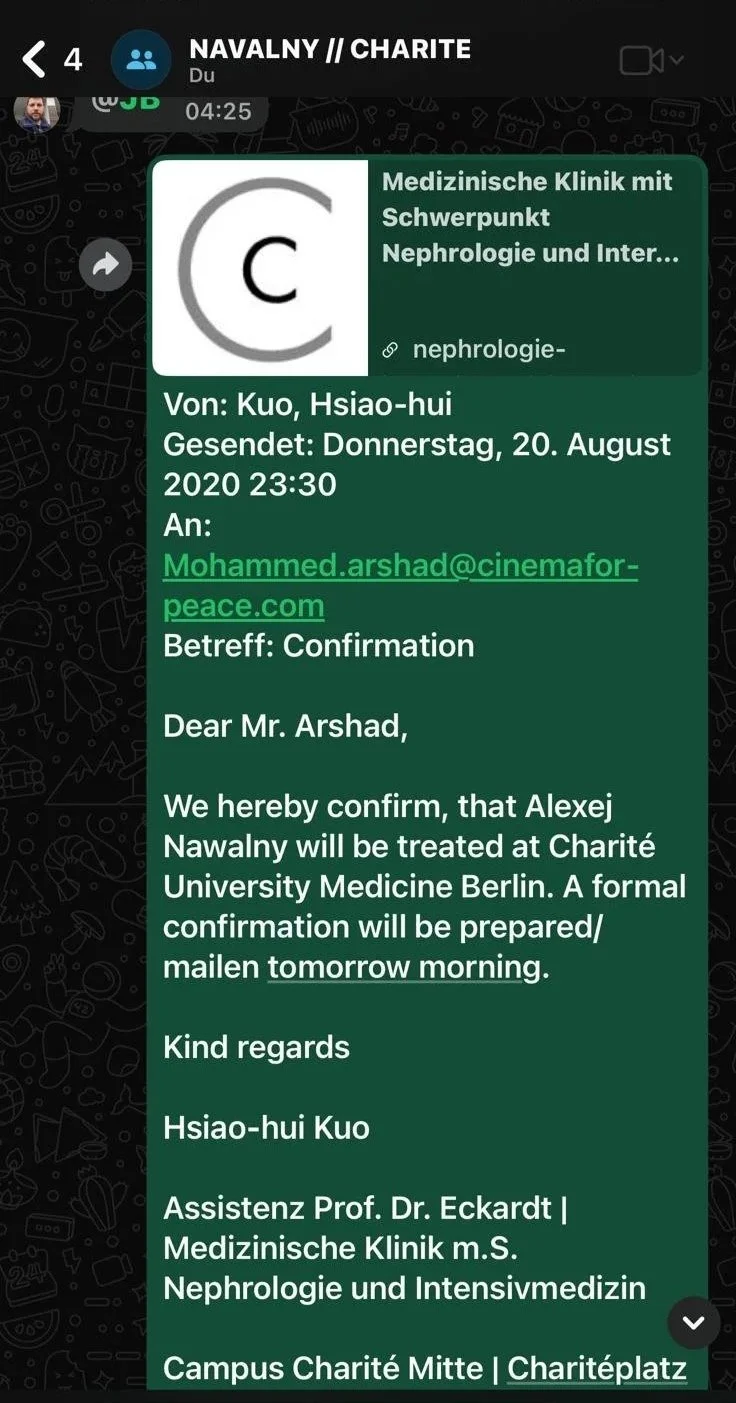
In order to fly the same day with a full medical crew, three things were needed: an emergency plane available immediately, confirmation from Charité in Berlin that they would accept the patient, and approval from the German government. All of this I had to secure simultaneously, in hours.
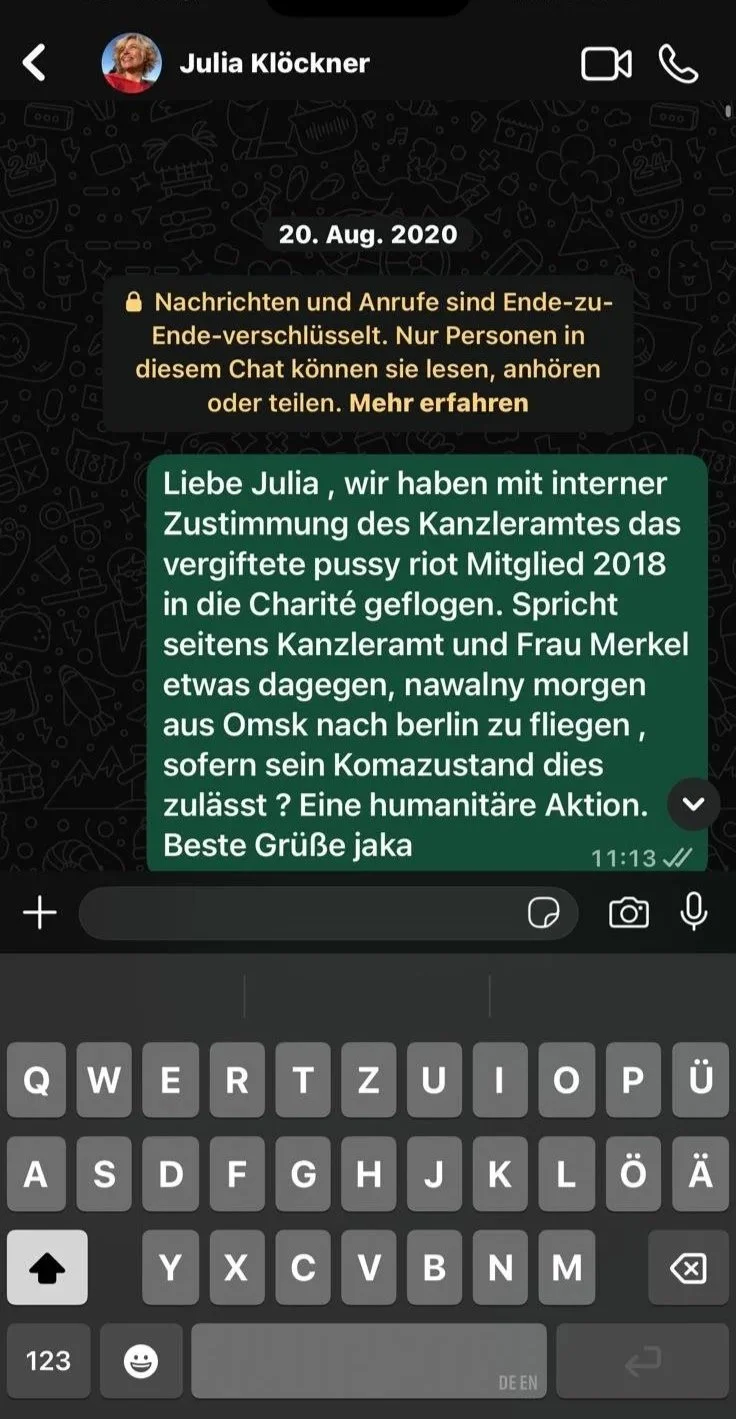
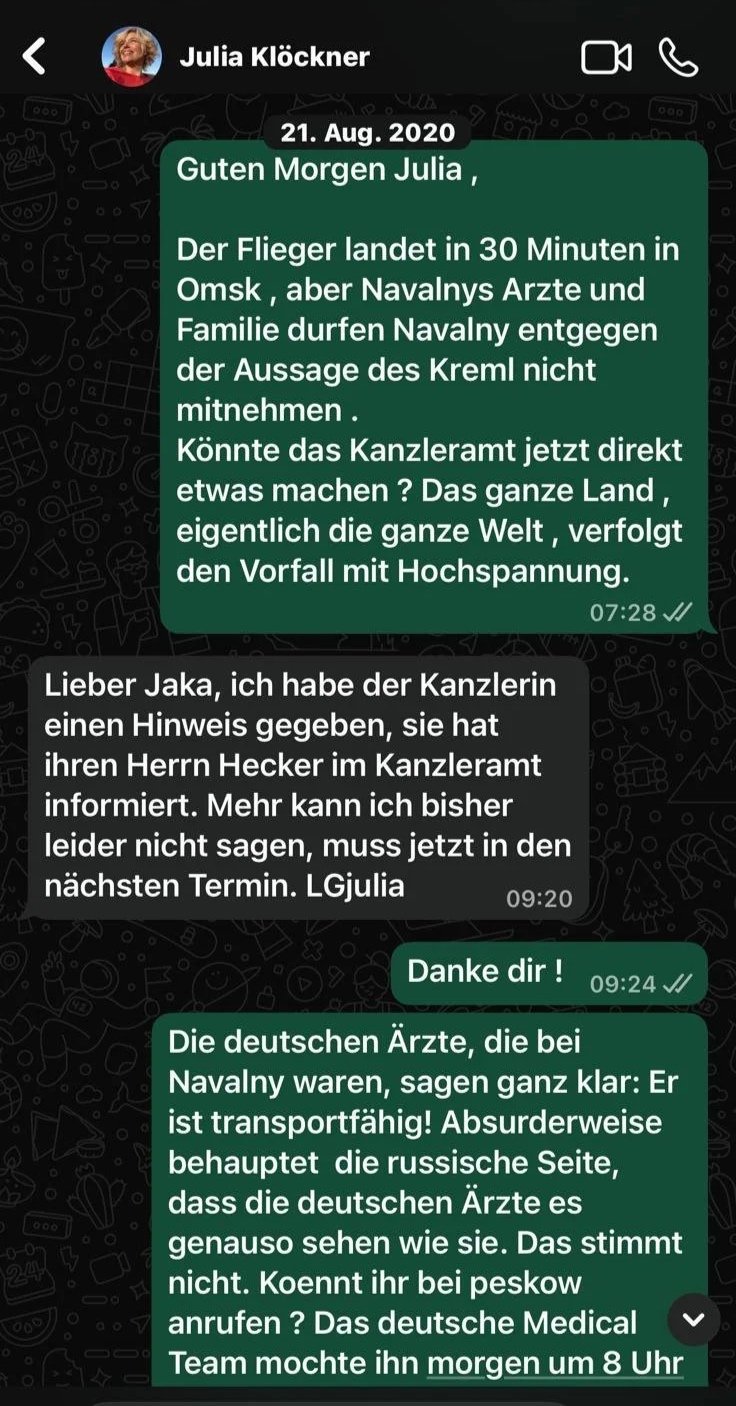
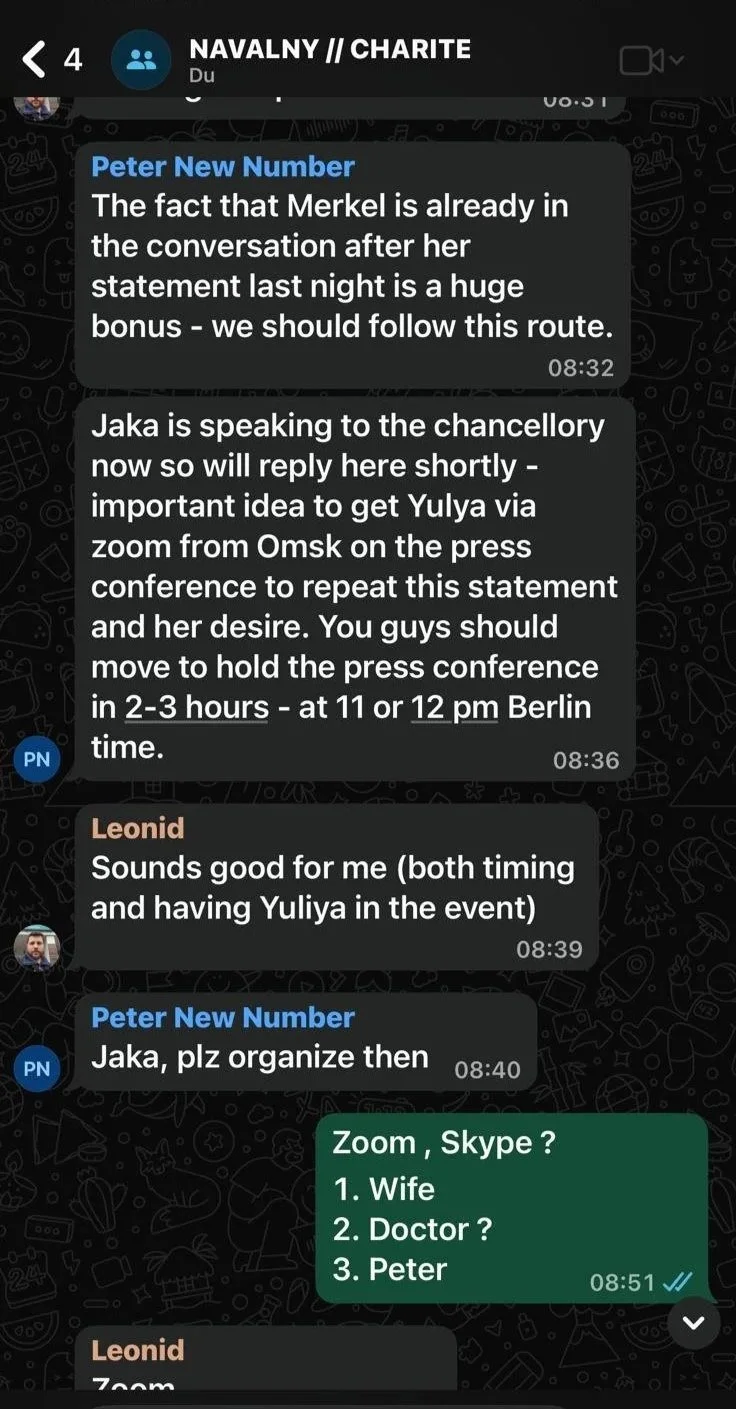
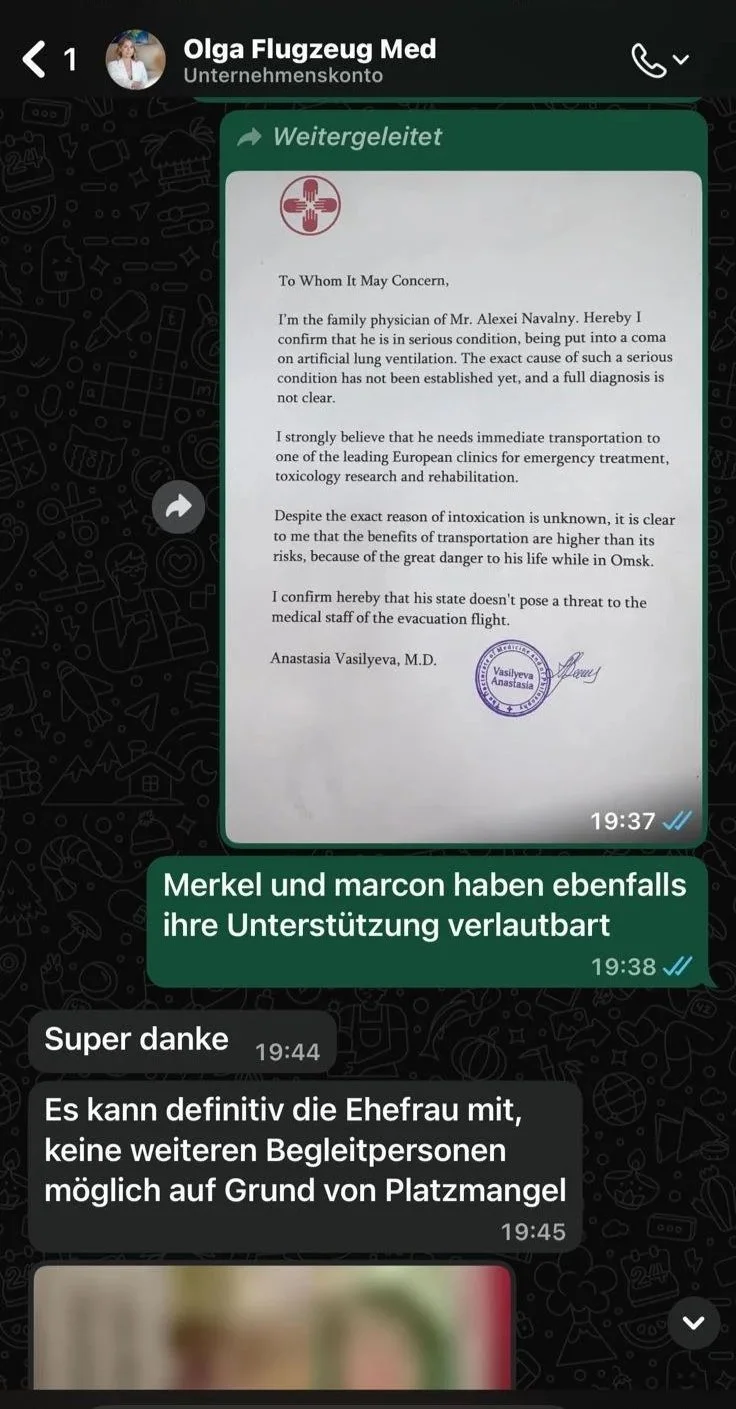
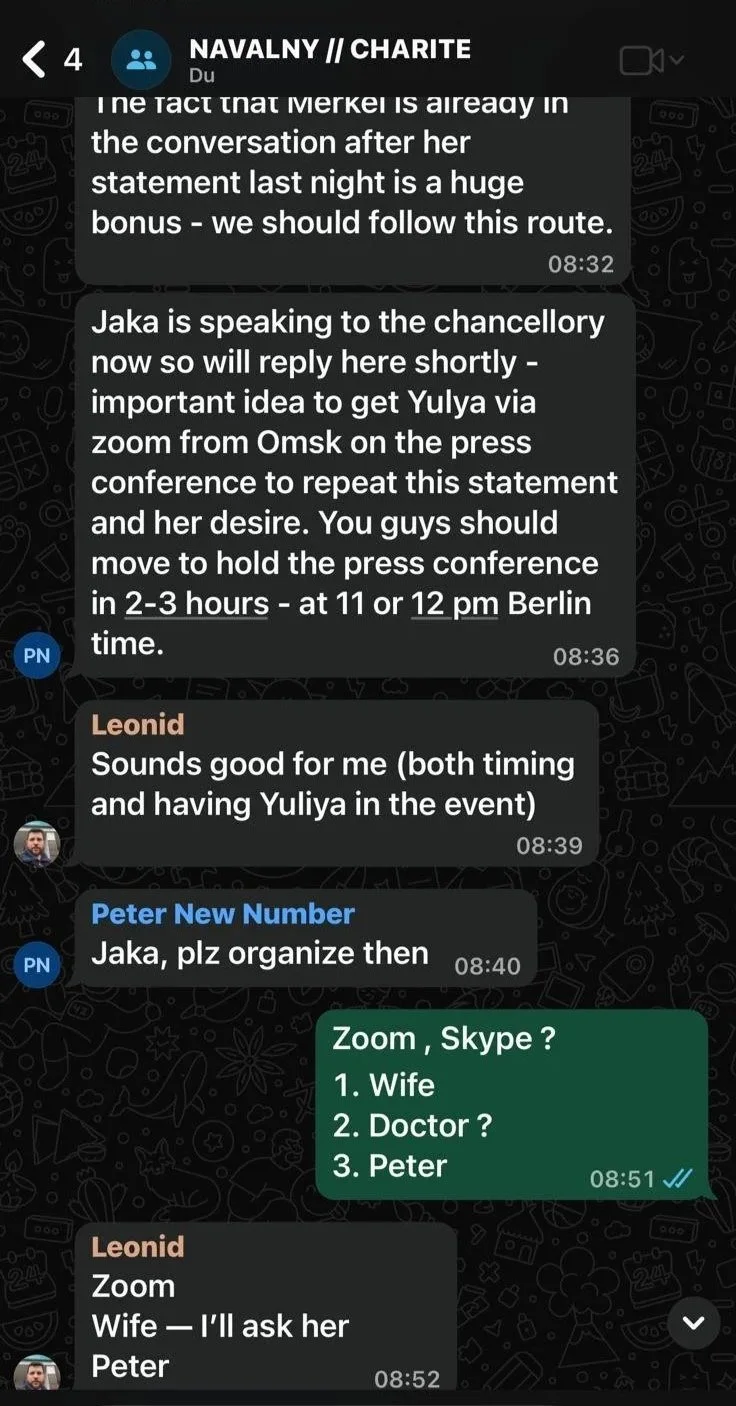
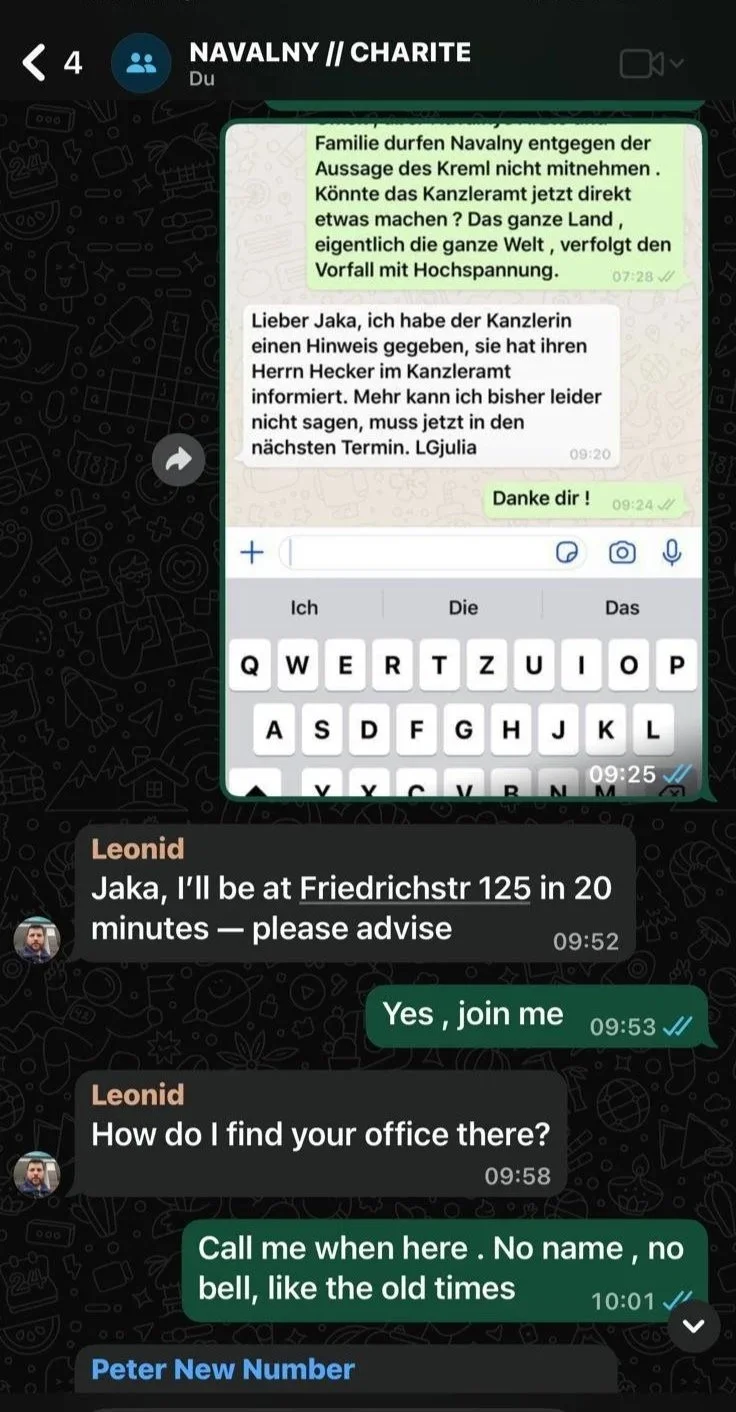
I sent a message to Chancellor Merkel via her party vice chair and member of the cabinet Julia Klöckner, whom I have known for 30 years. Merkel was with President Macron at this moment and, after receiving my message, both announced in a press conference that France and Germany were both offering medical treatment to Alexei Navalny.
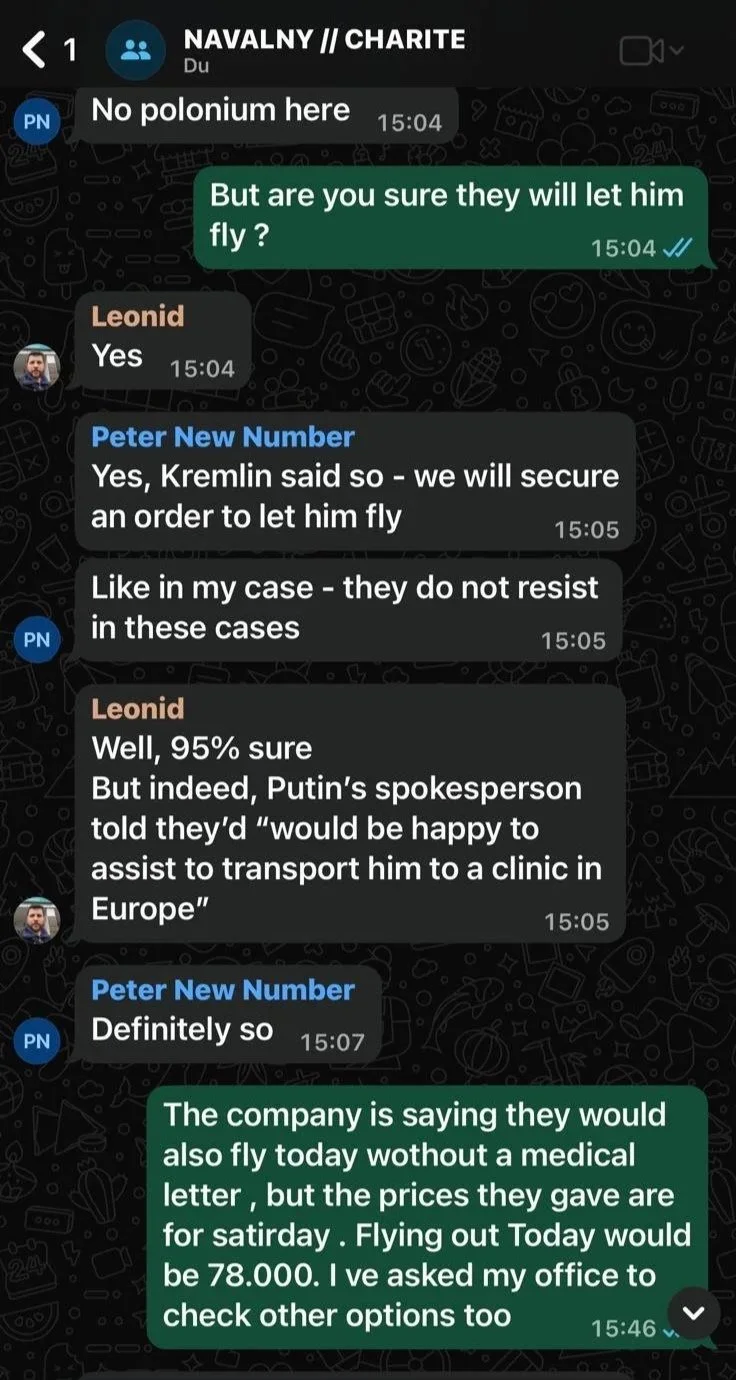
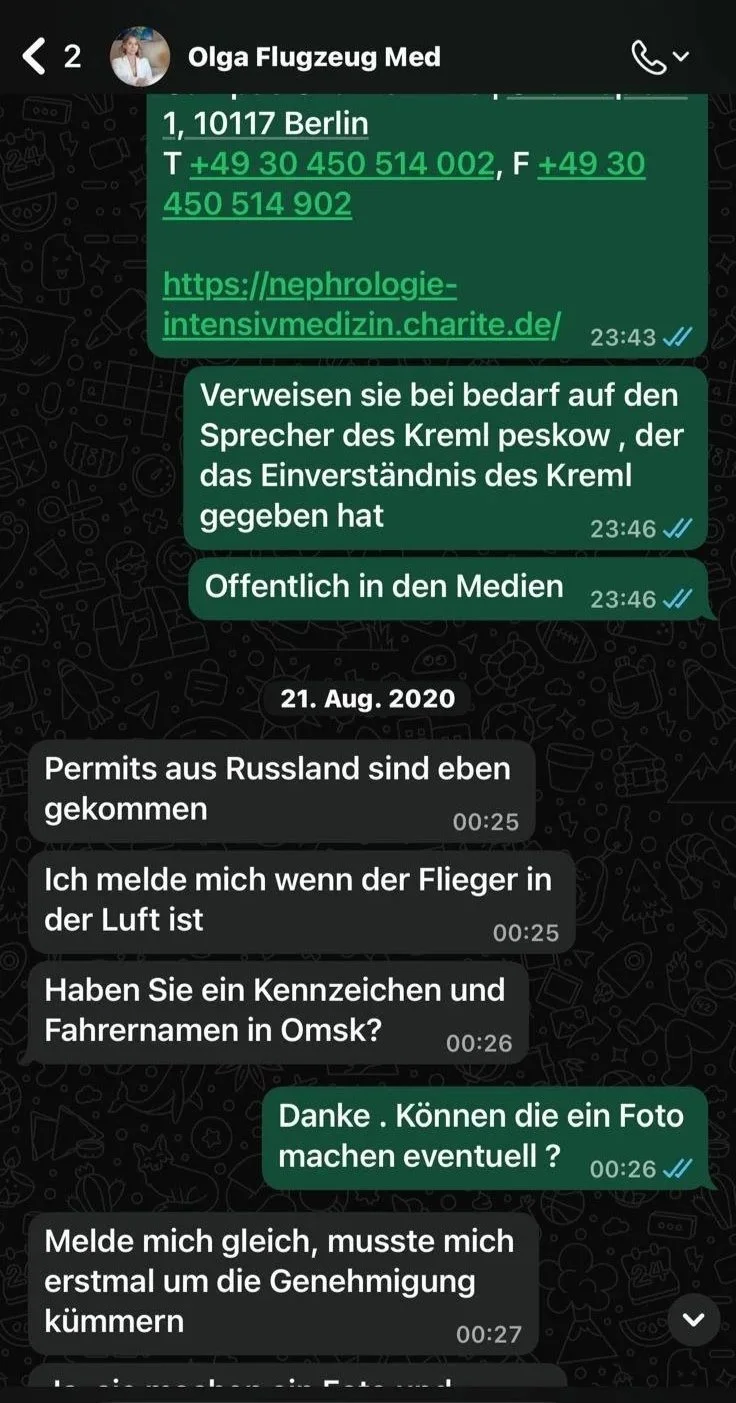
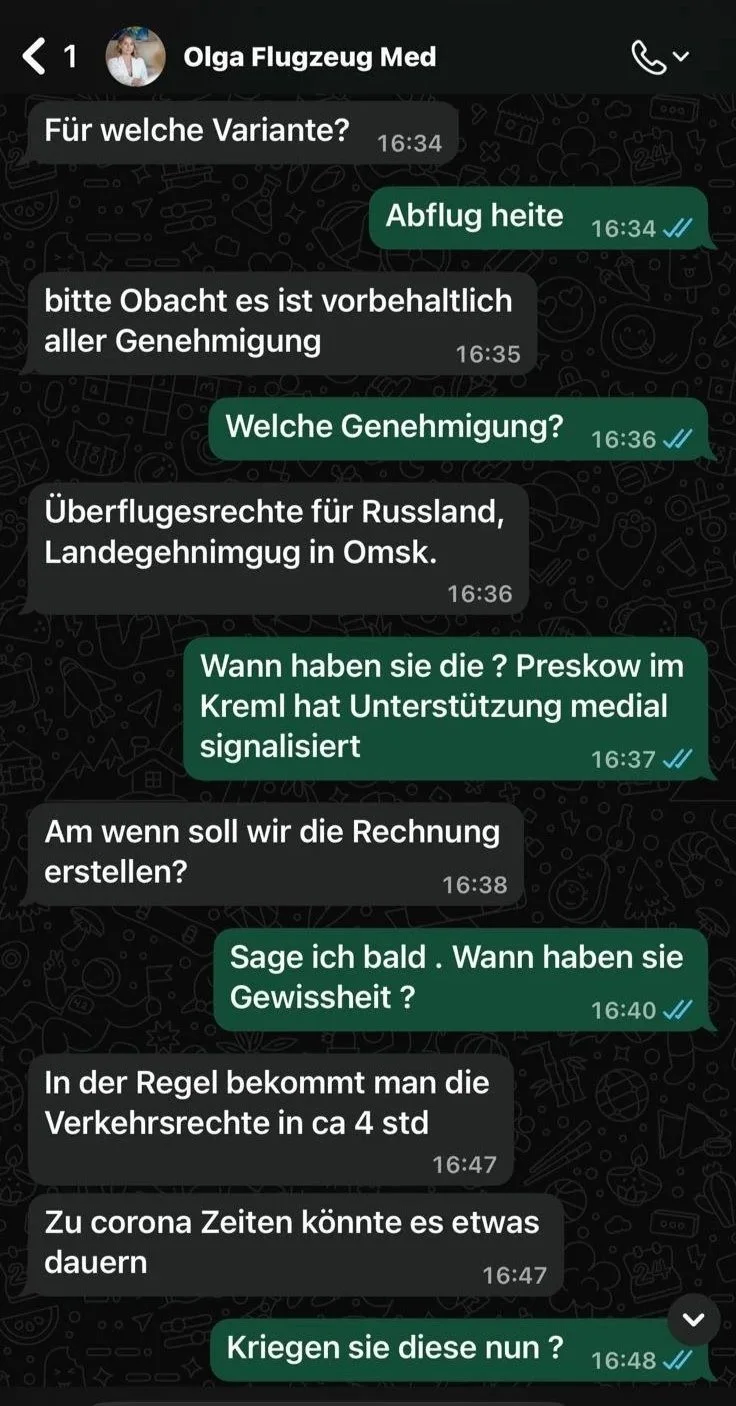
My calculation was that the public announcements by Chancellor Merkel and President Macron would provoke a statement by the Kremlin that they cared about their citizens and that they would allow them to be treated outside Russia. This was exactly what Kremlin spokesman Peskov did in order to make his regime look humanitarian and caring, and not like assassins. Putin had an interest in looking good in front of the world and his spokesperson stated on the record that a Russian citizen could be treated wherever his family wished. This was my opening to get Navalny out of Russia! And I let all contacts with ties to Putin and Russia know: if they did not want to look like assassins, they would be much better off allowing me to evacuate Navalny to Berlin.
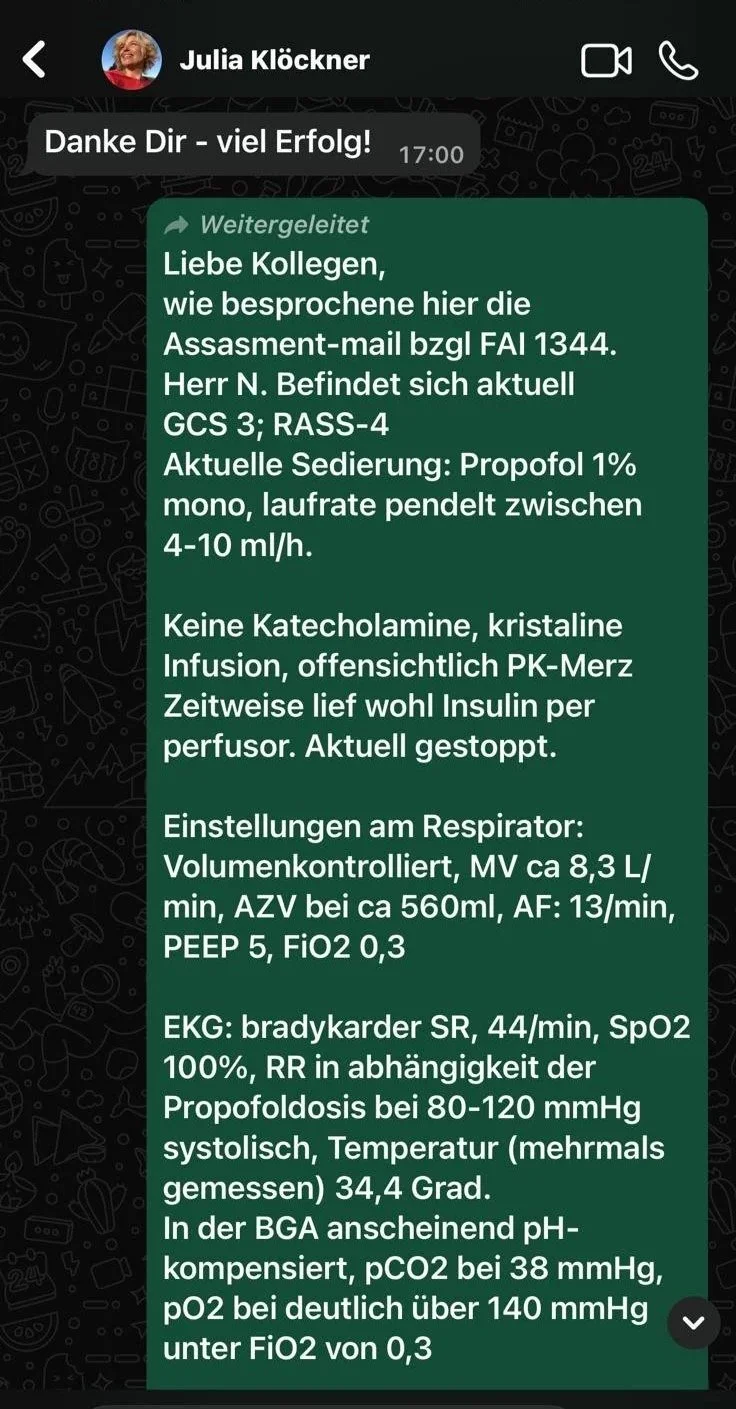
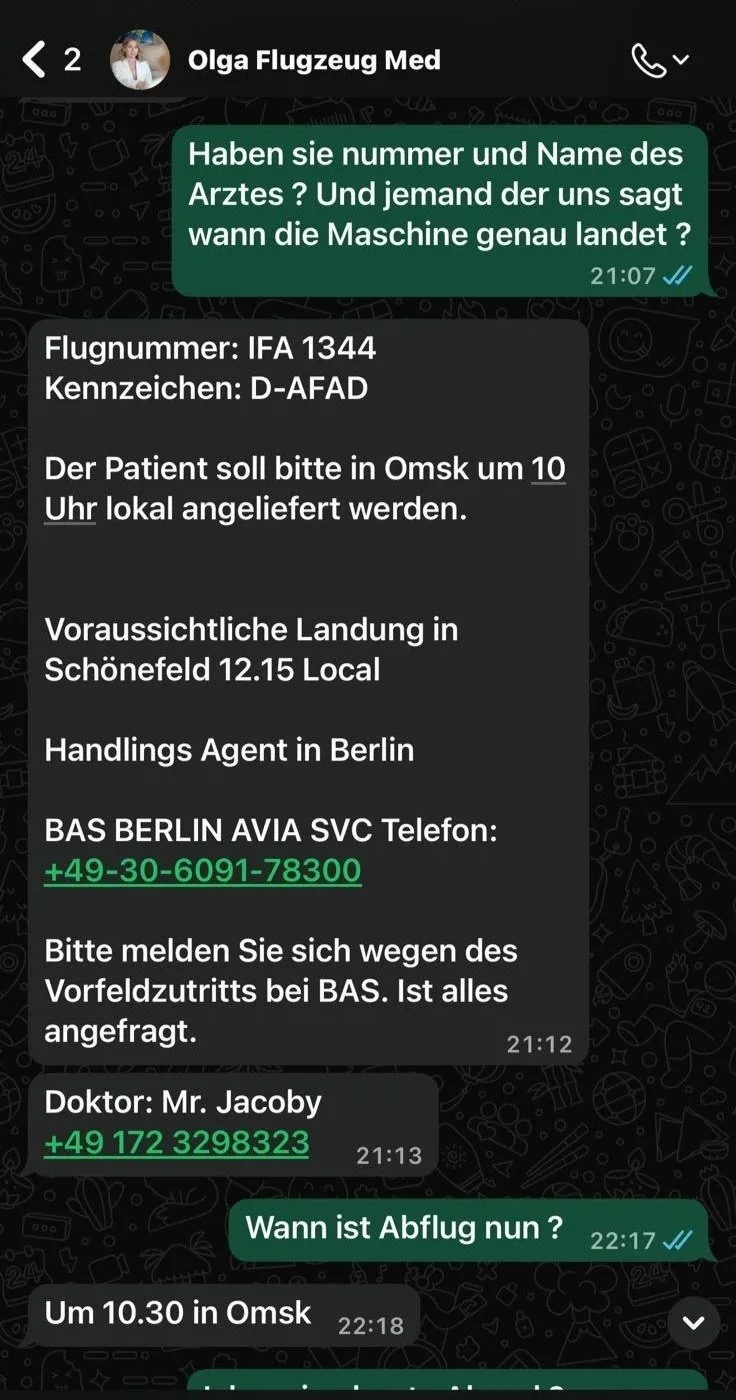
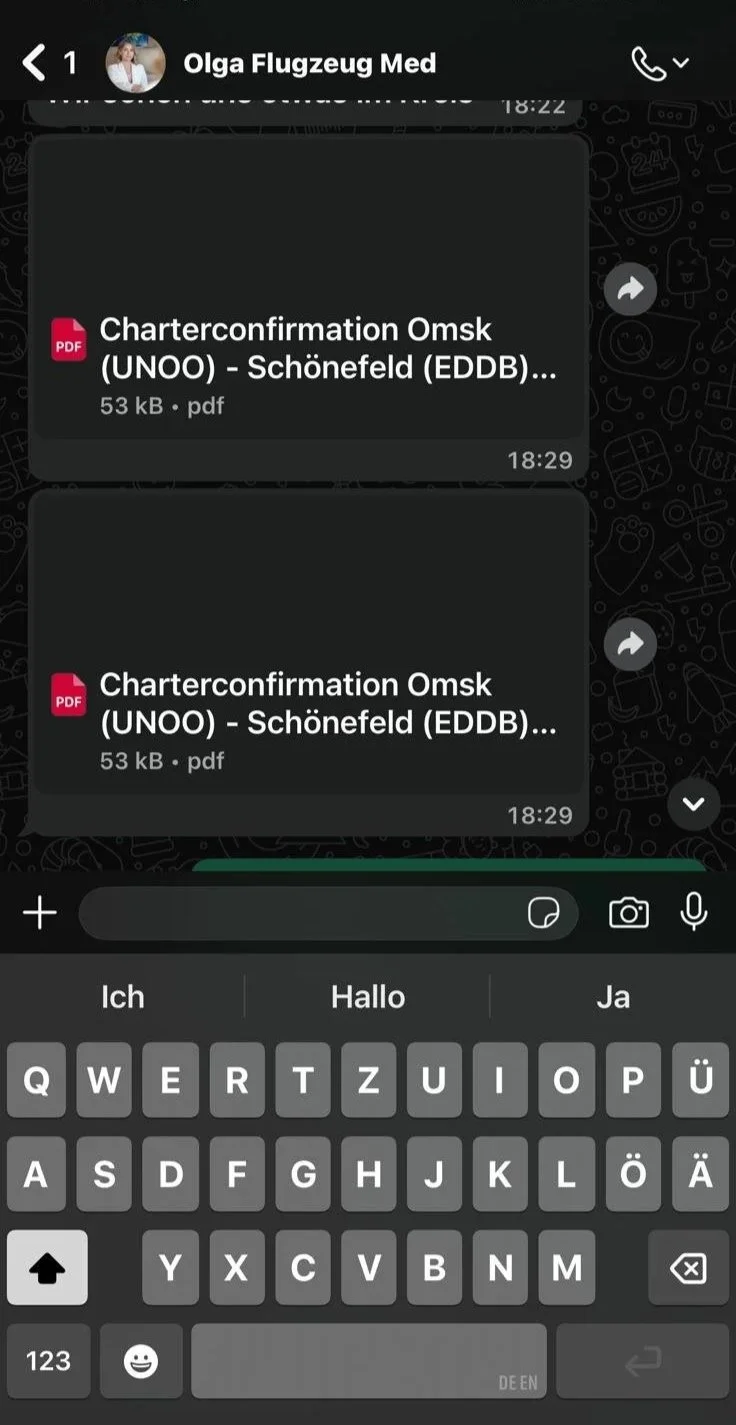
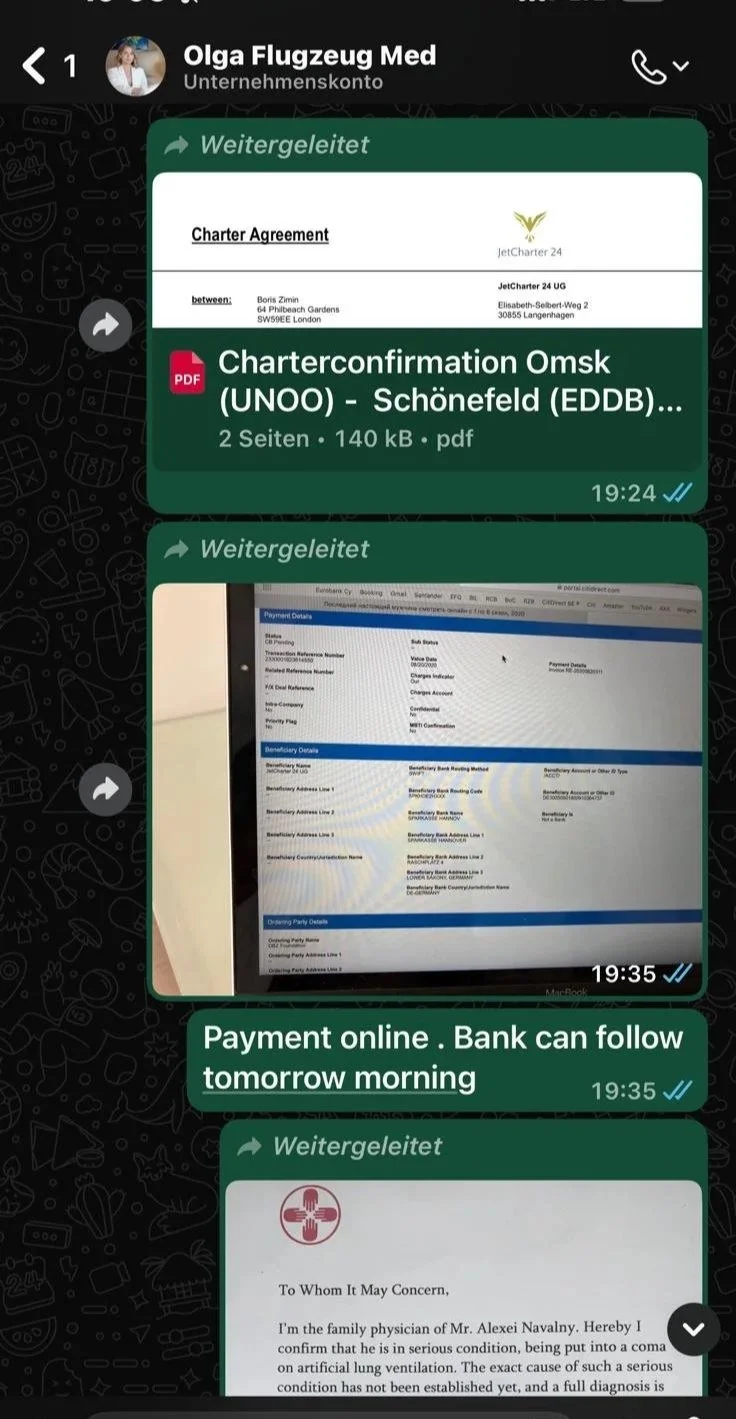
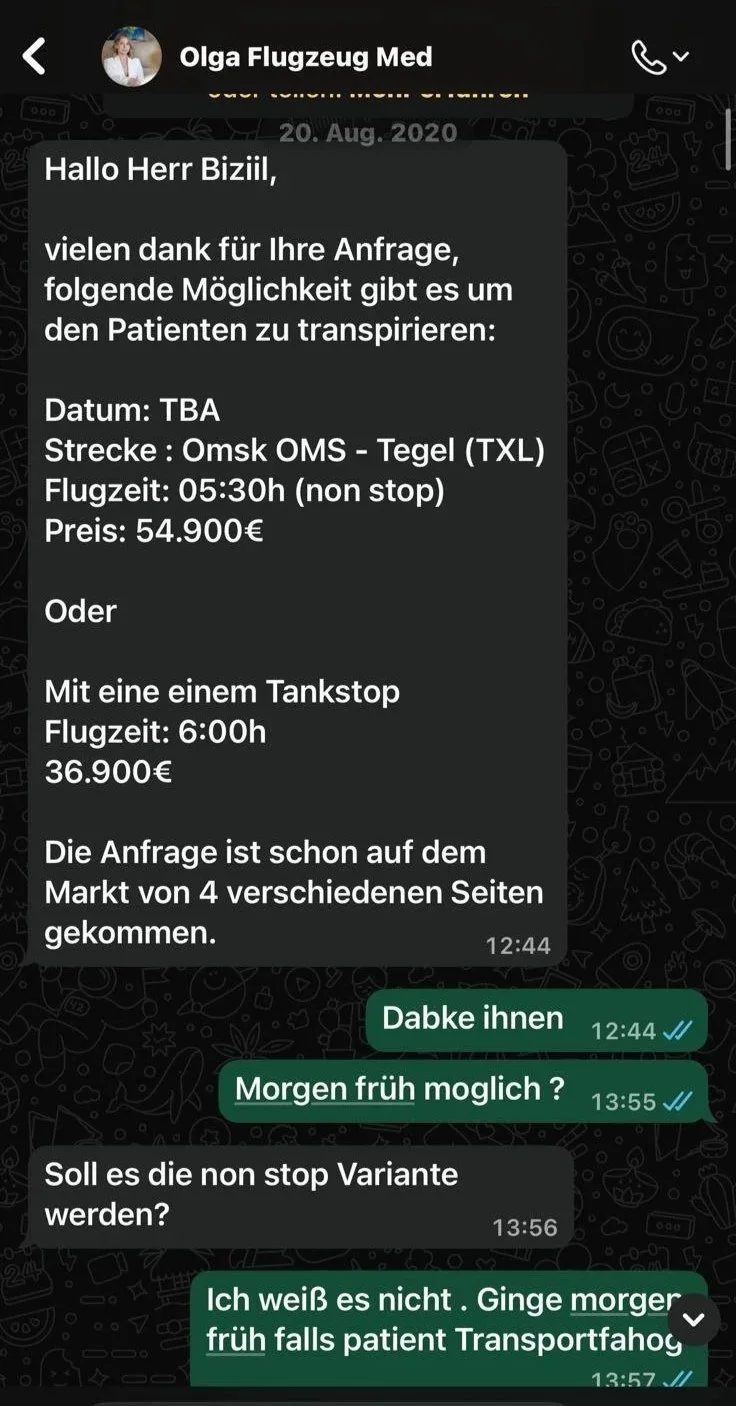
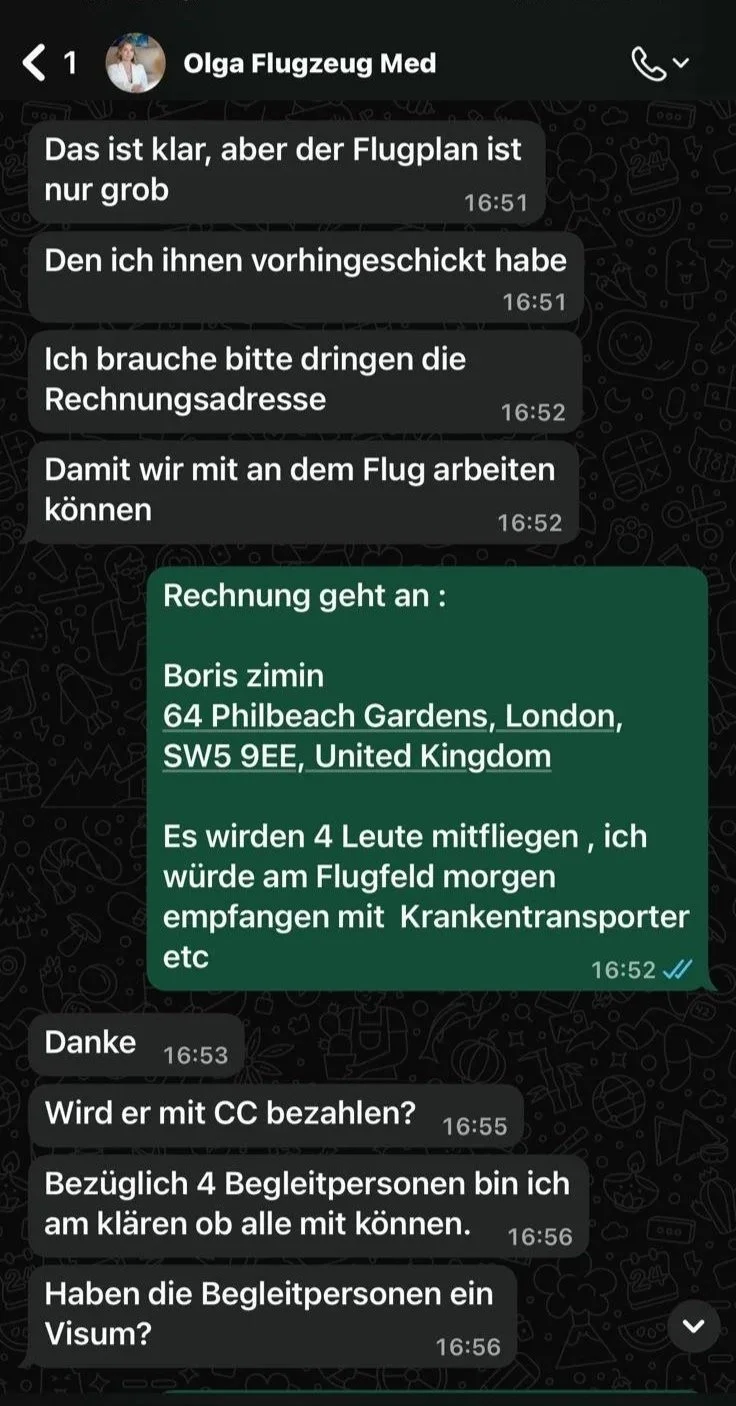
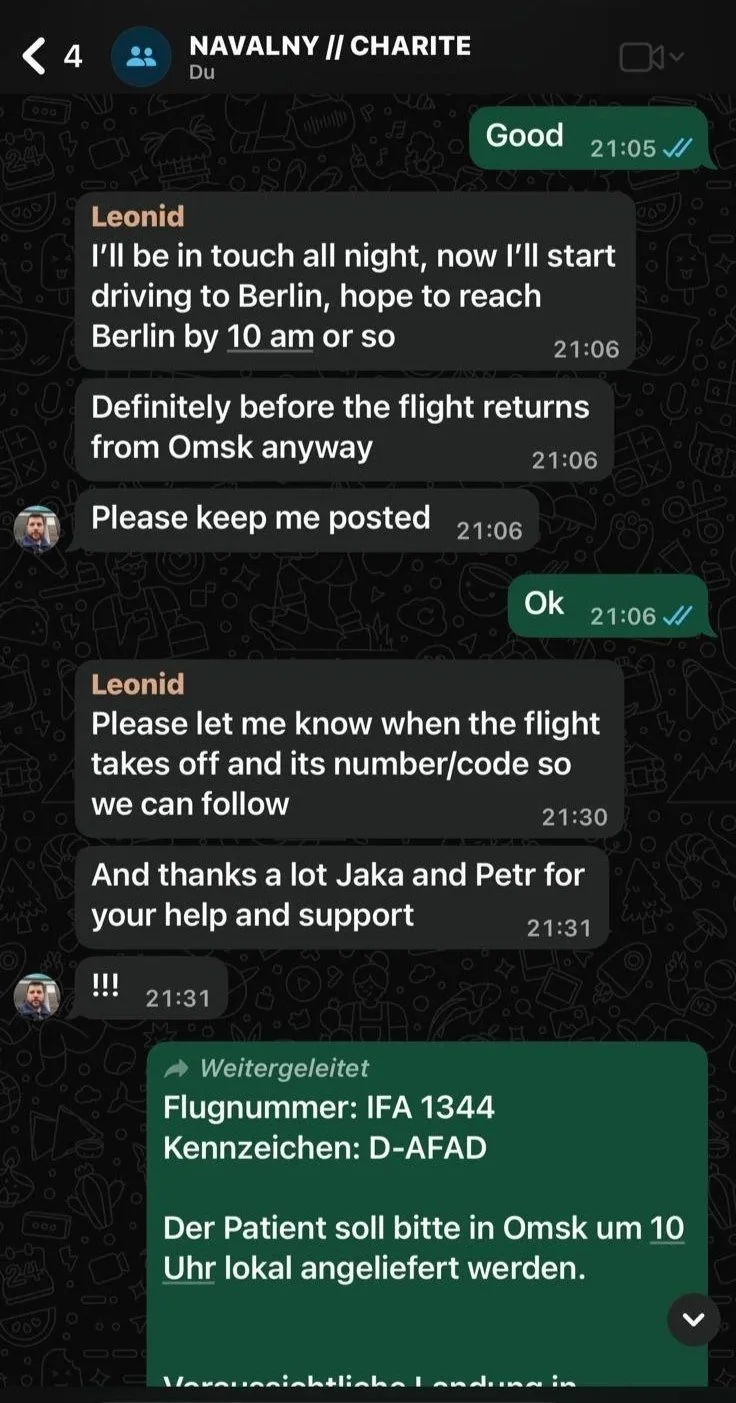
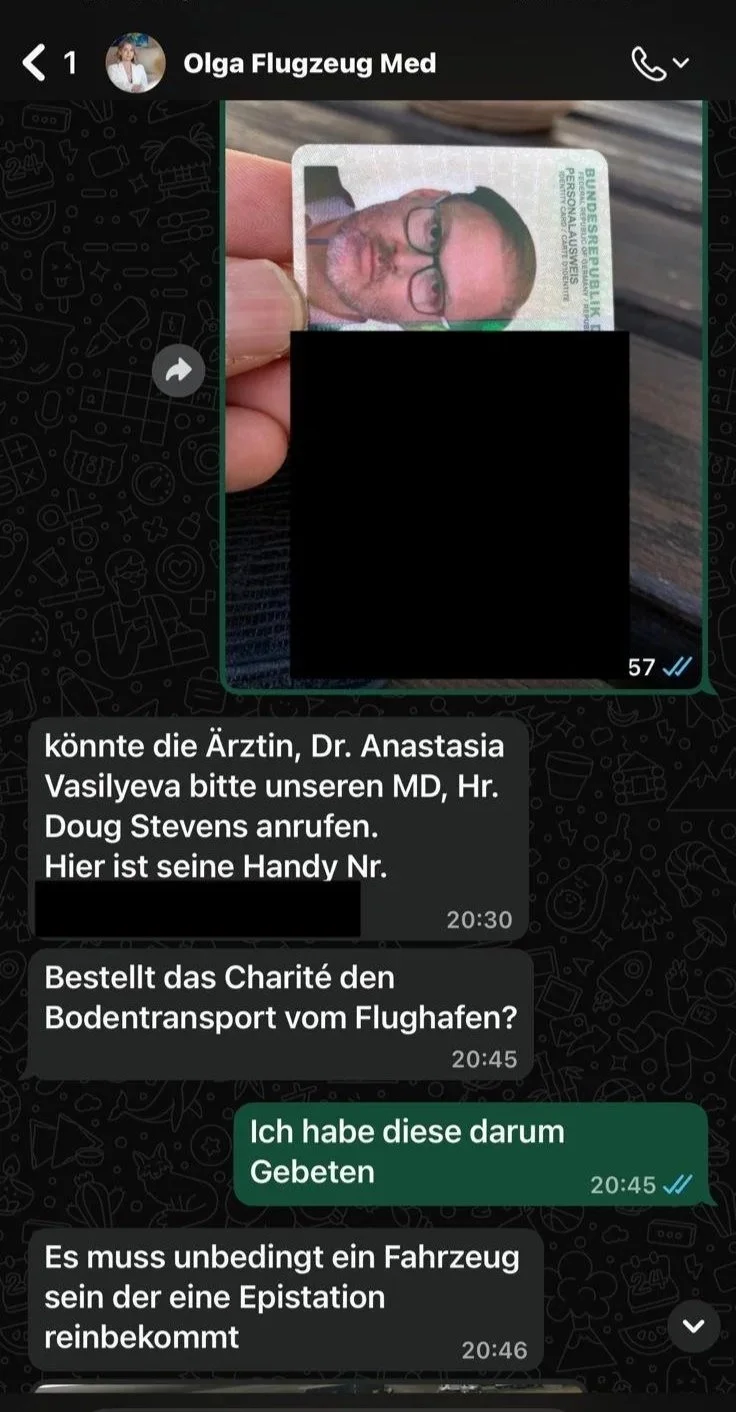
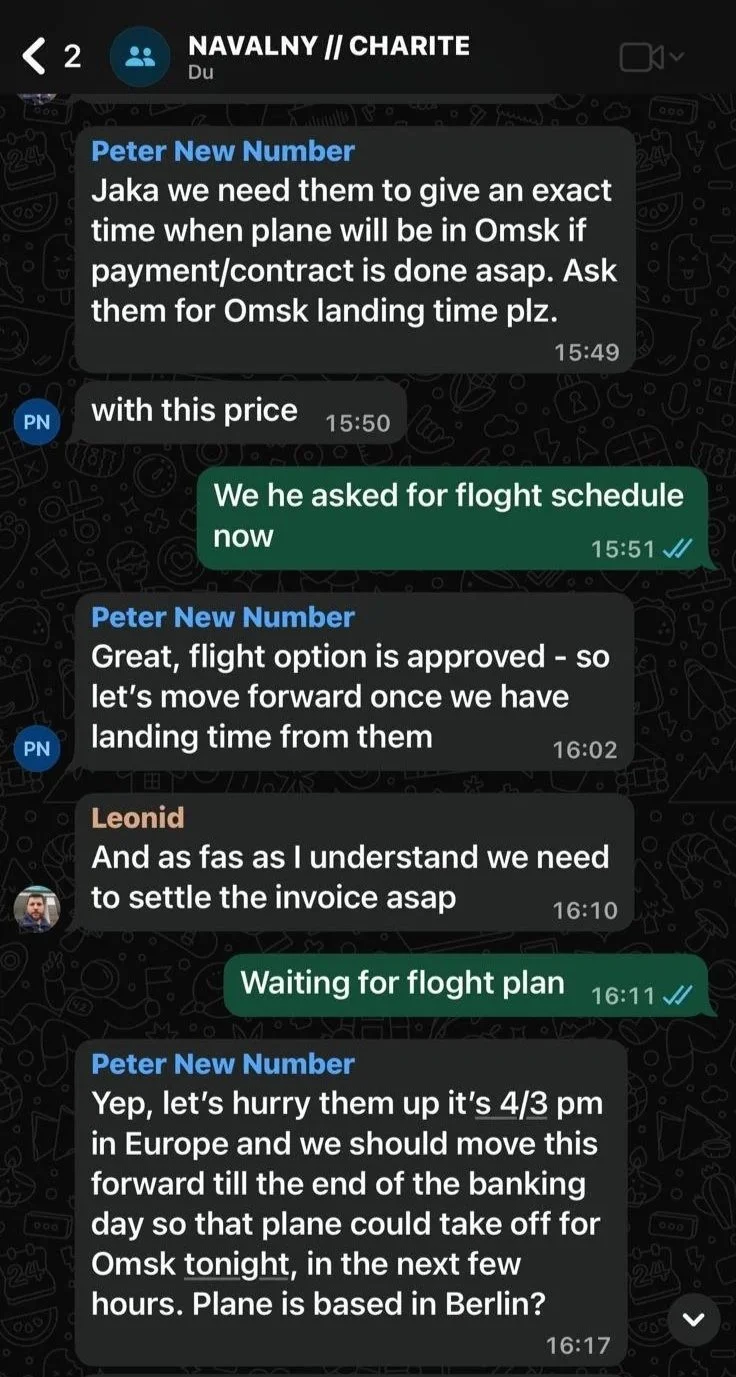
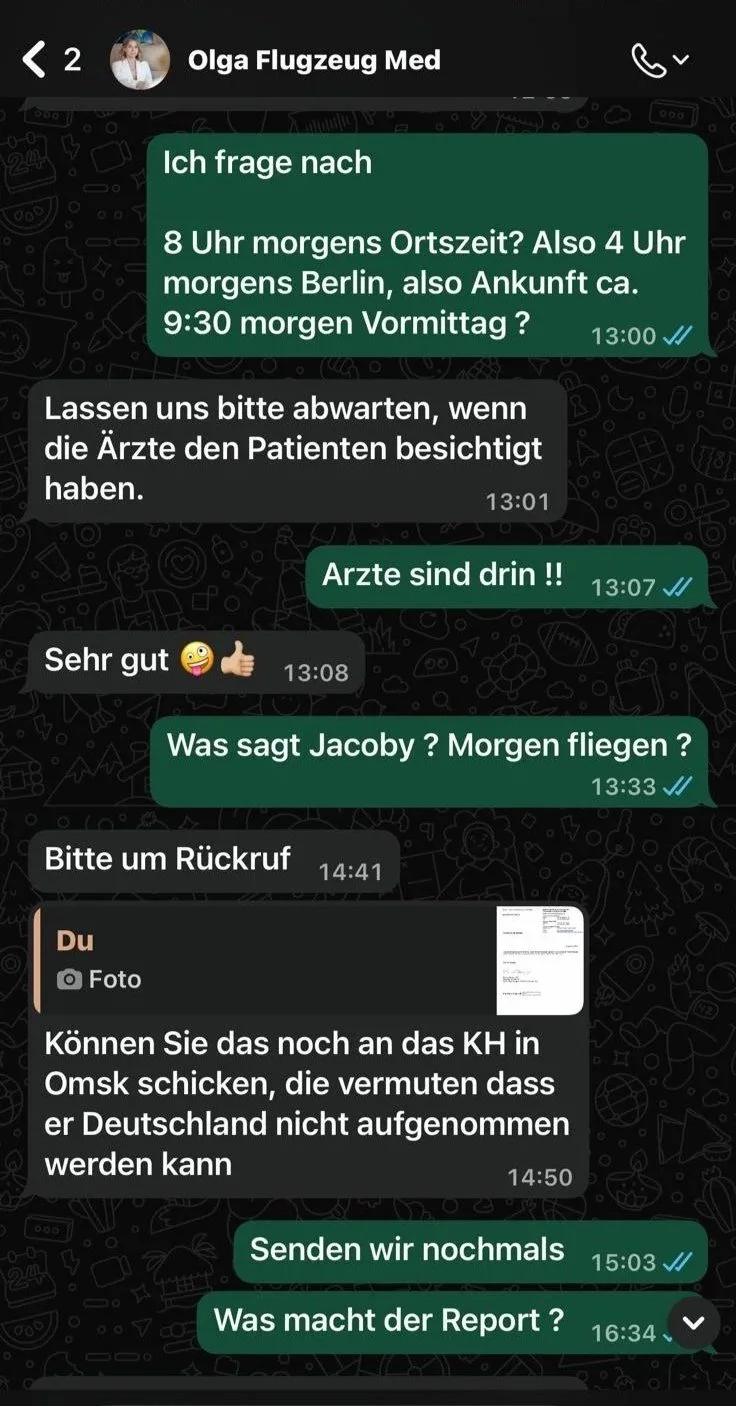
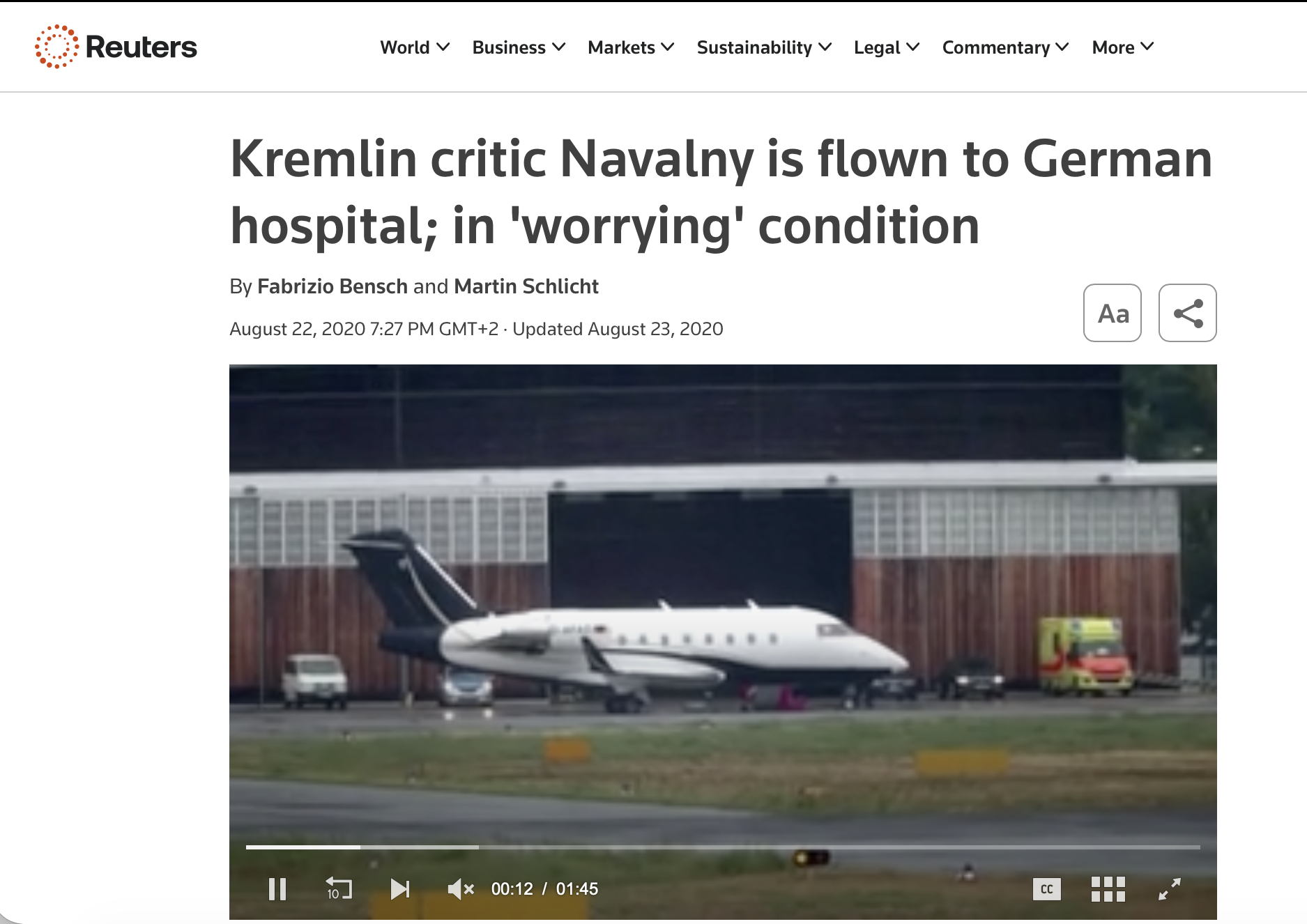
We searched with my team for hours for medical planes that could fly immediately; in the end, I organised the air ambulance with the same contact I had used two years before to book the emergency plane and medical crew to evacuate Peter Verzilov from Moscow - a Challenger medevac jet, flight "IFA 1344" - and guaranteed the cost with my credit card for 78,000 euros for someone I had never met in my life, before Mr. Zimin from London, at the request of Navalny's team, came forward to make the payment. As I had used the same course of action two years earlier for Peter Verzilov after his own suspected poisoning, I knew it could be done.
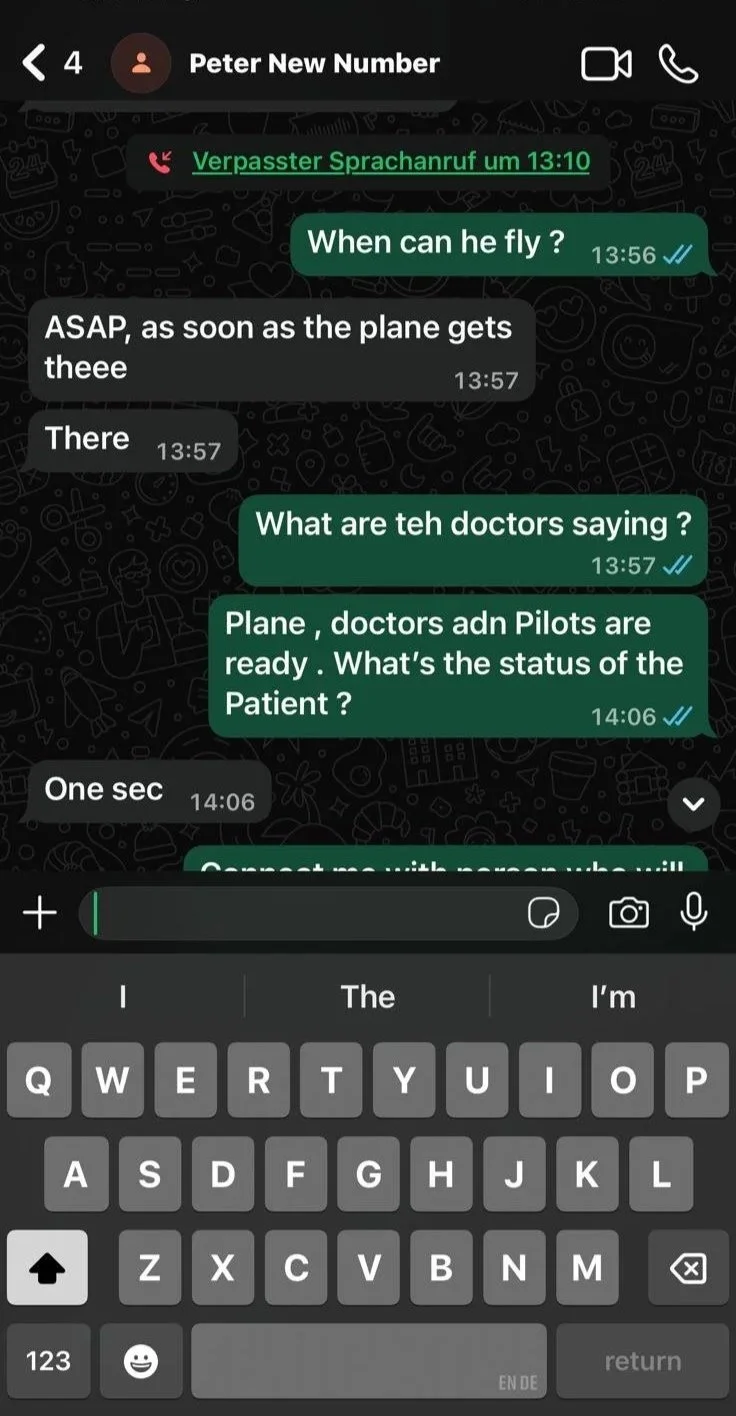
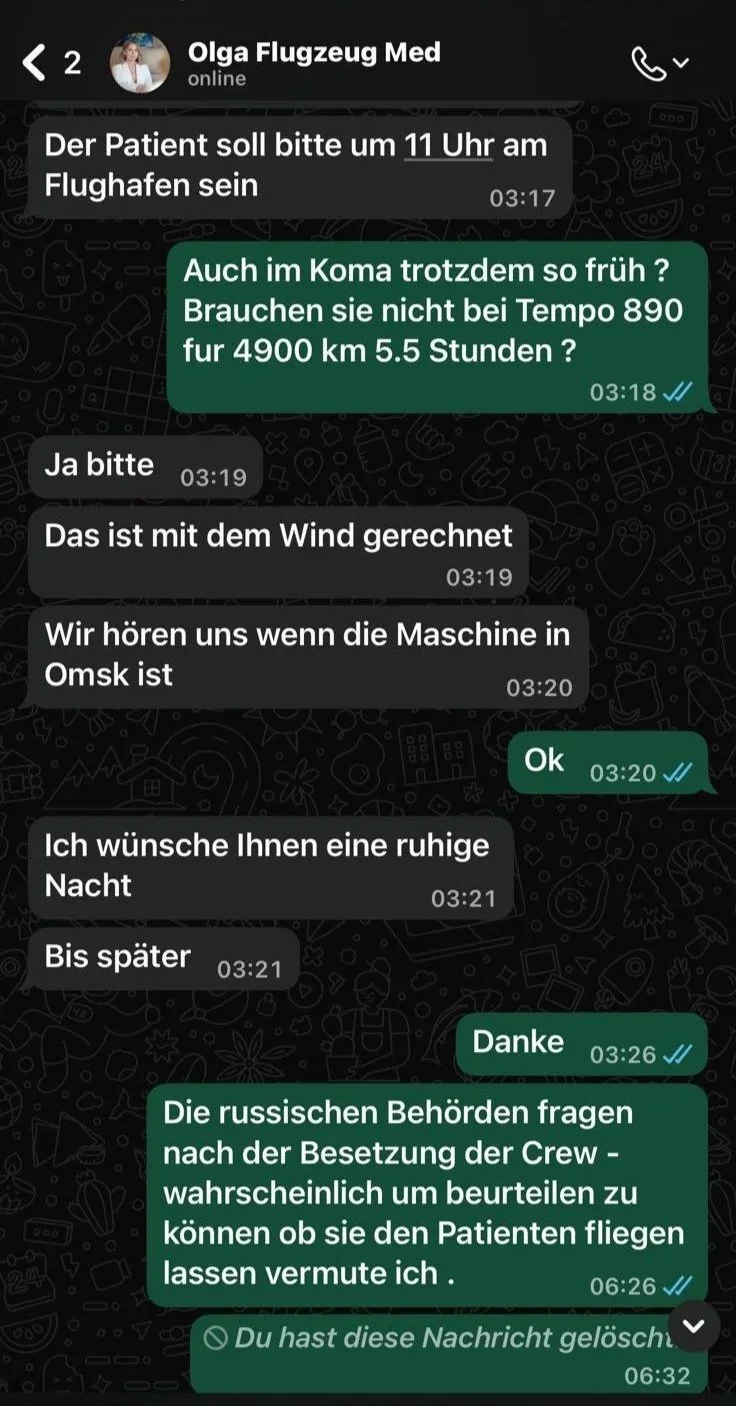
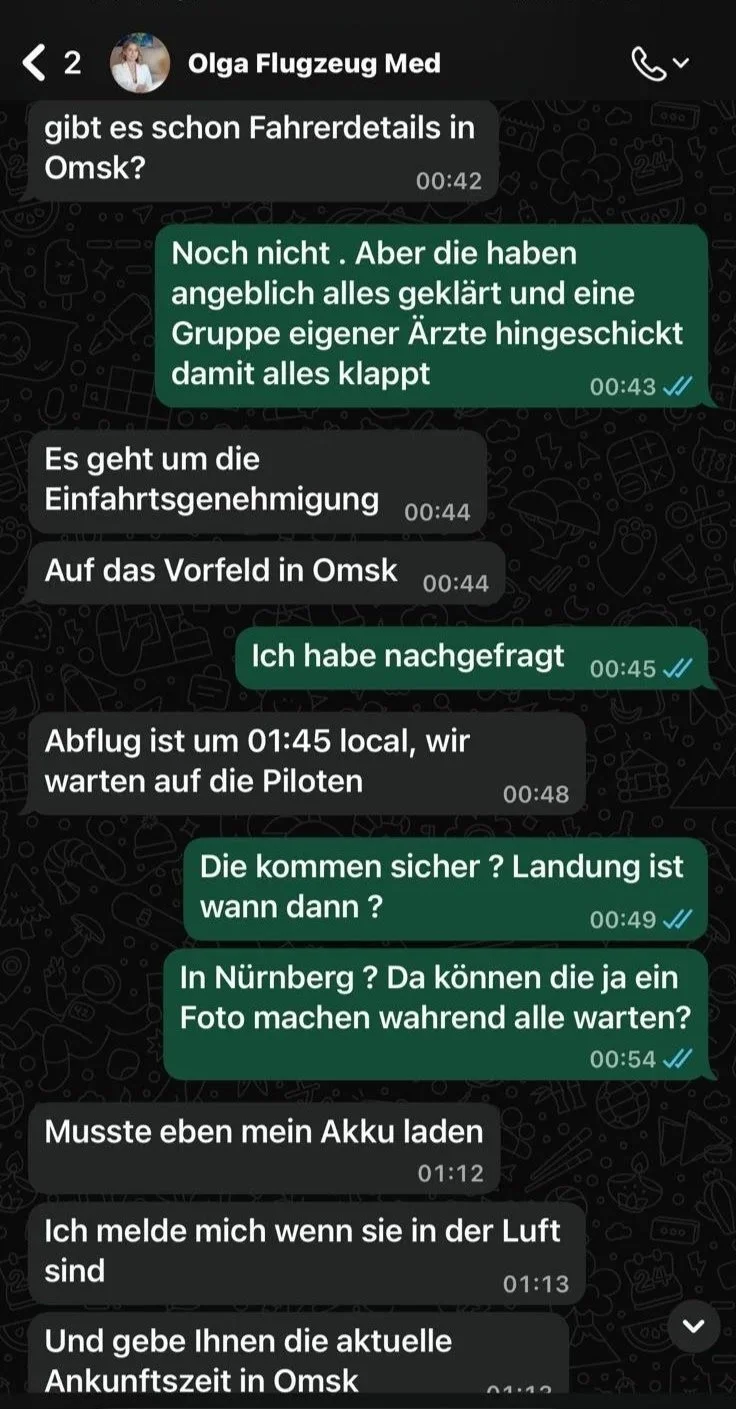
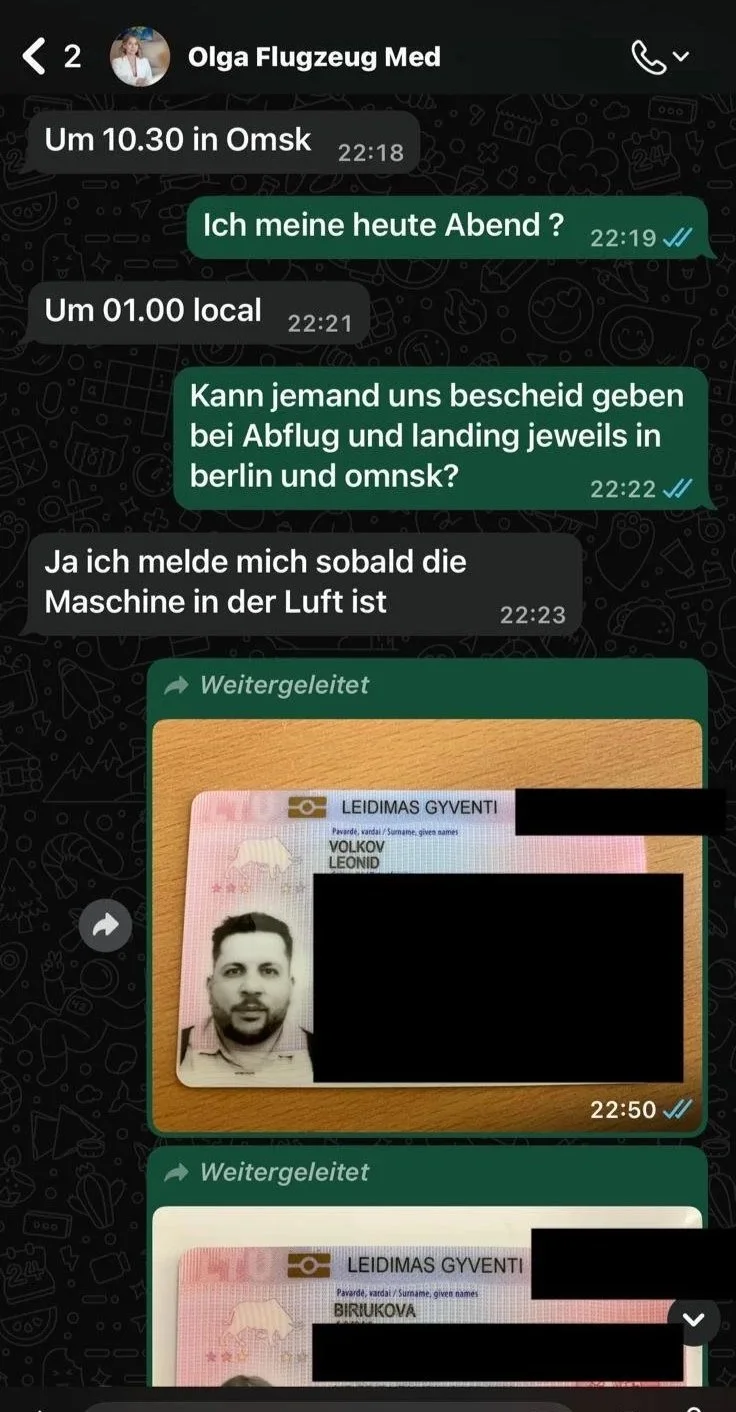
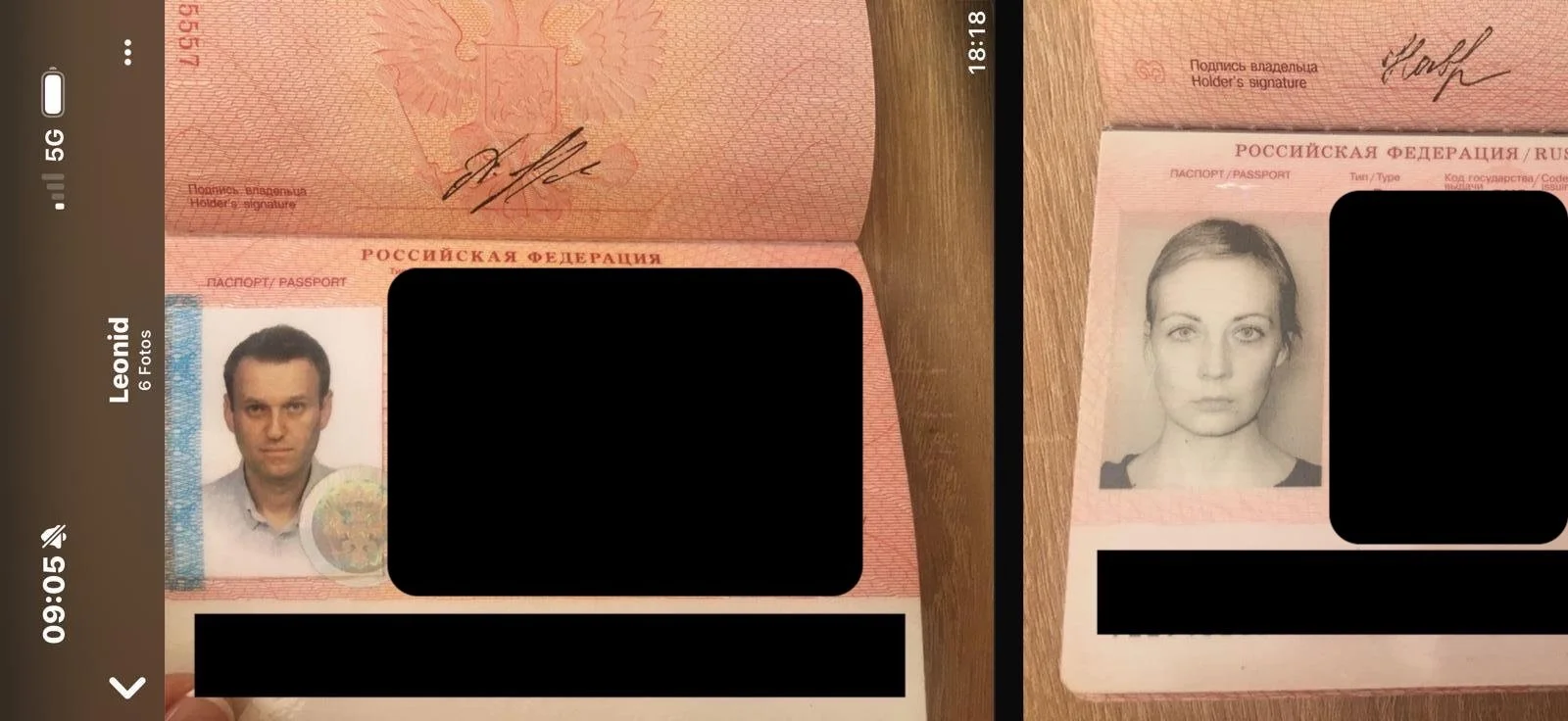
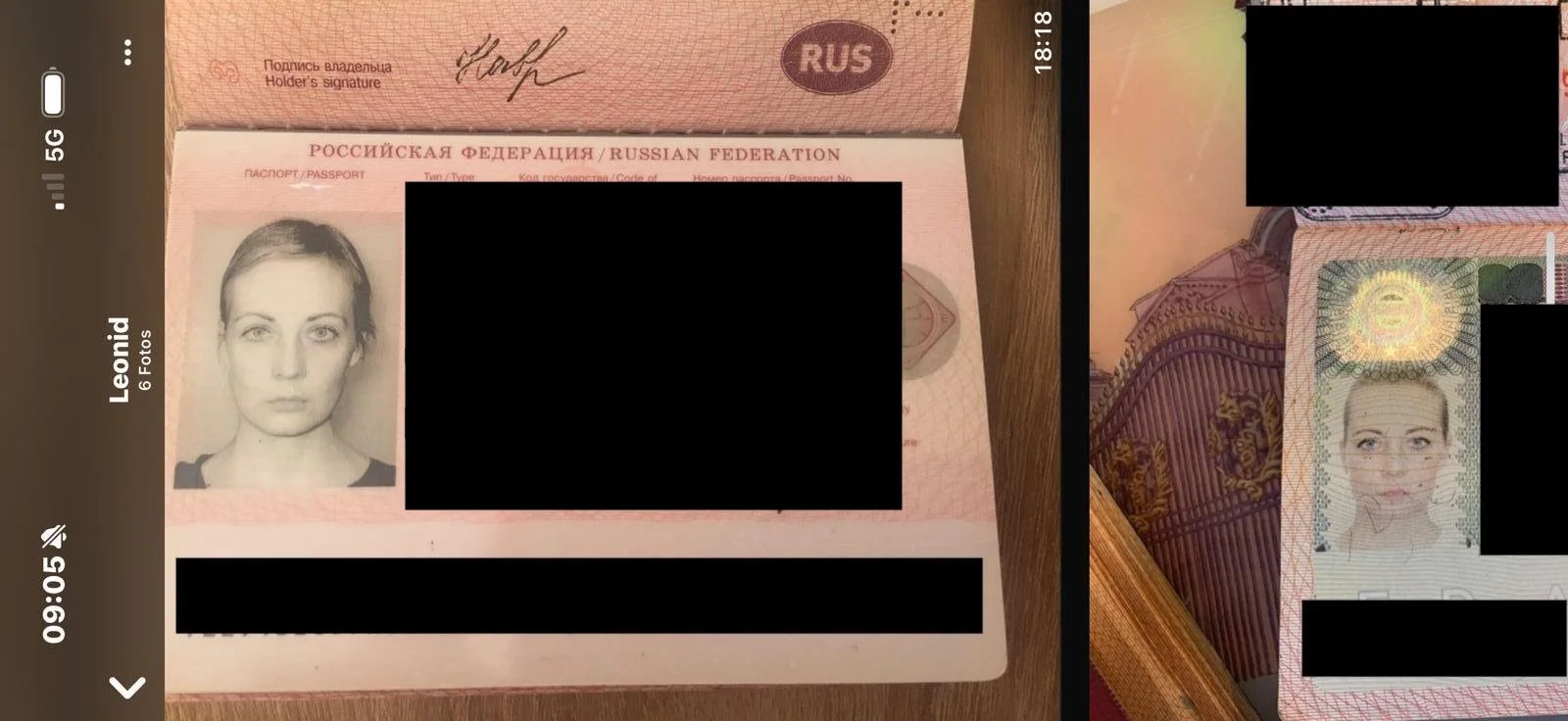
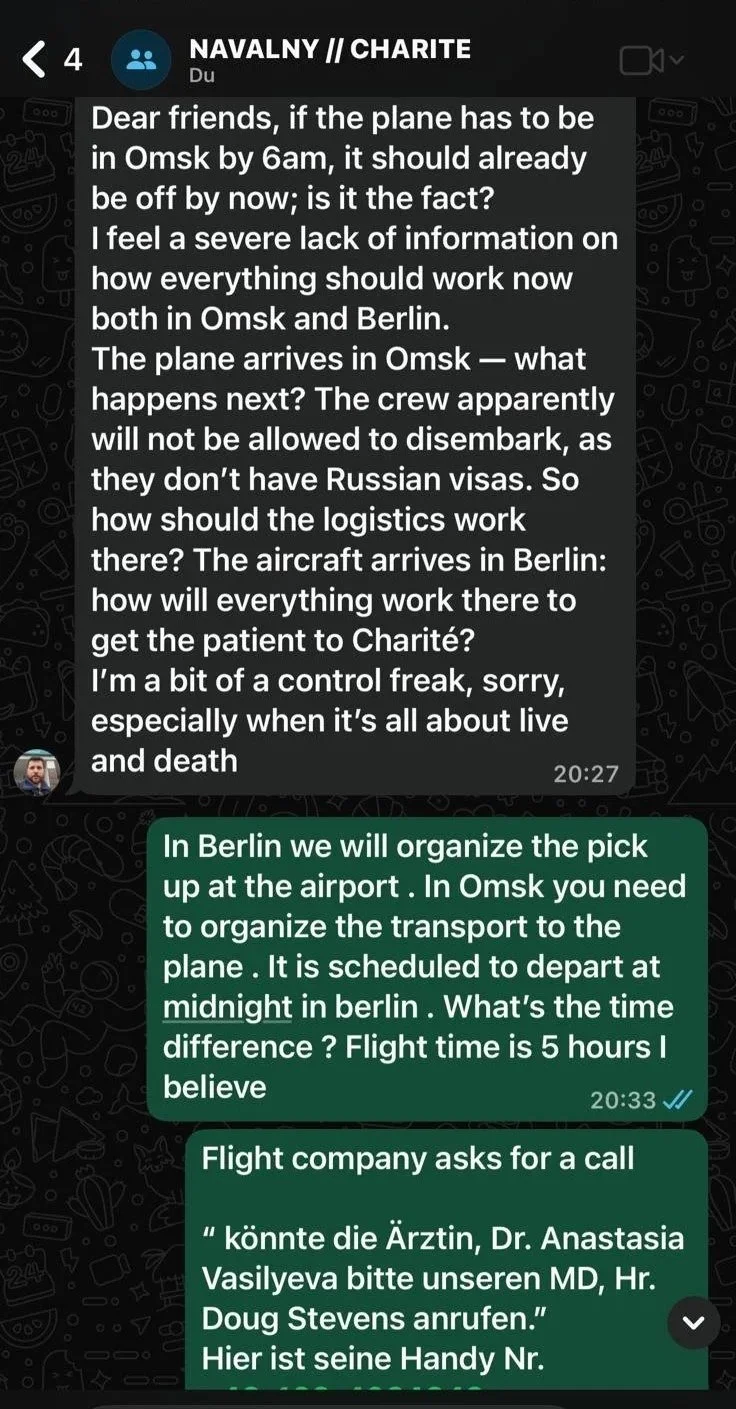
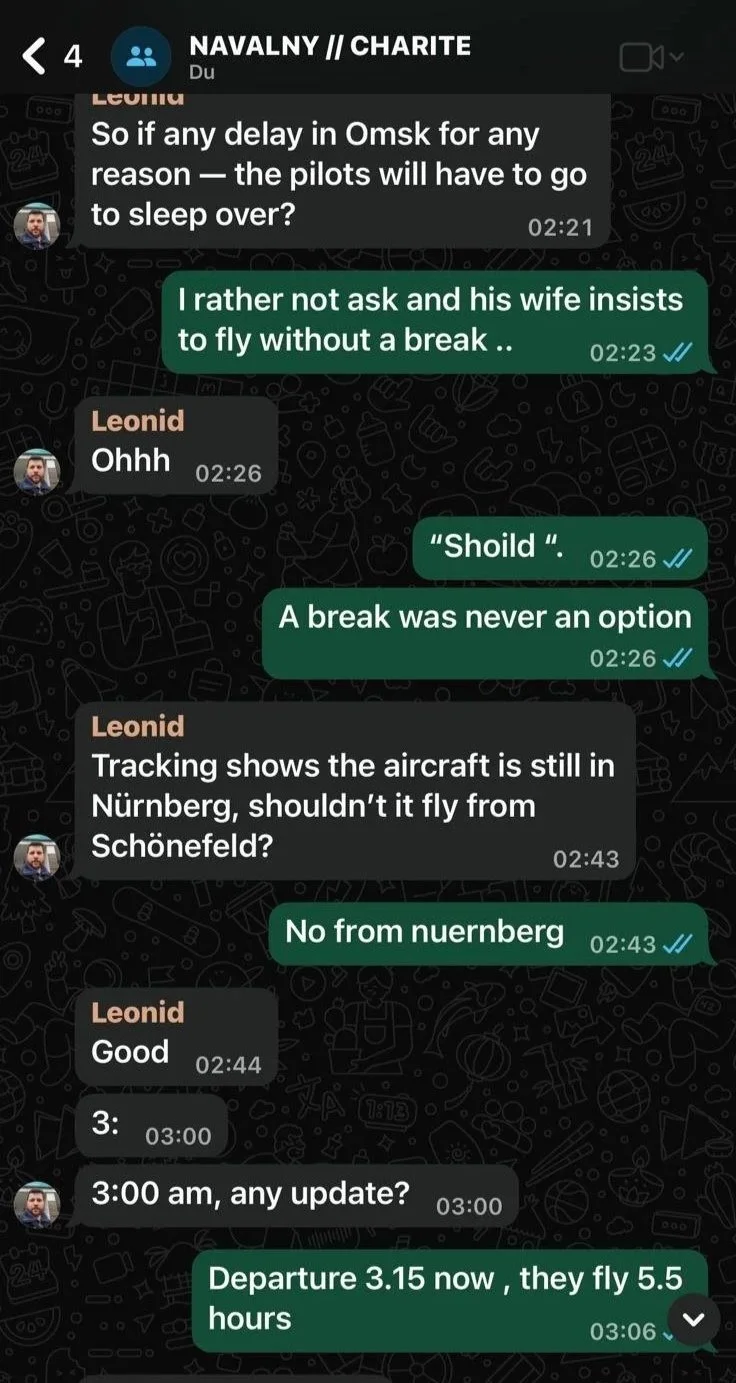
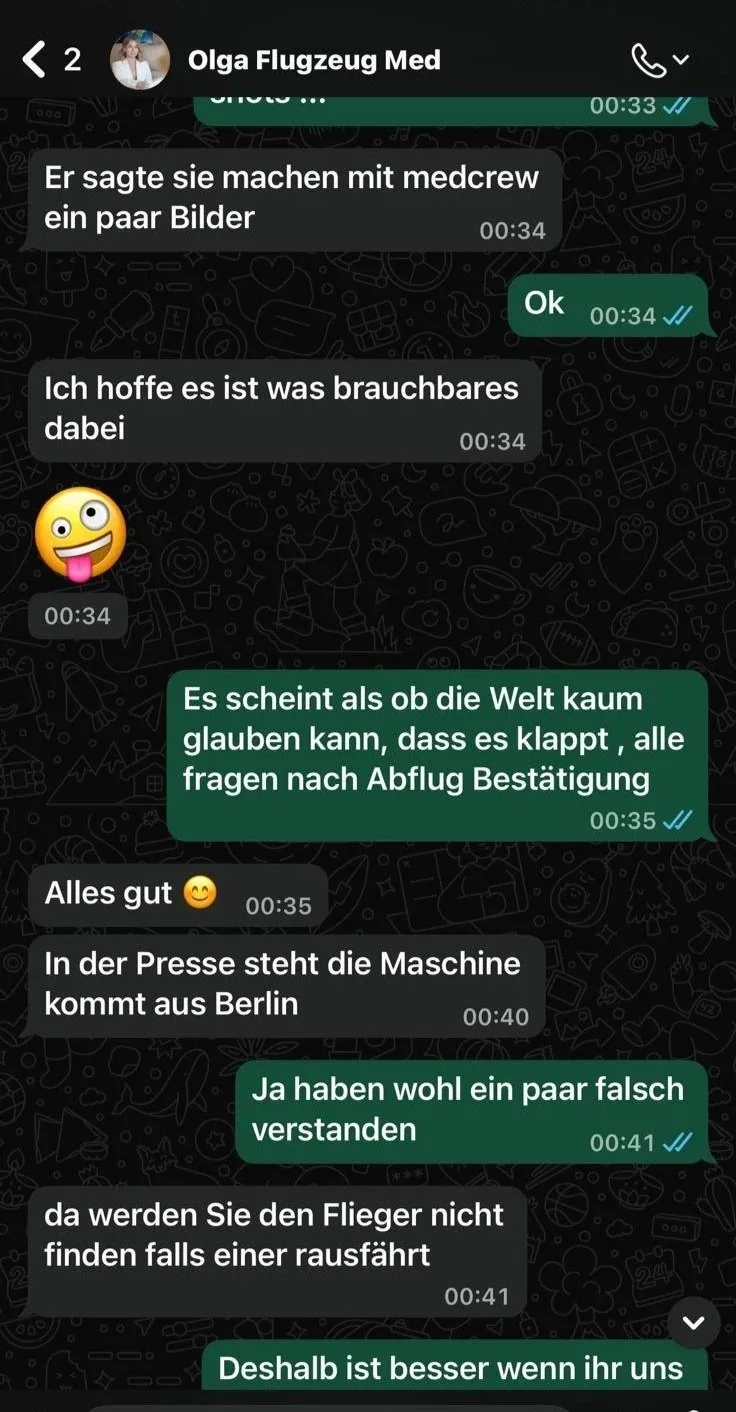
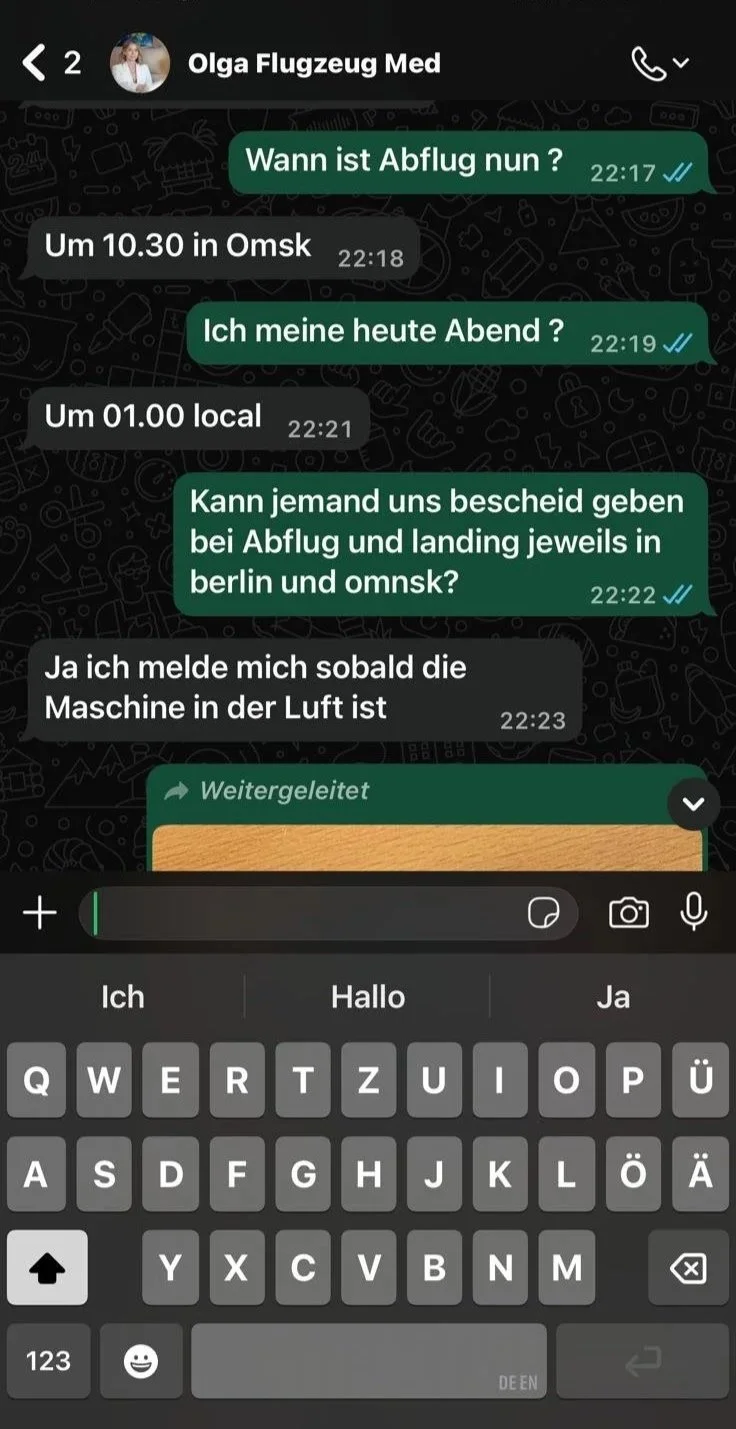
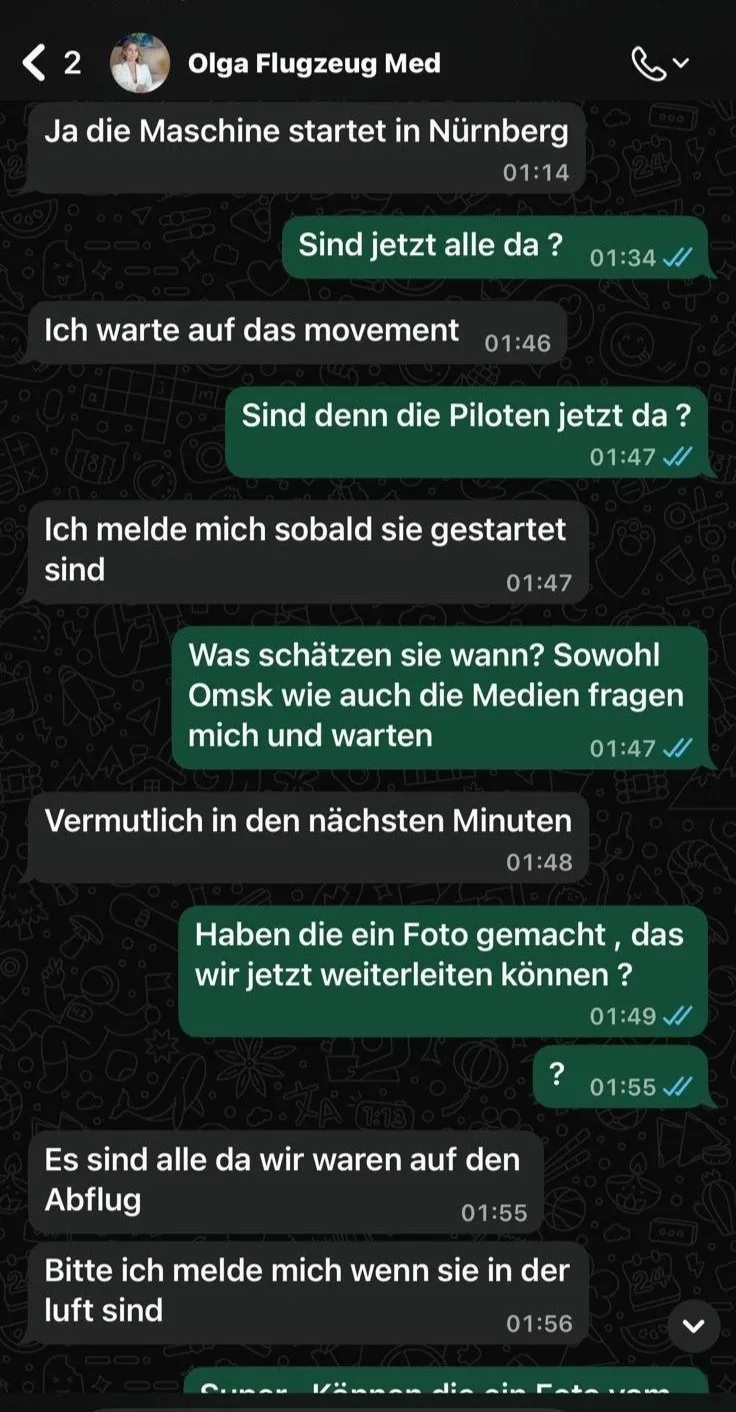
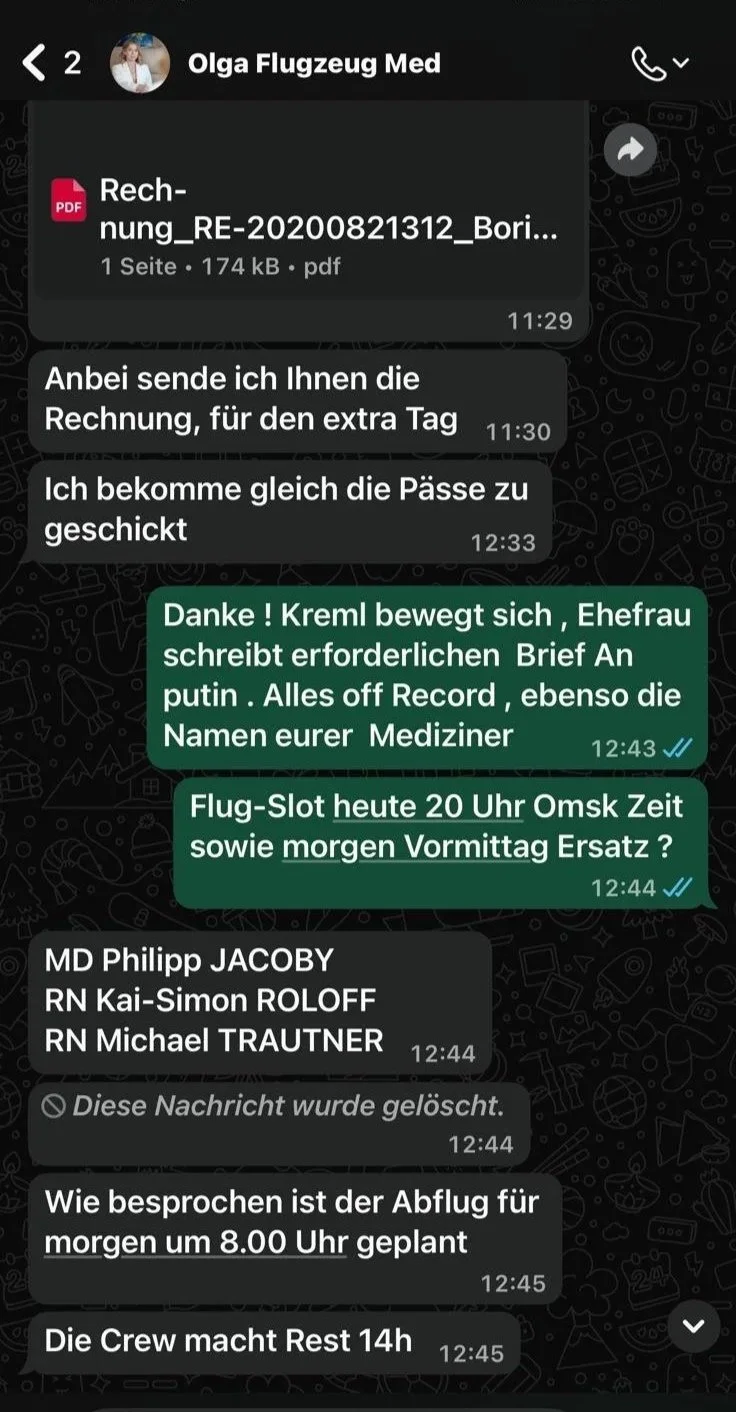
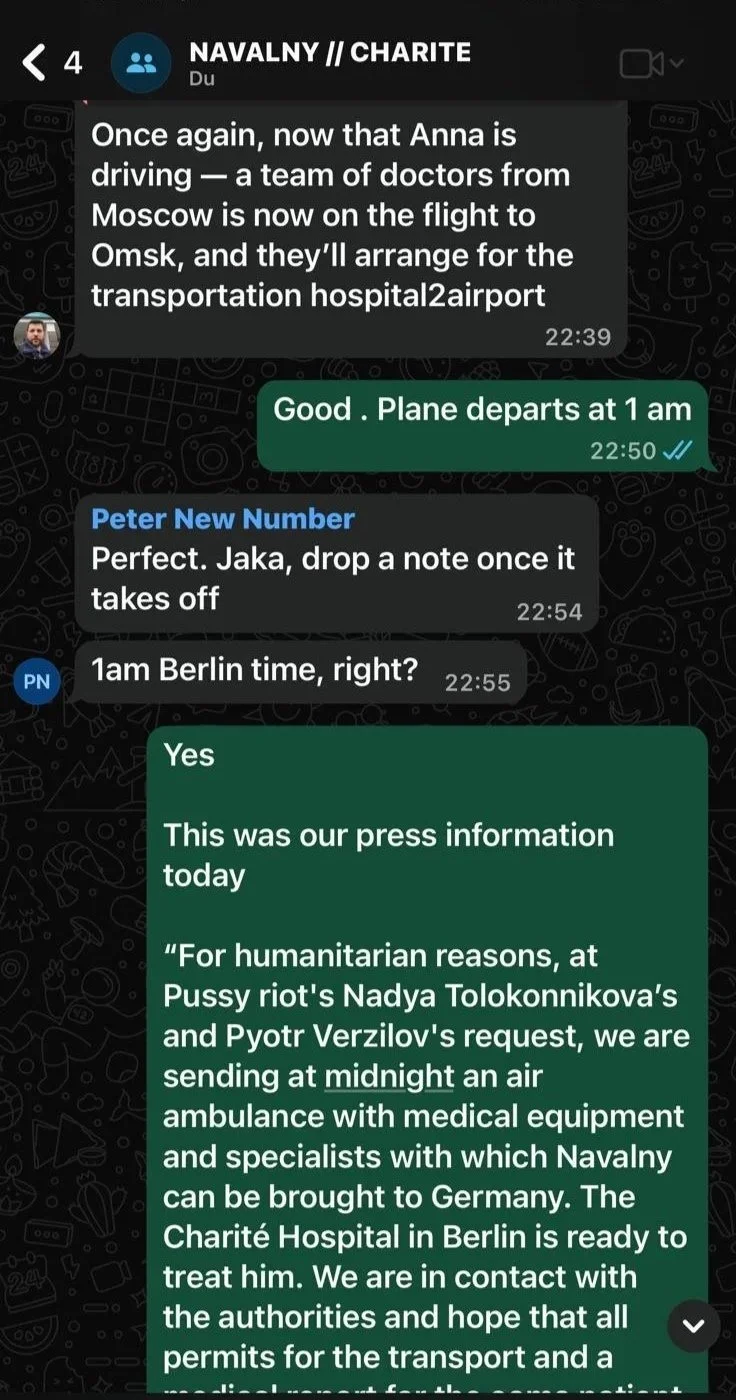
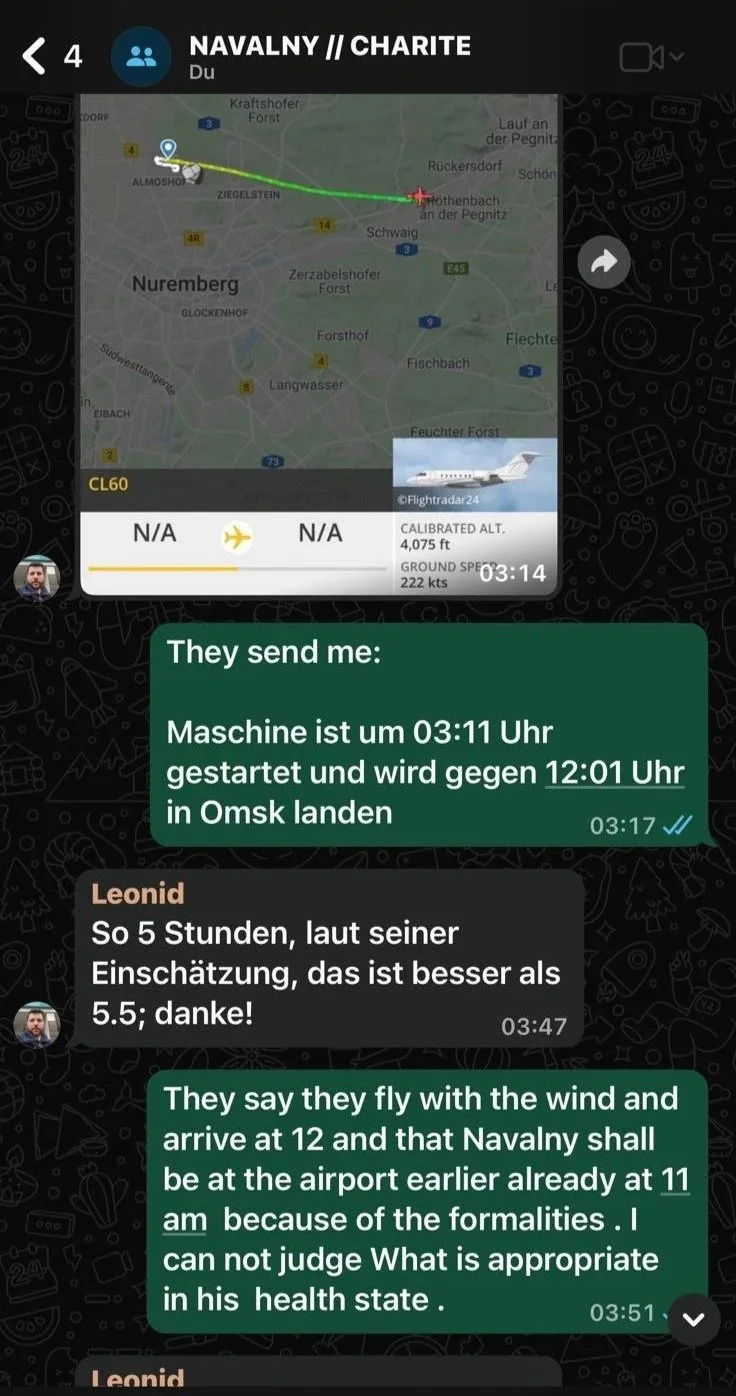
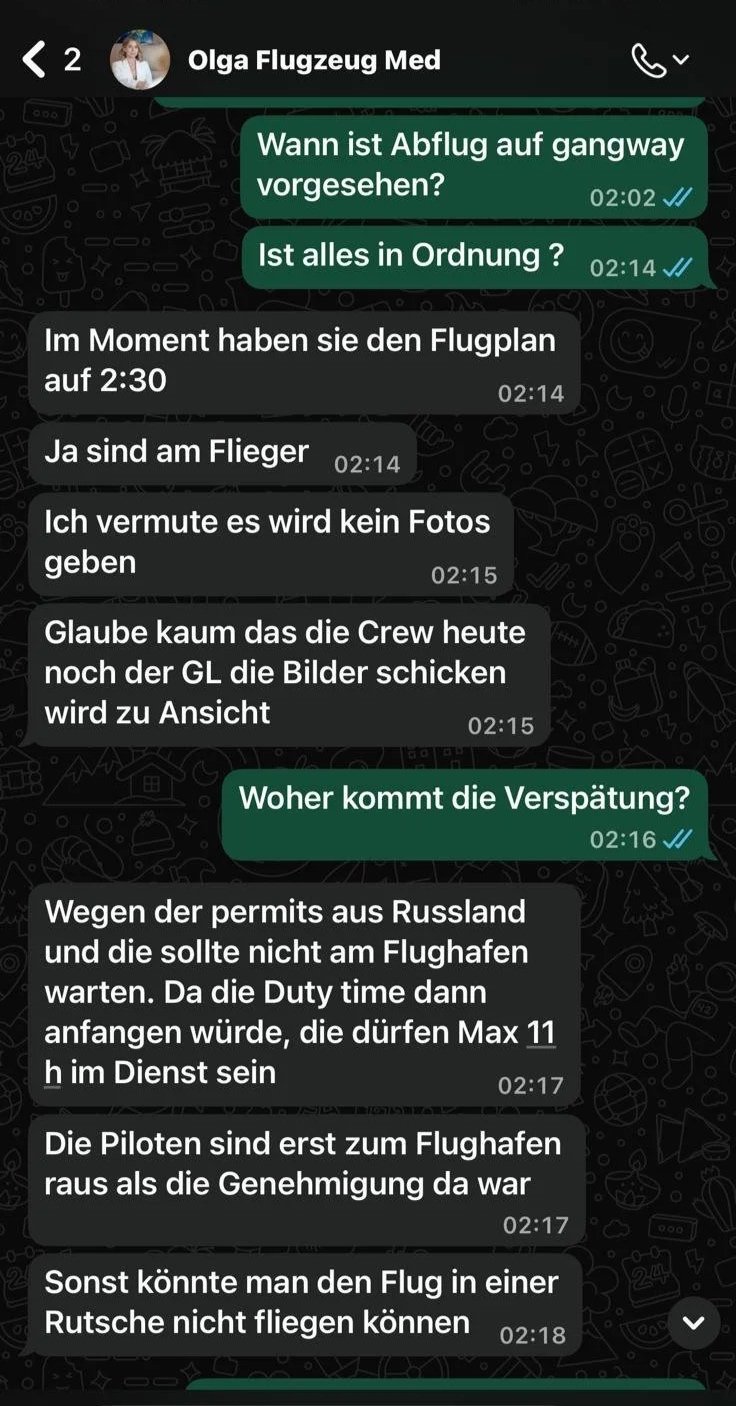
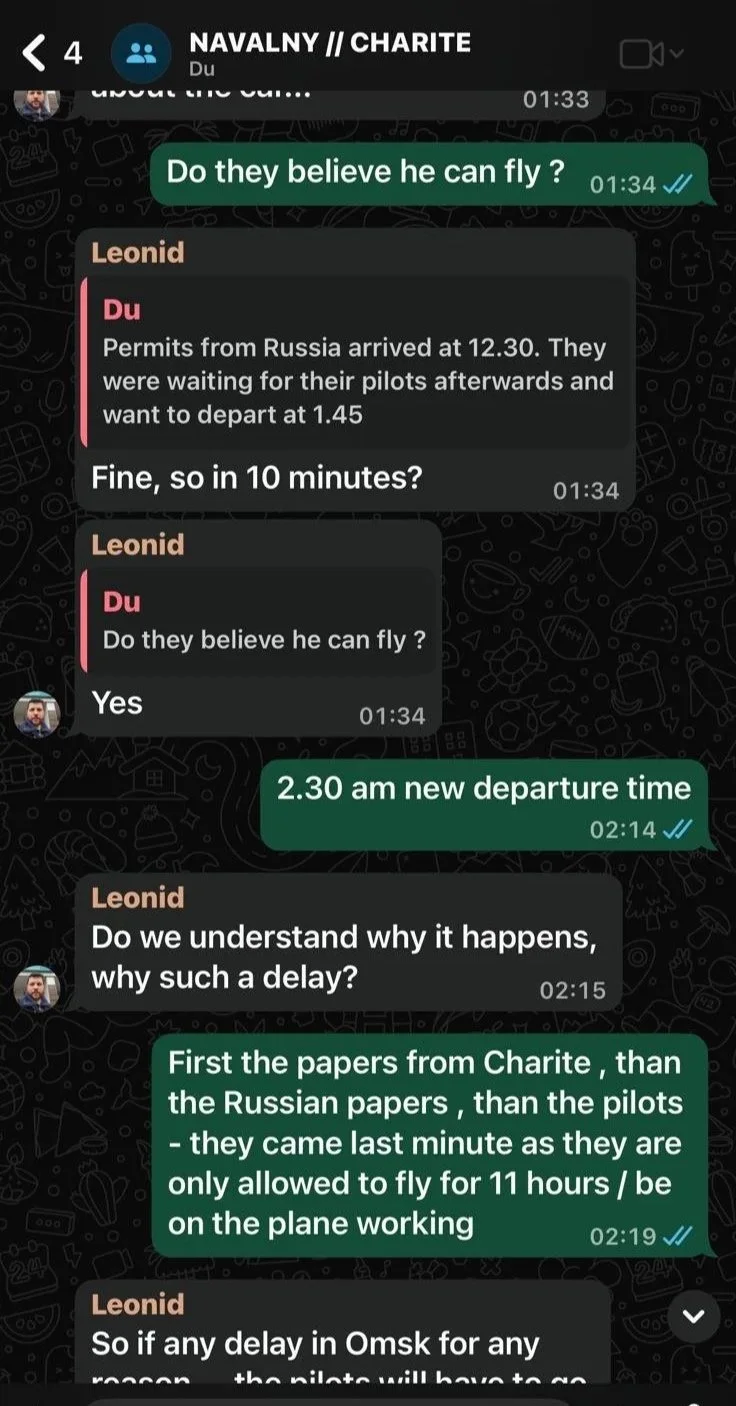
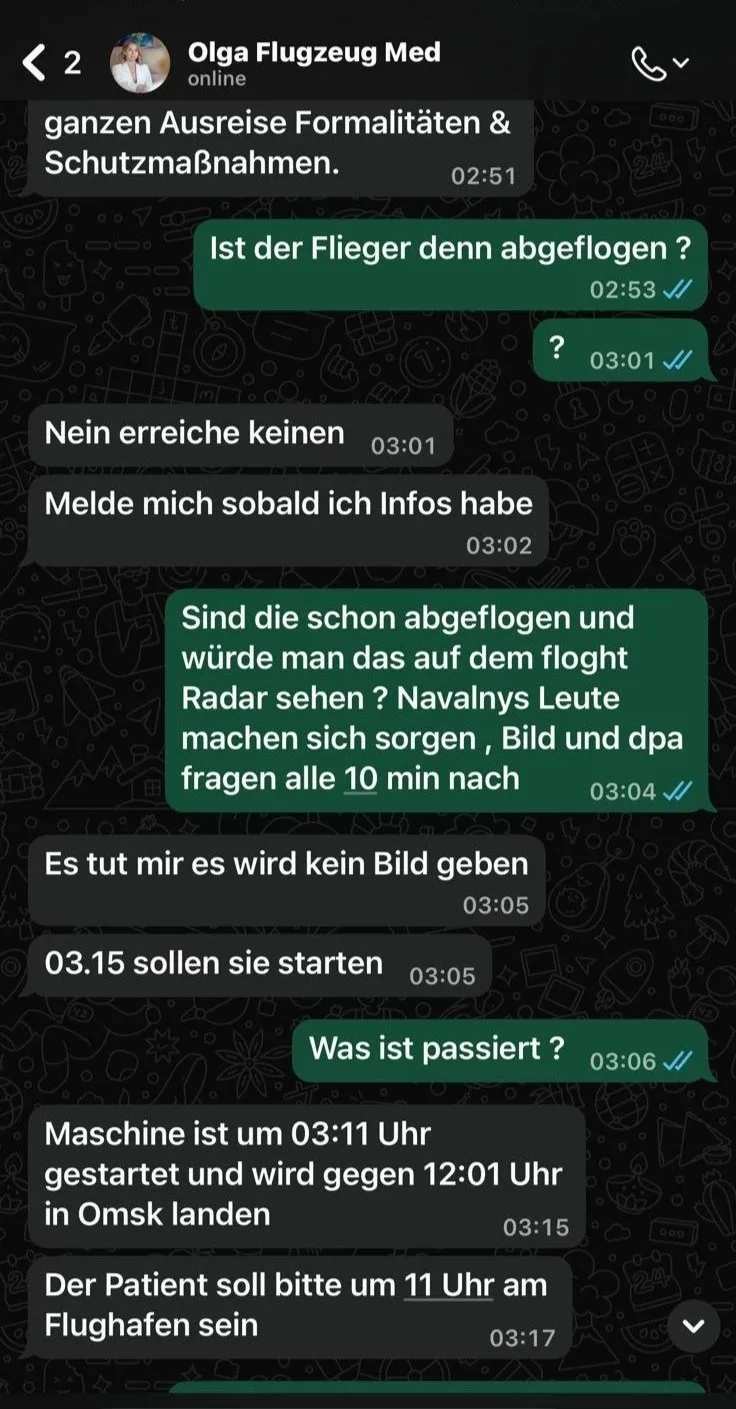
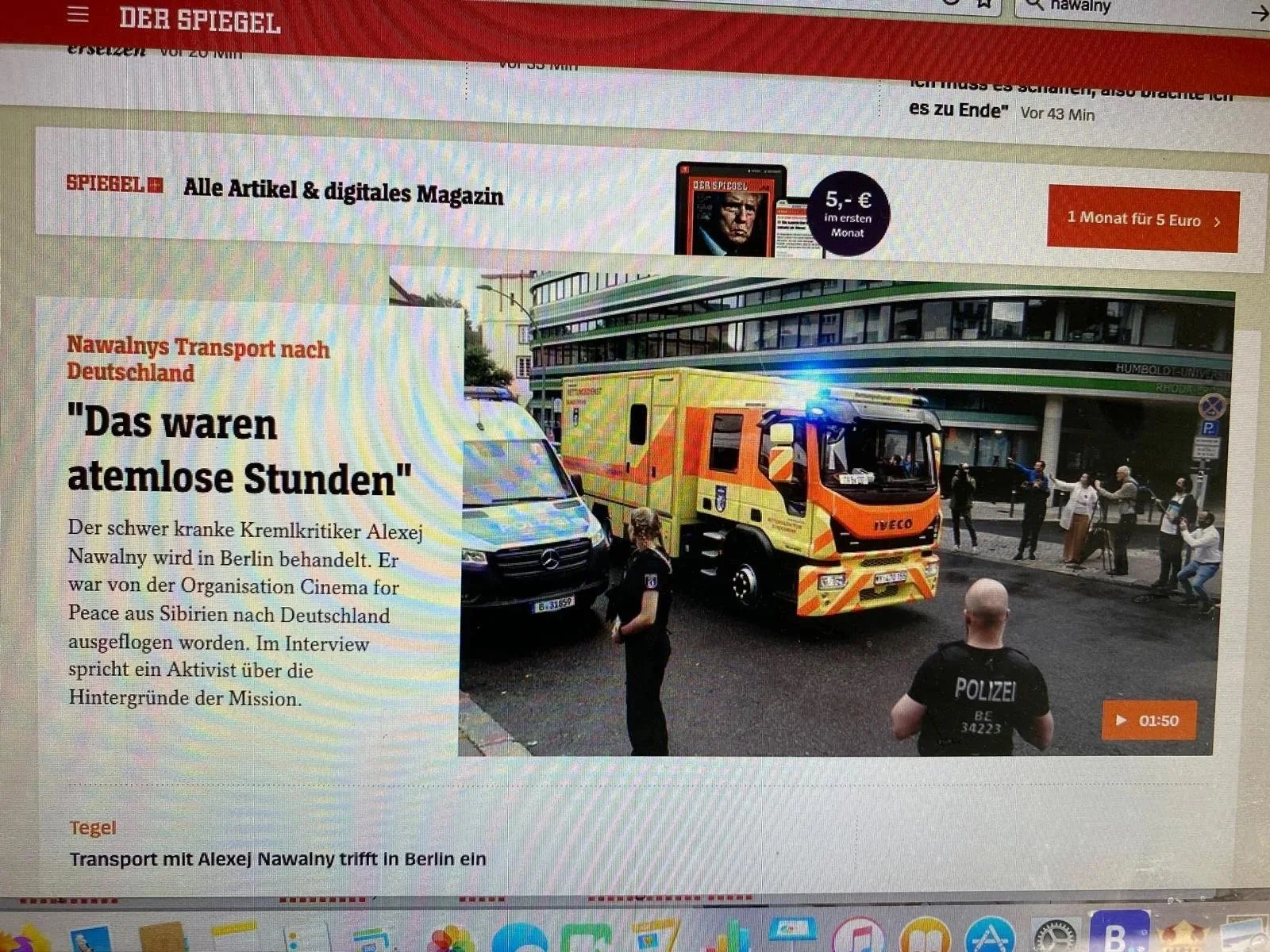
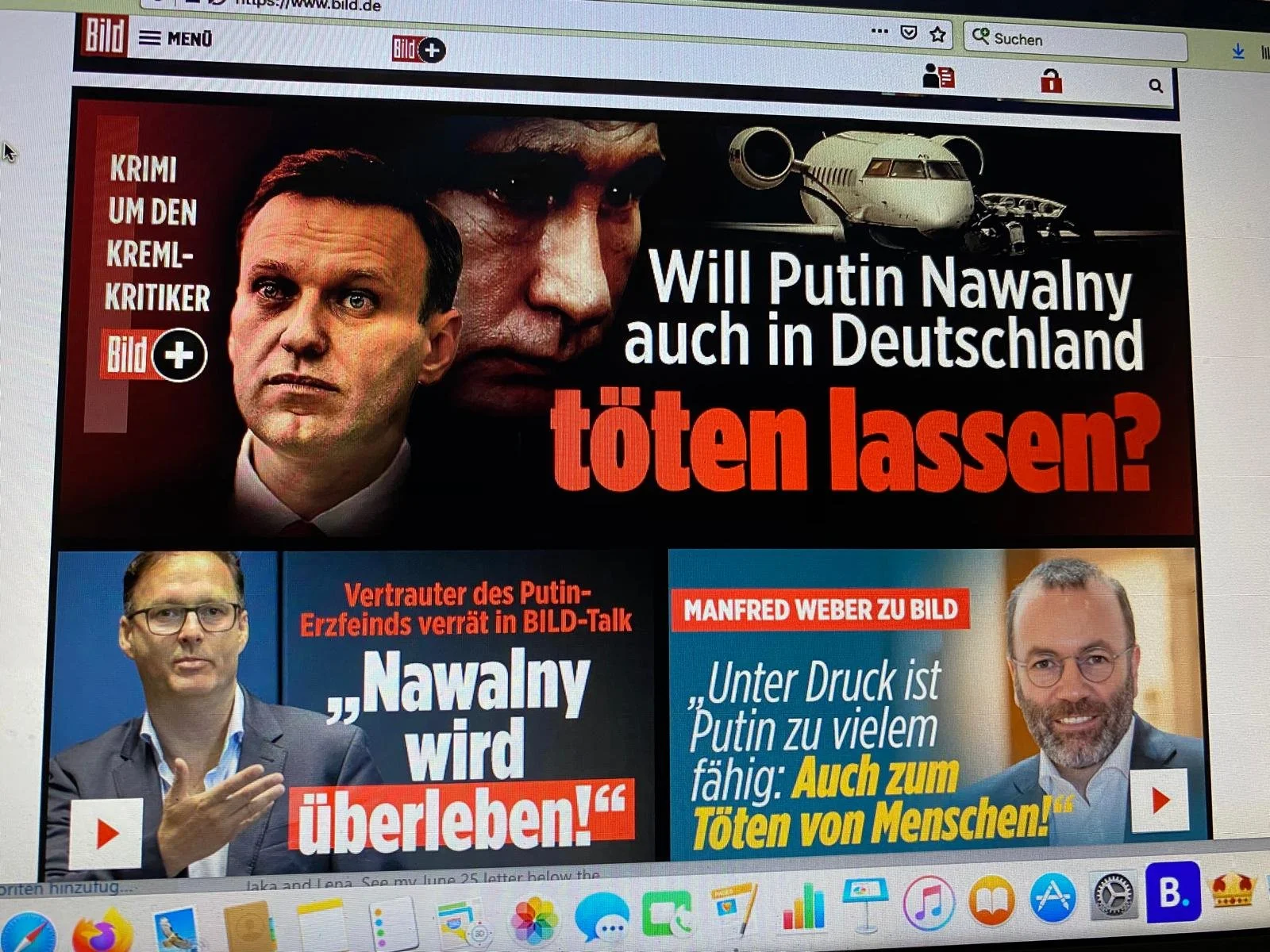
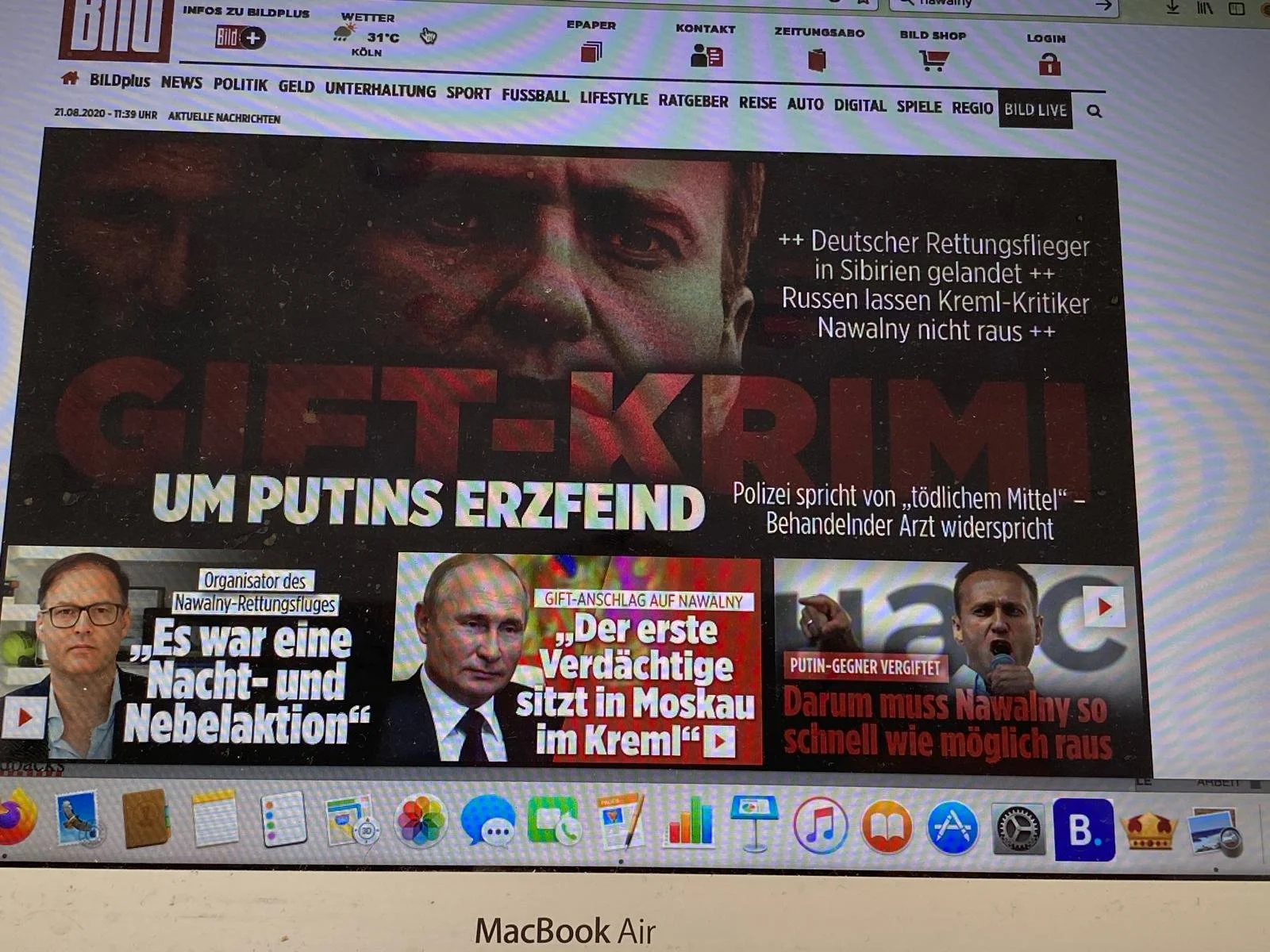
After getting all the extensive paperwork done by all parties and getting all the medical crew members on the plane, while news agencies and outlets such as Bild and Spiegel were asking me every few minutes for updates - nobody slept that night - finally at 3.11 am the plane was in the air. I had been promised the patient would be ready for transportation when we landed. Spiegel ran a headline saying - Cinema for Peace rescue plane on the way to Siberia.
The Obstruction
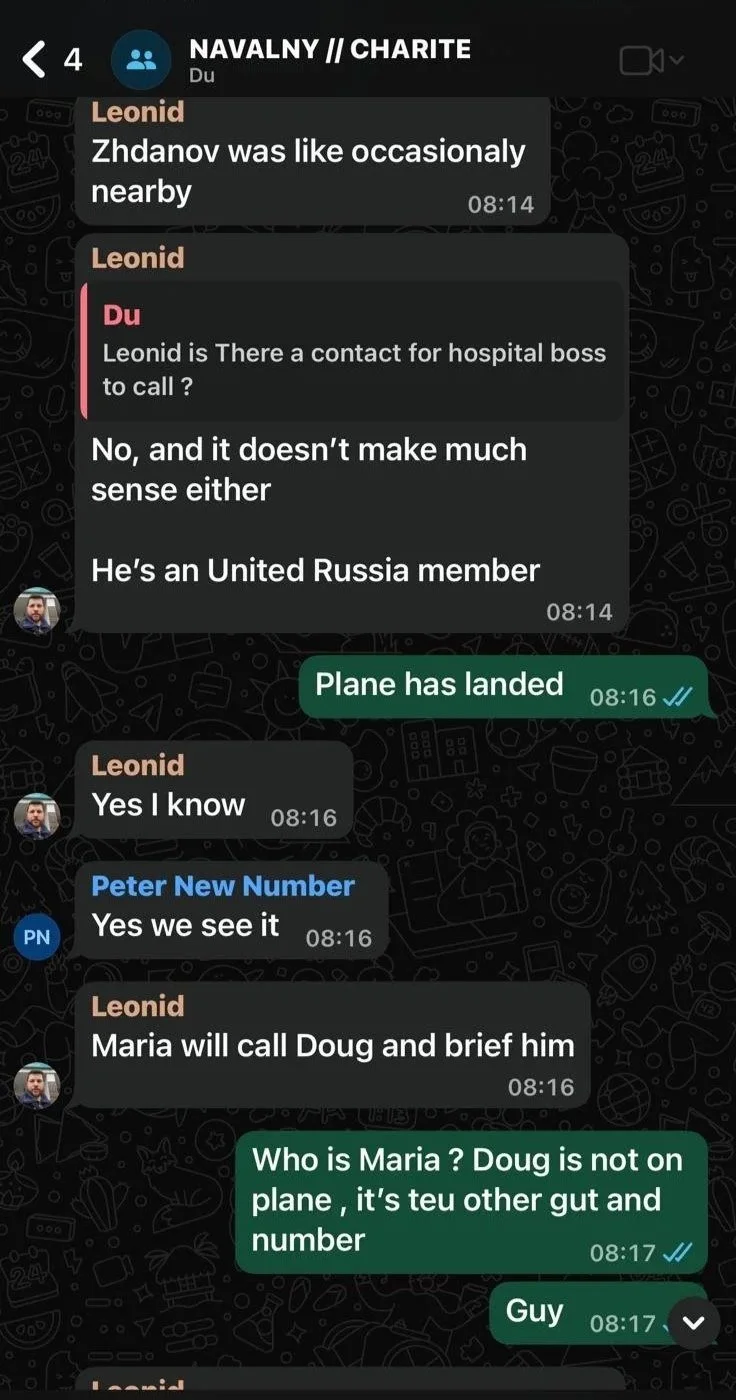
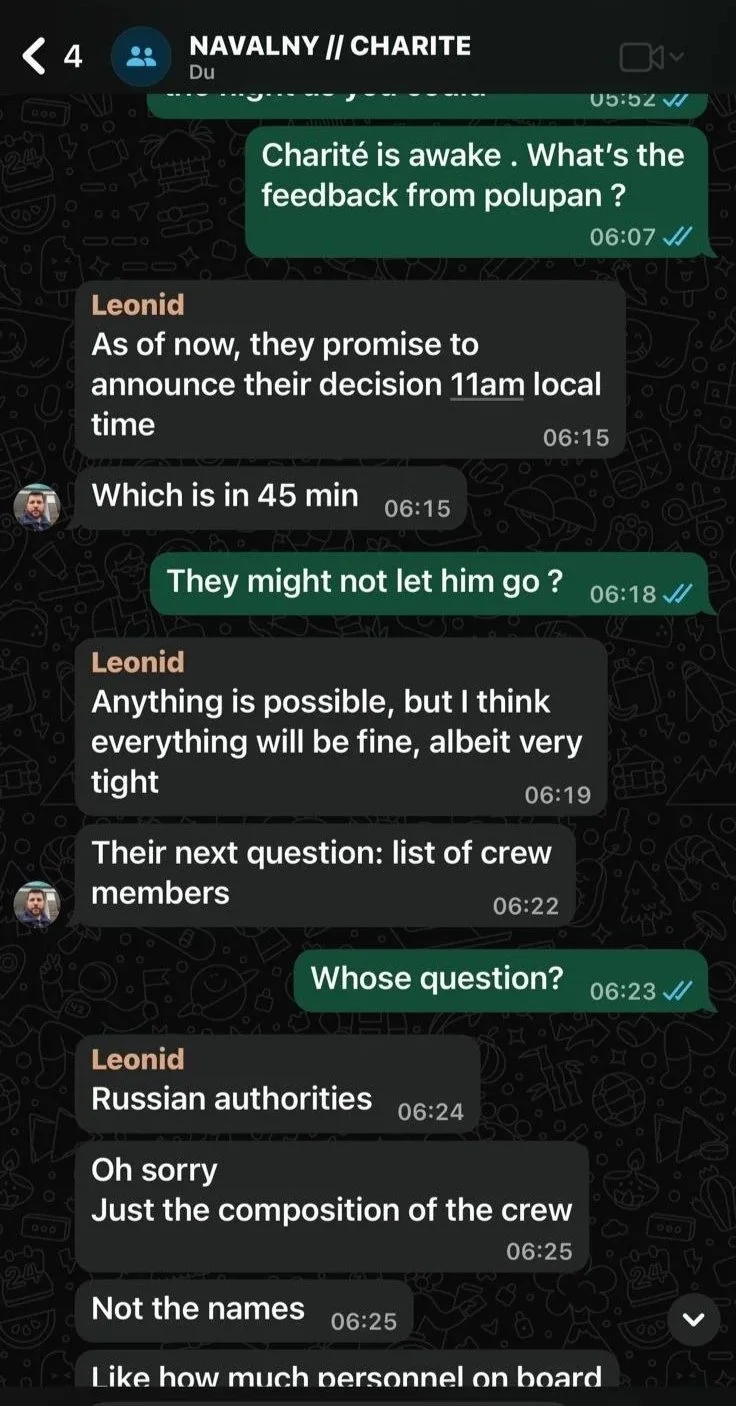
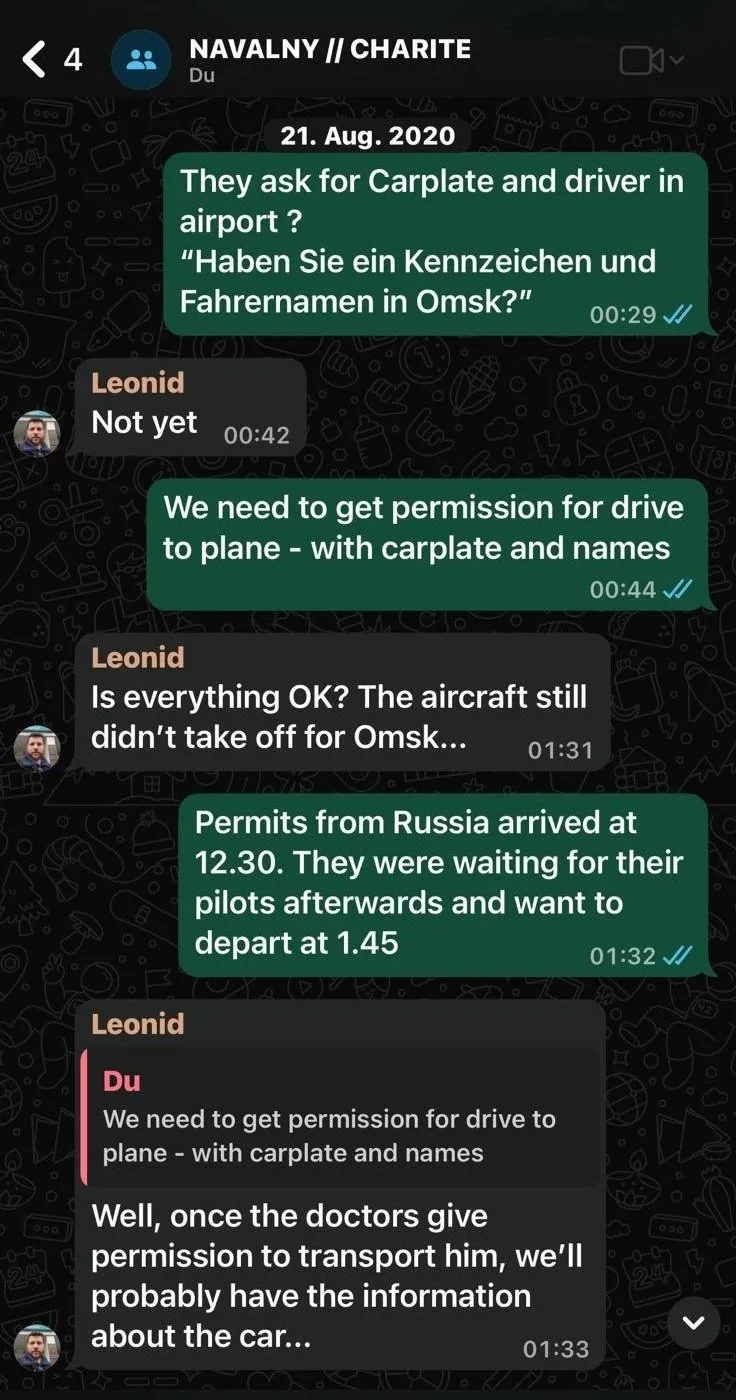
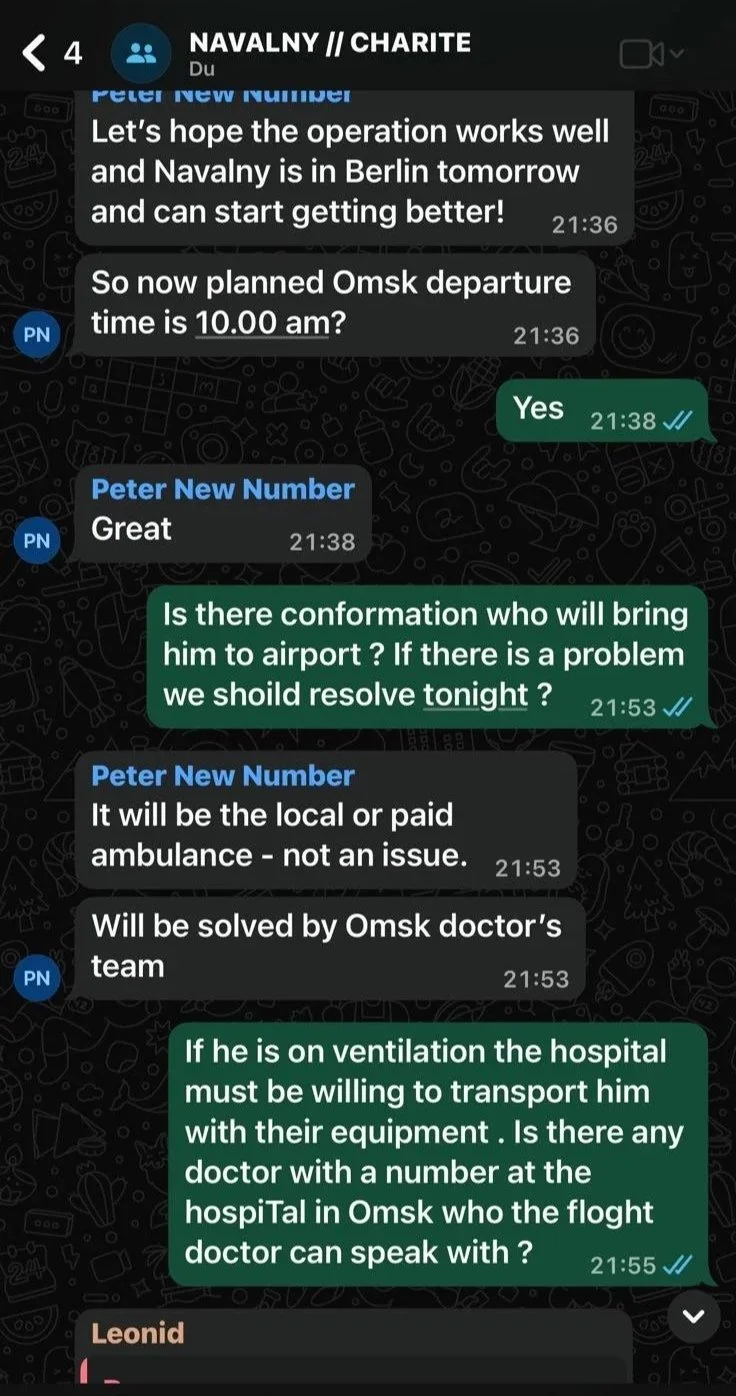
Before the plane landed, I demanded the registration number of Navalny's medical vehicle on the tarmac as proof that transportation was really on the way - I was met with silence.
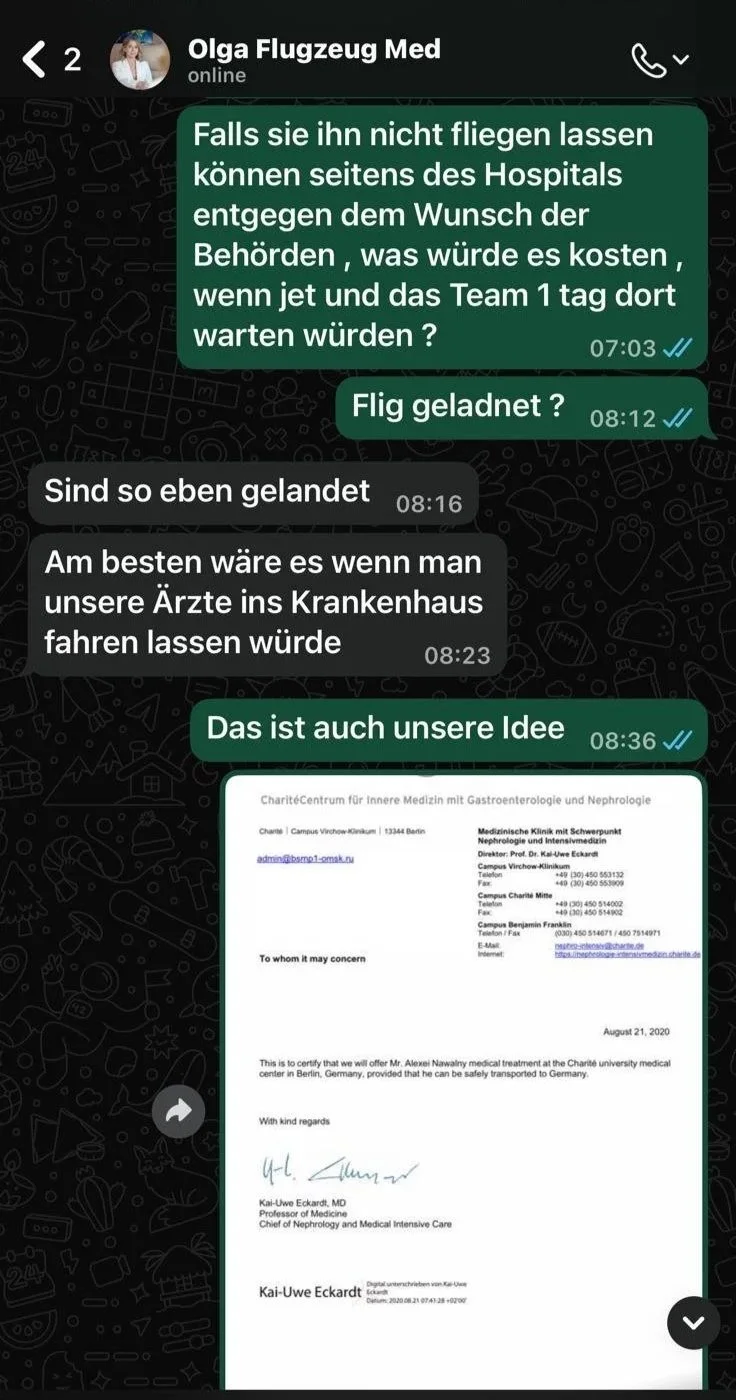
When our plane landed, there was no patient.
The plane had been booked only for a pickup, not to stay and wait.
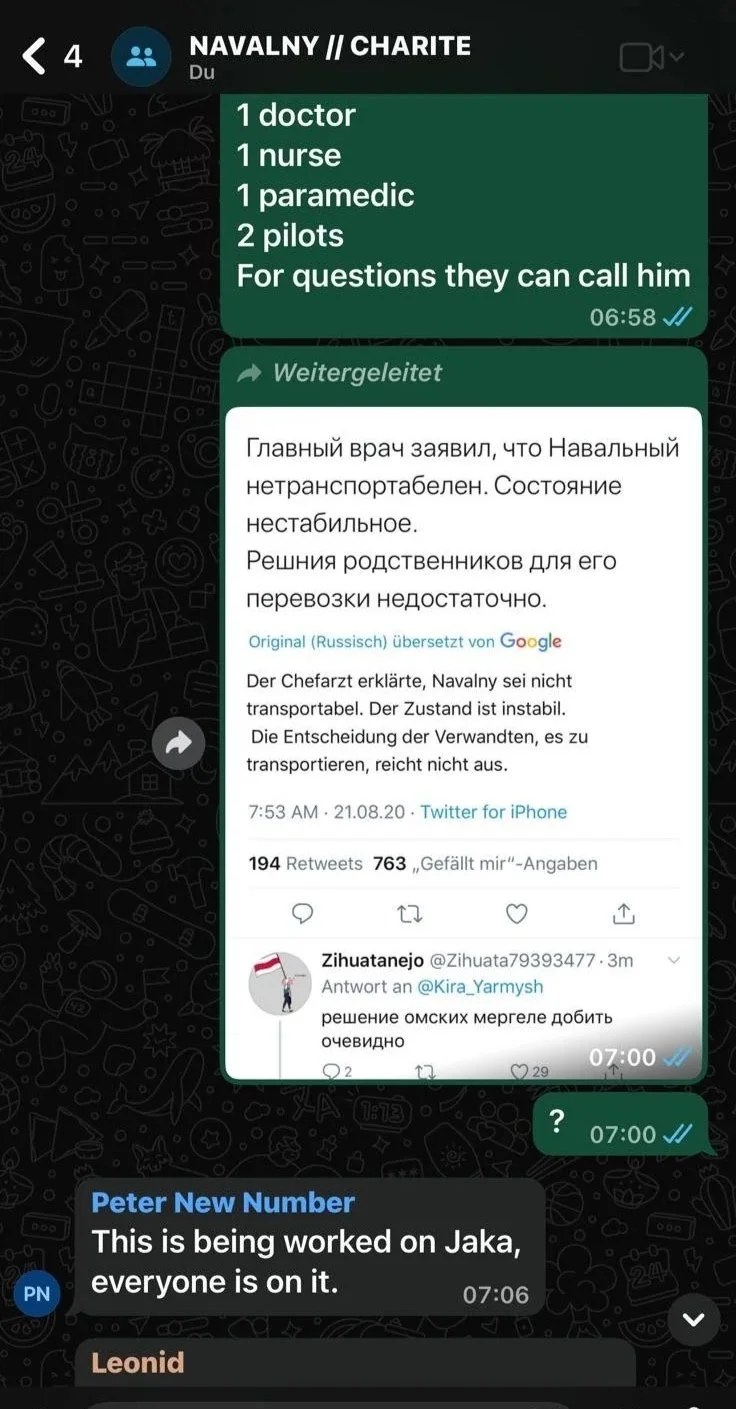
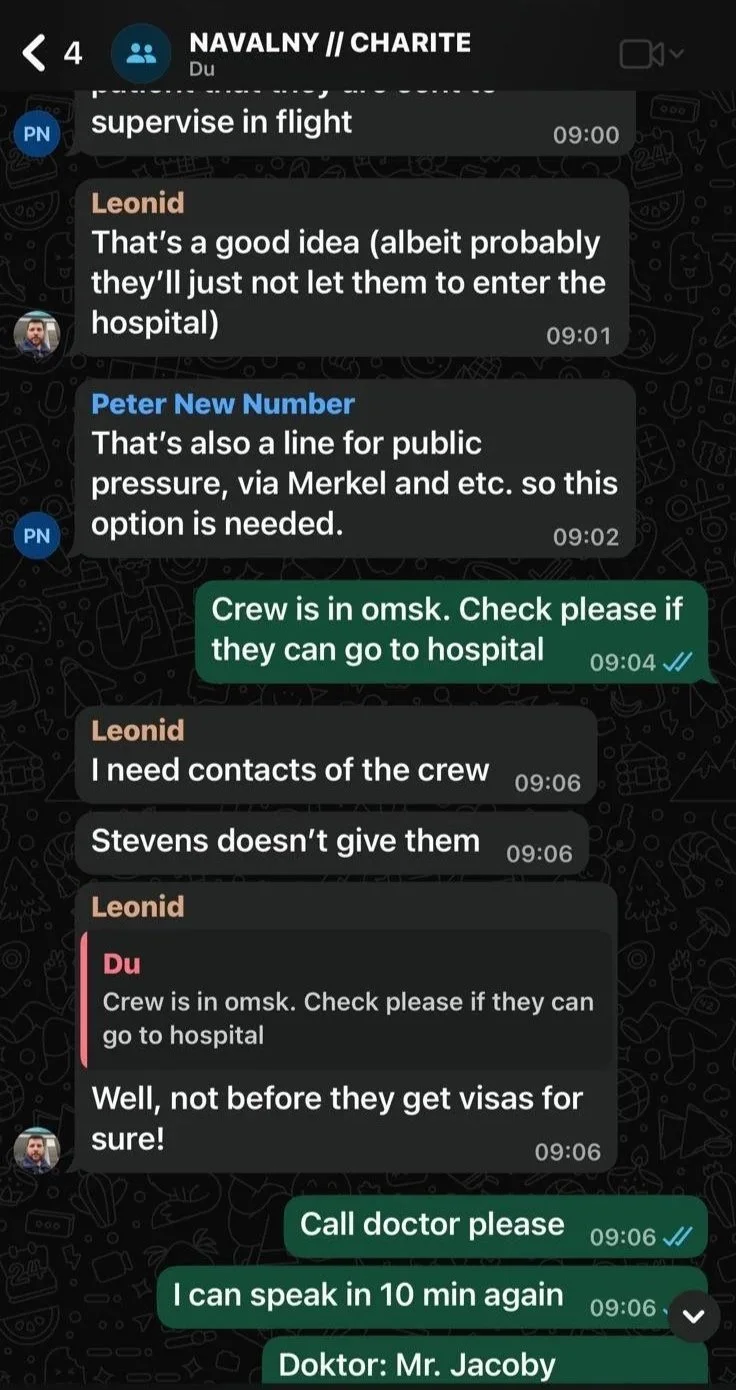
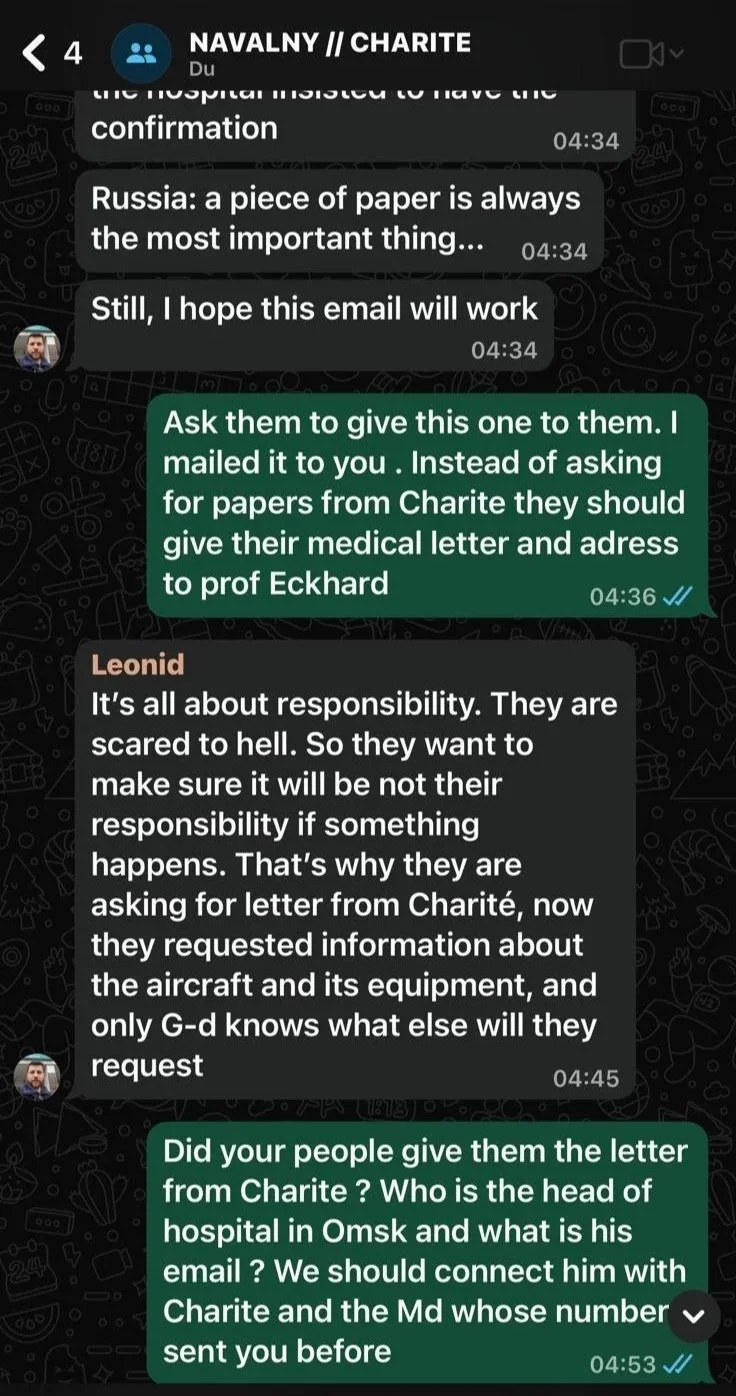
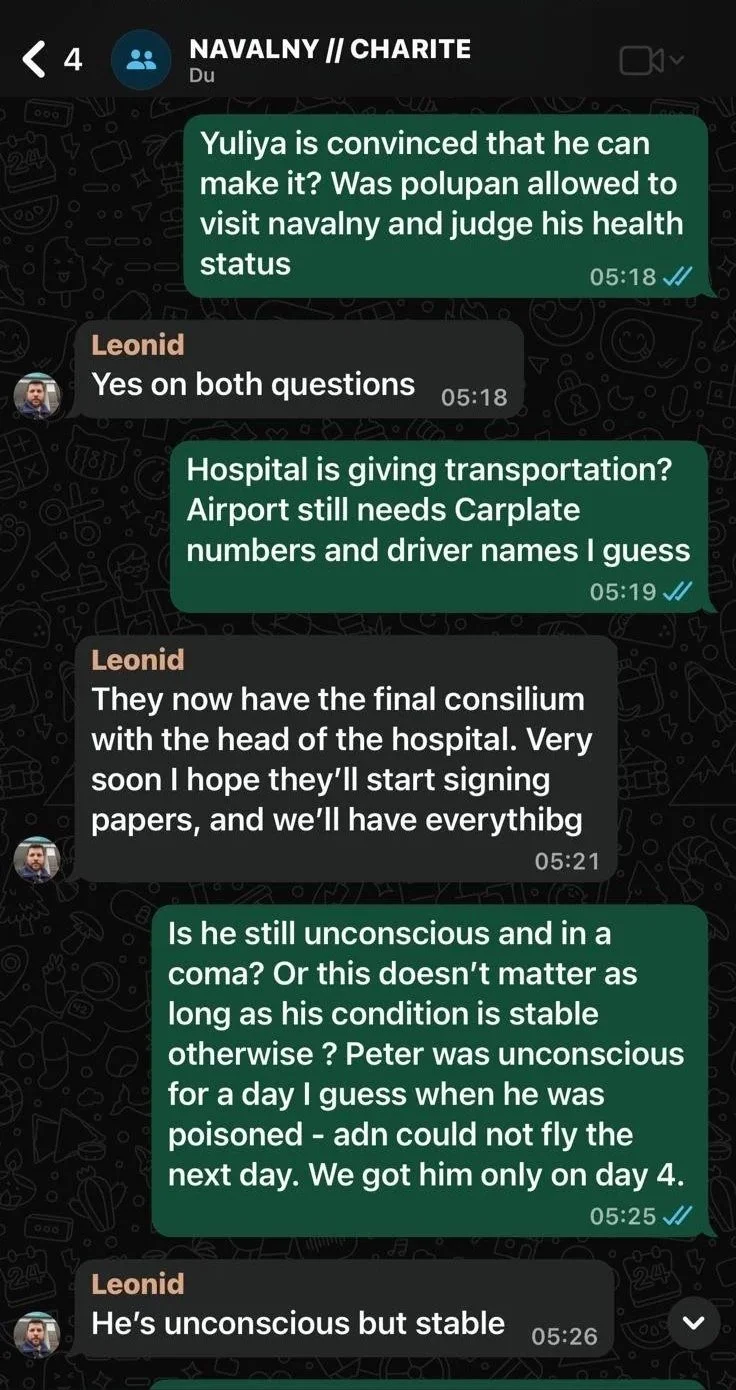
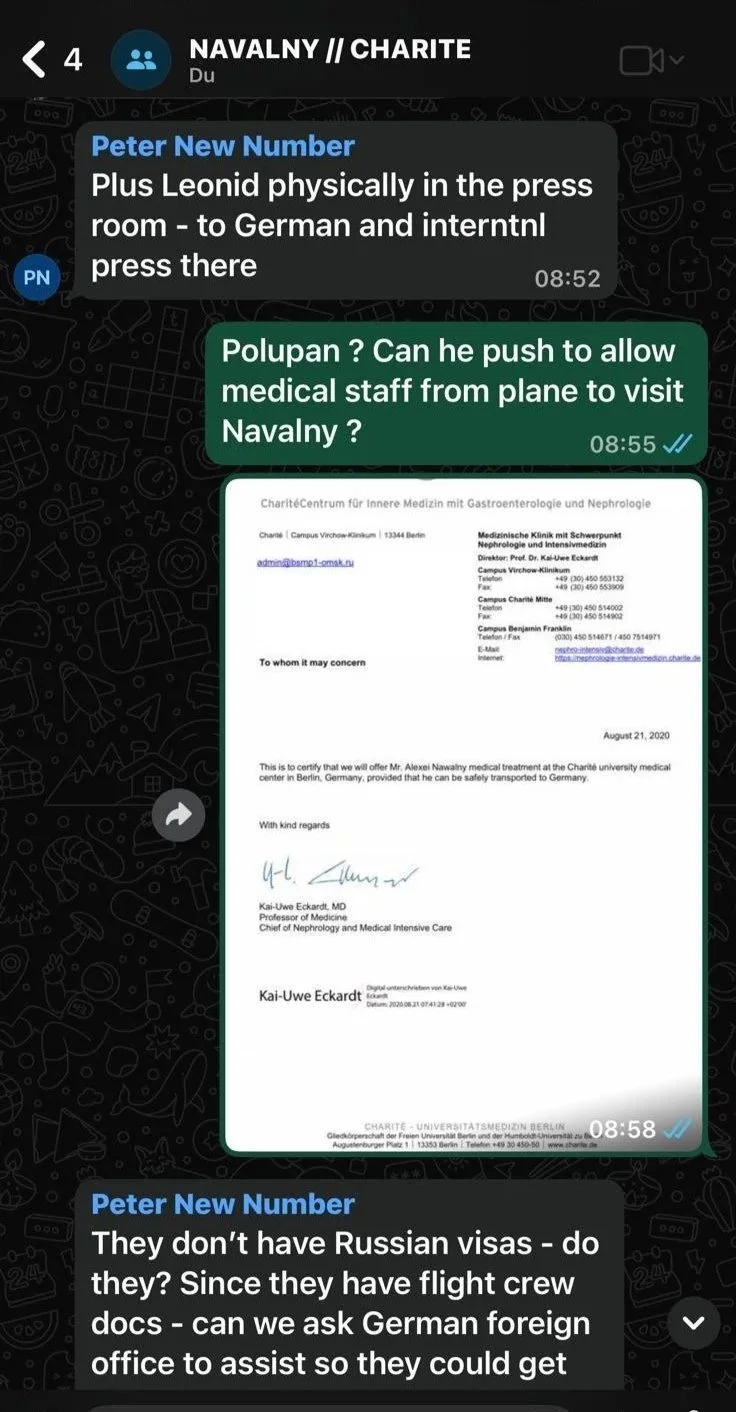
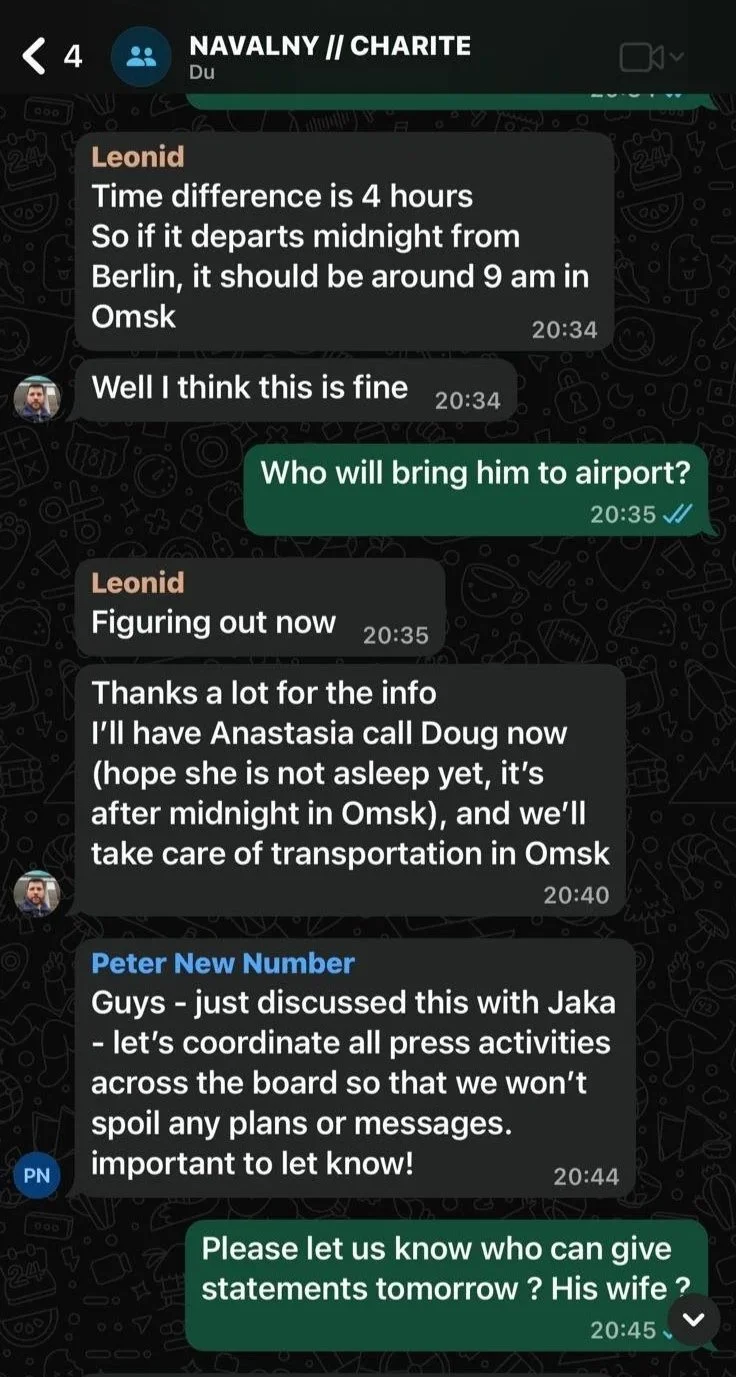
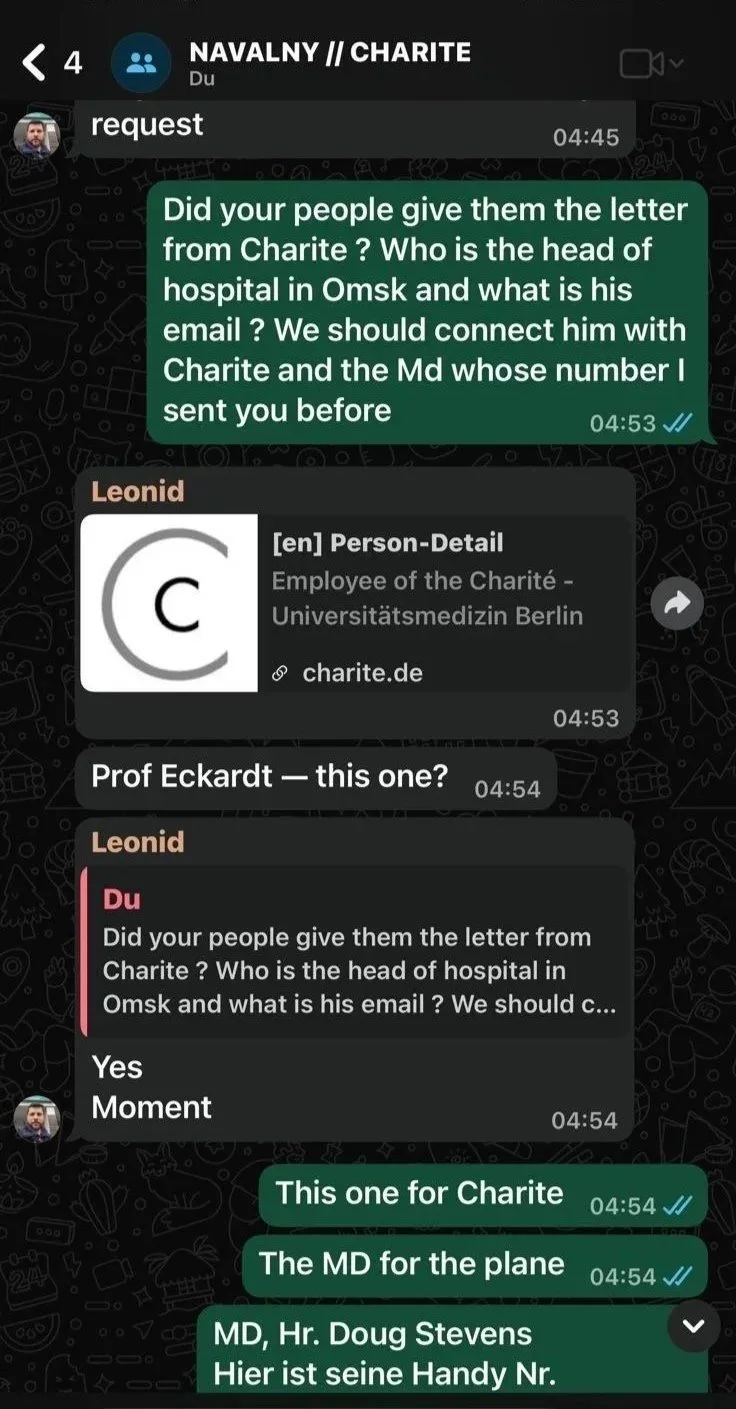
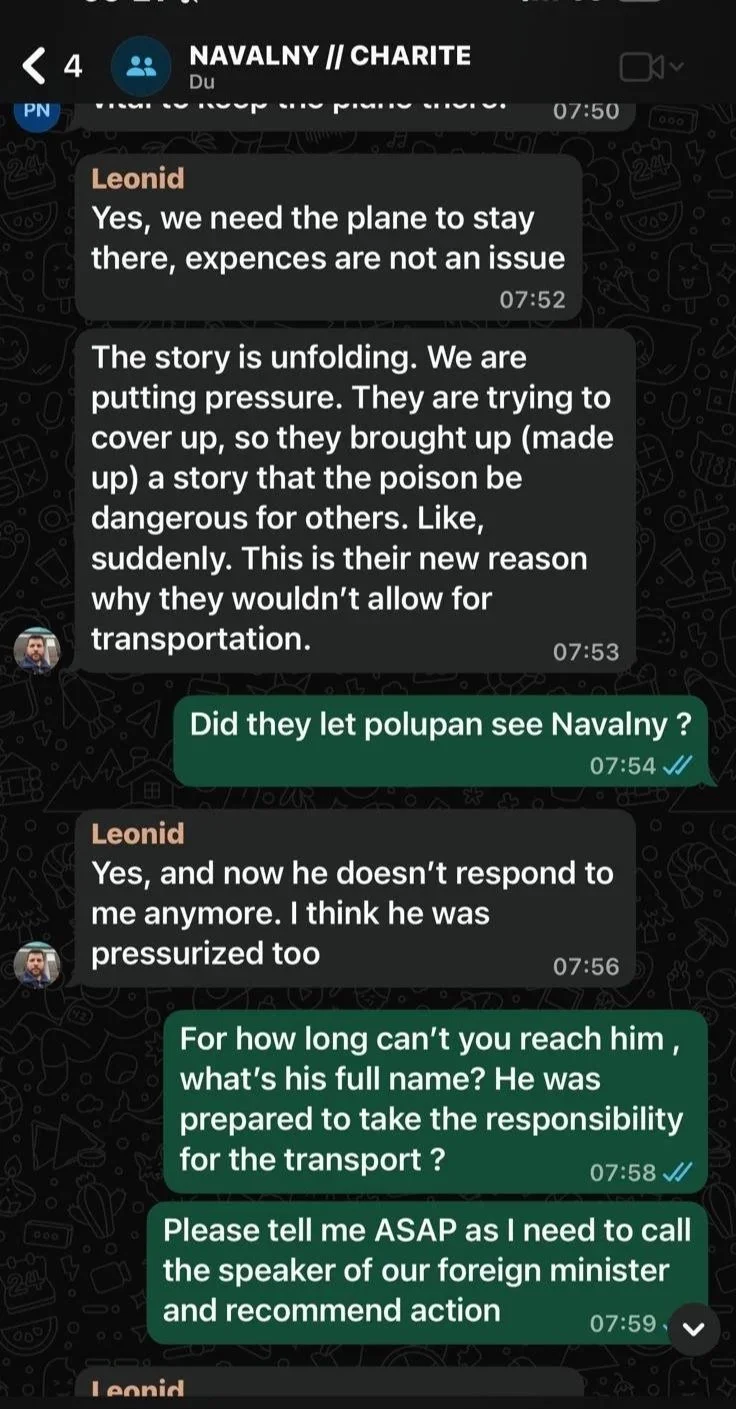
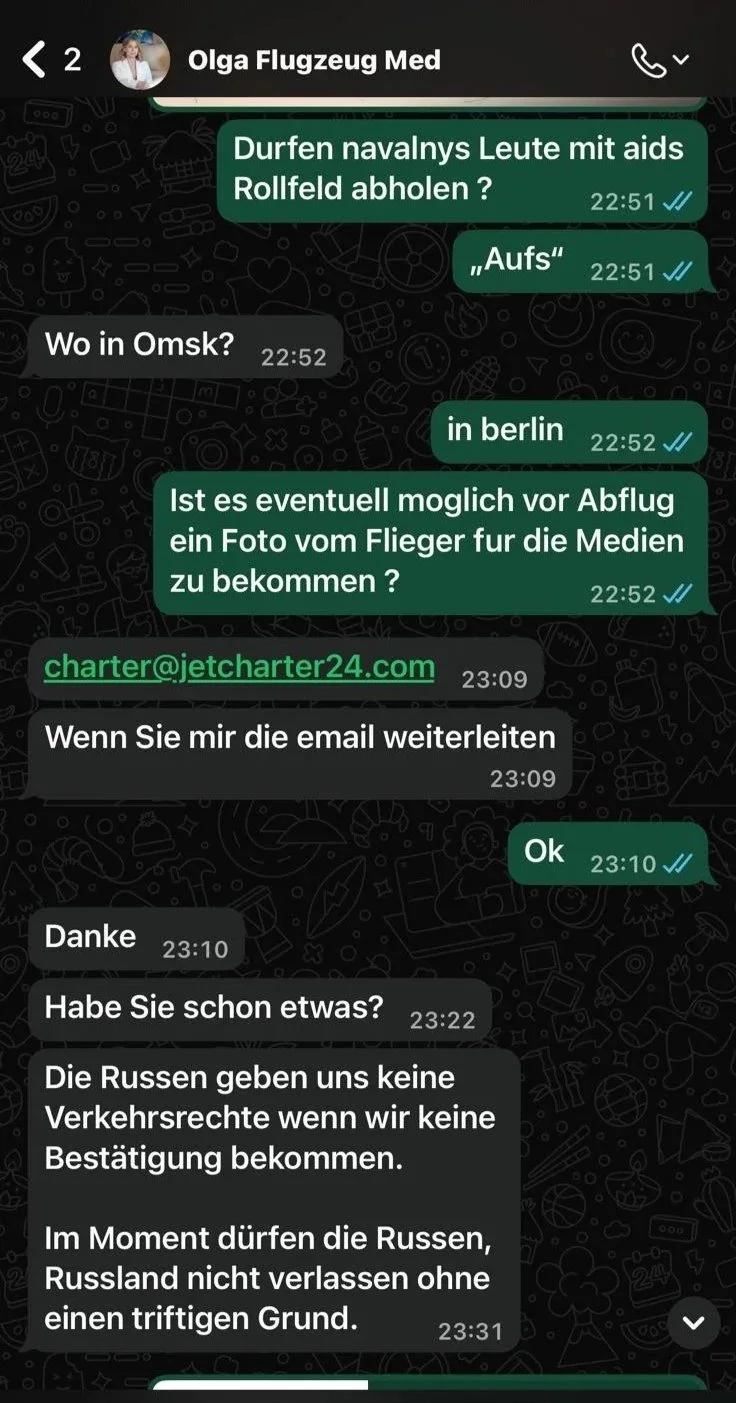
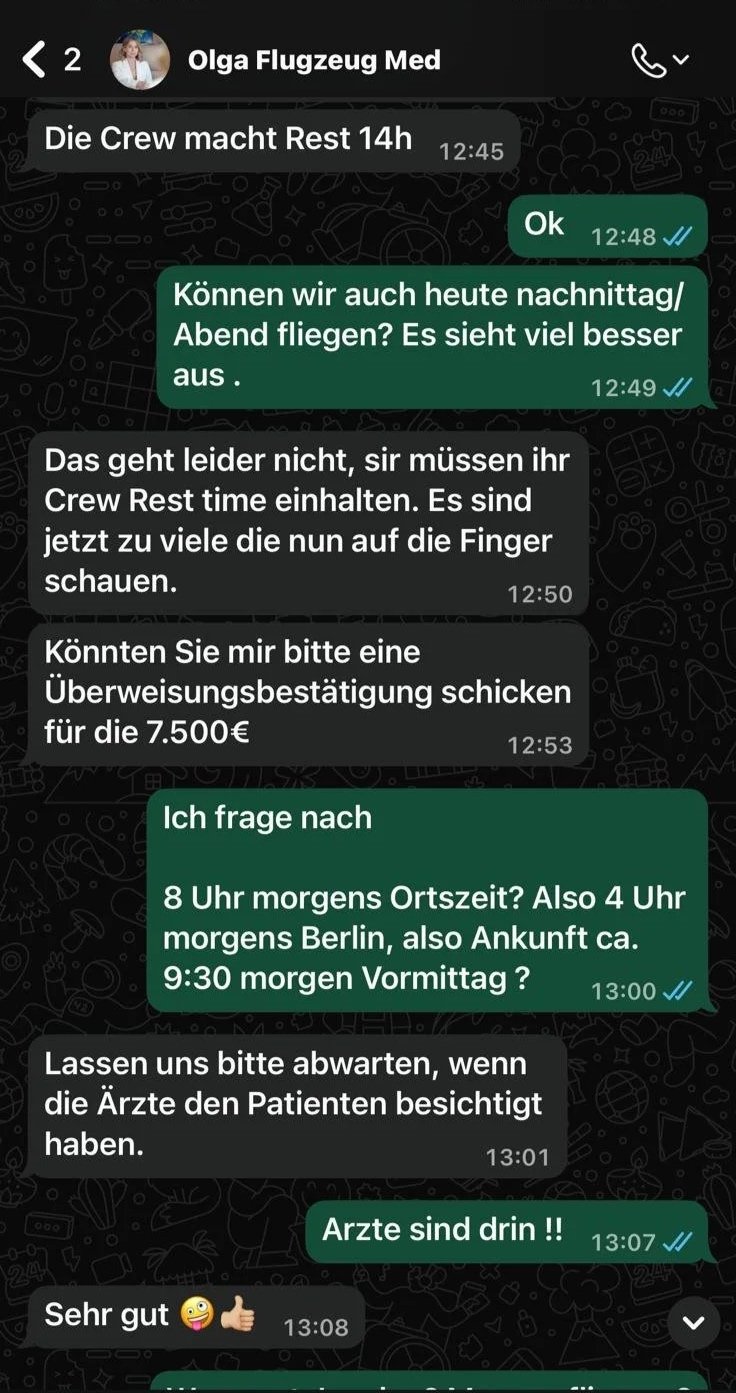
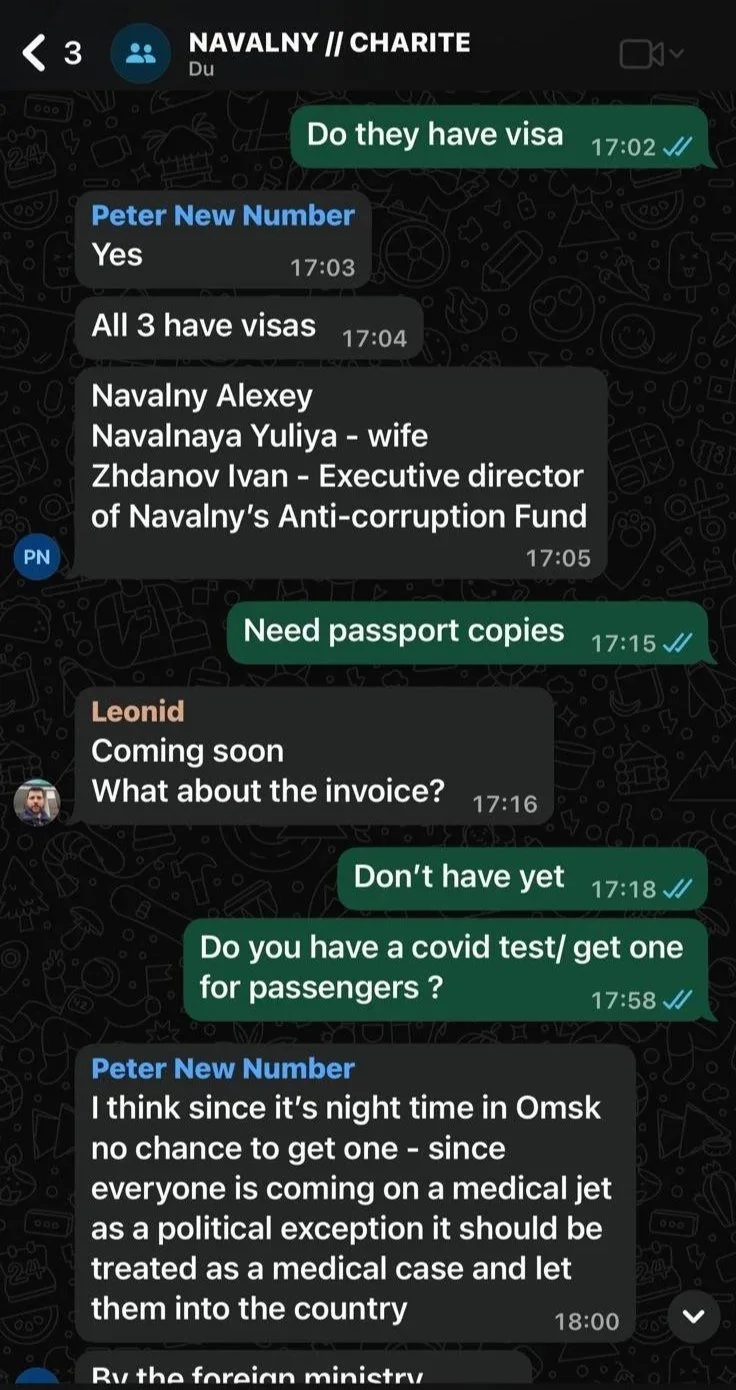
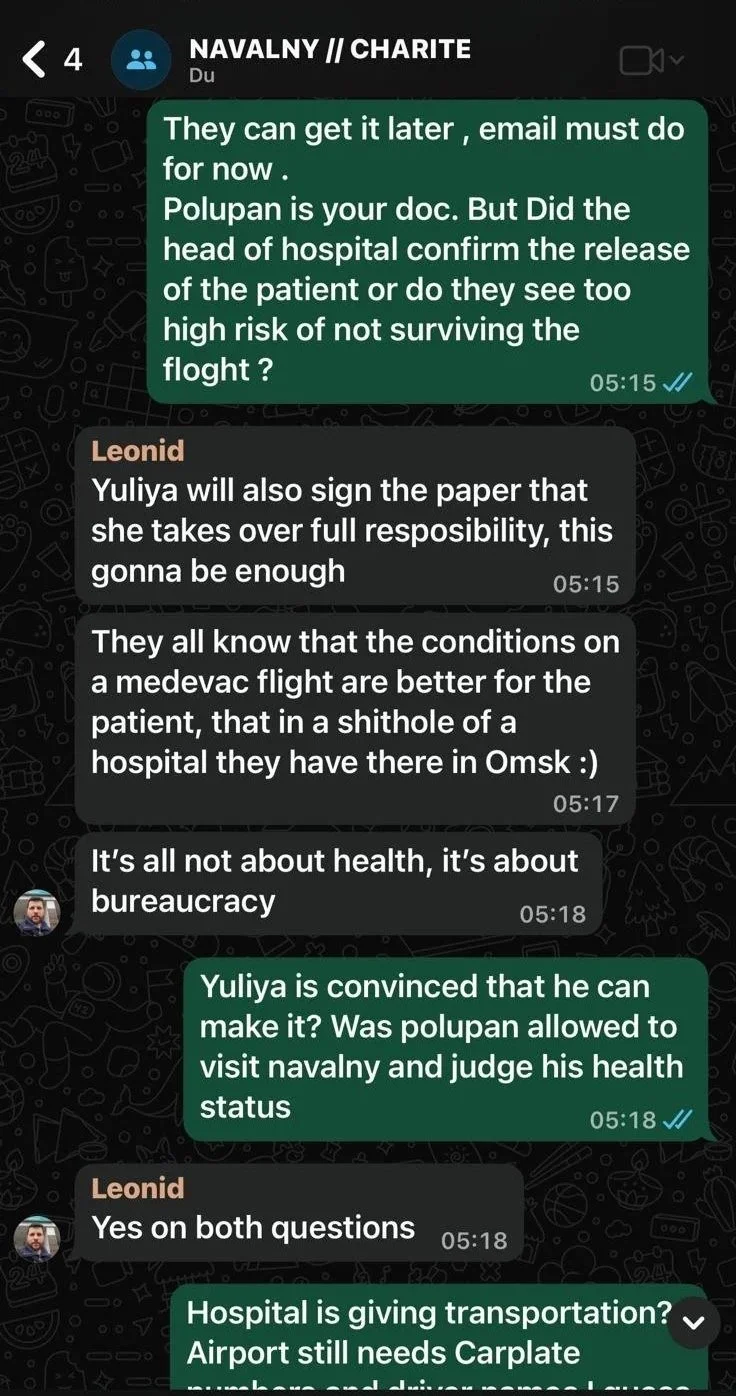
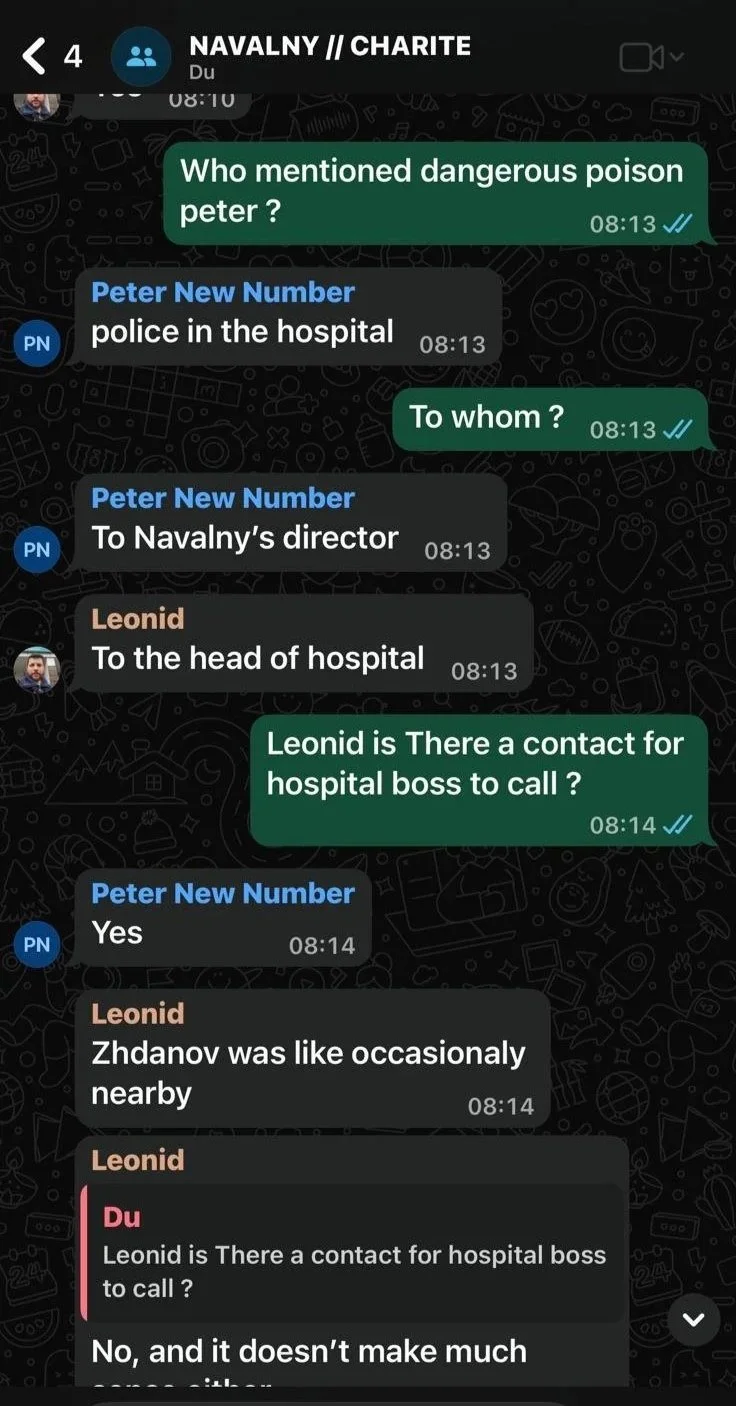
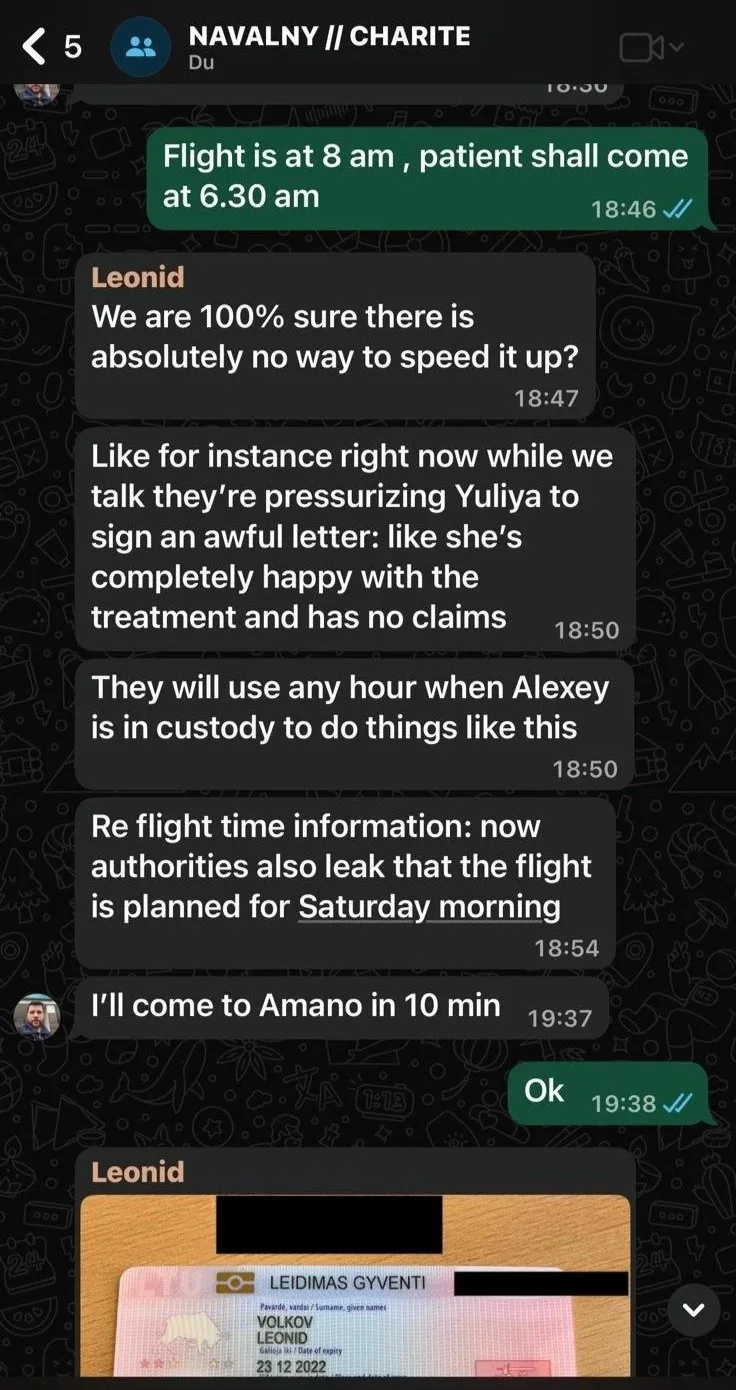
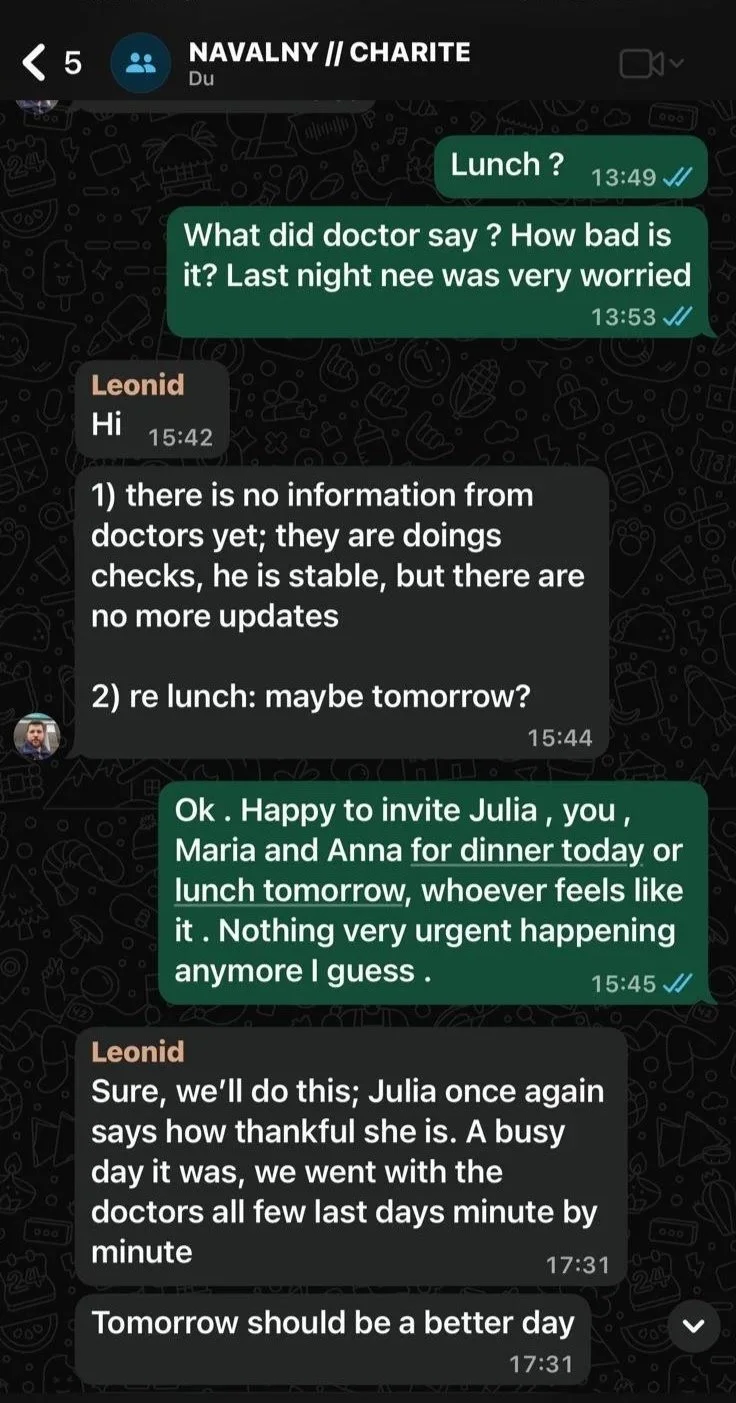
The Russian doctors declared Navalny unfit for transport. His condition was deemed unstable. The Omsk hospital refused to release him. The toxicologist who had privately confirmed he could fly - Alexander Polupan - suddenly stopped answering calls. Leonid Volkov, Navalny's chief of staff, said it simply: "Their idea is to cover up the poison." The FSB had poisoned him in Tomsk precisely because it was far from everything - far from witnesses, far from specialists, far from the world. And now they wanted to keep him there. I activated all our networks, contacting everyone who had any connection to Russia. My argument was simple: tell Putin this is the best option for him to prove that he did not try to kill Navalny.
The Russian doctors' claim that the flight would kill him was the political cover for blocking the transfer.
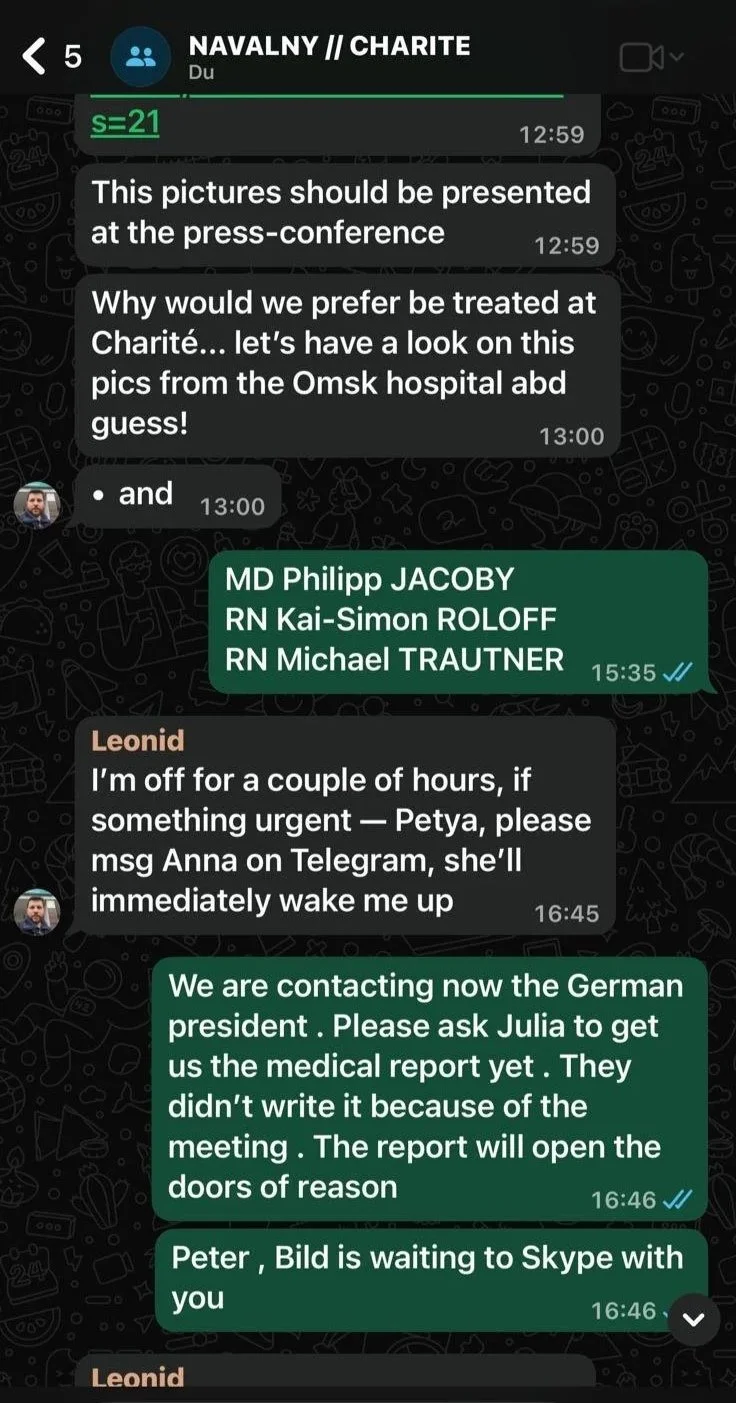
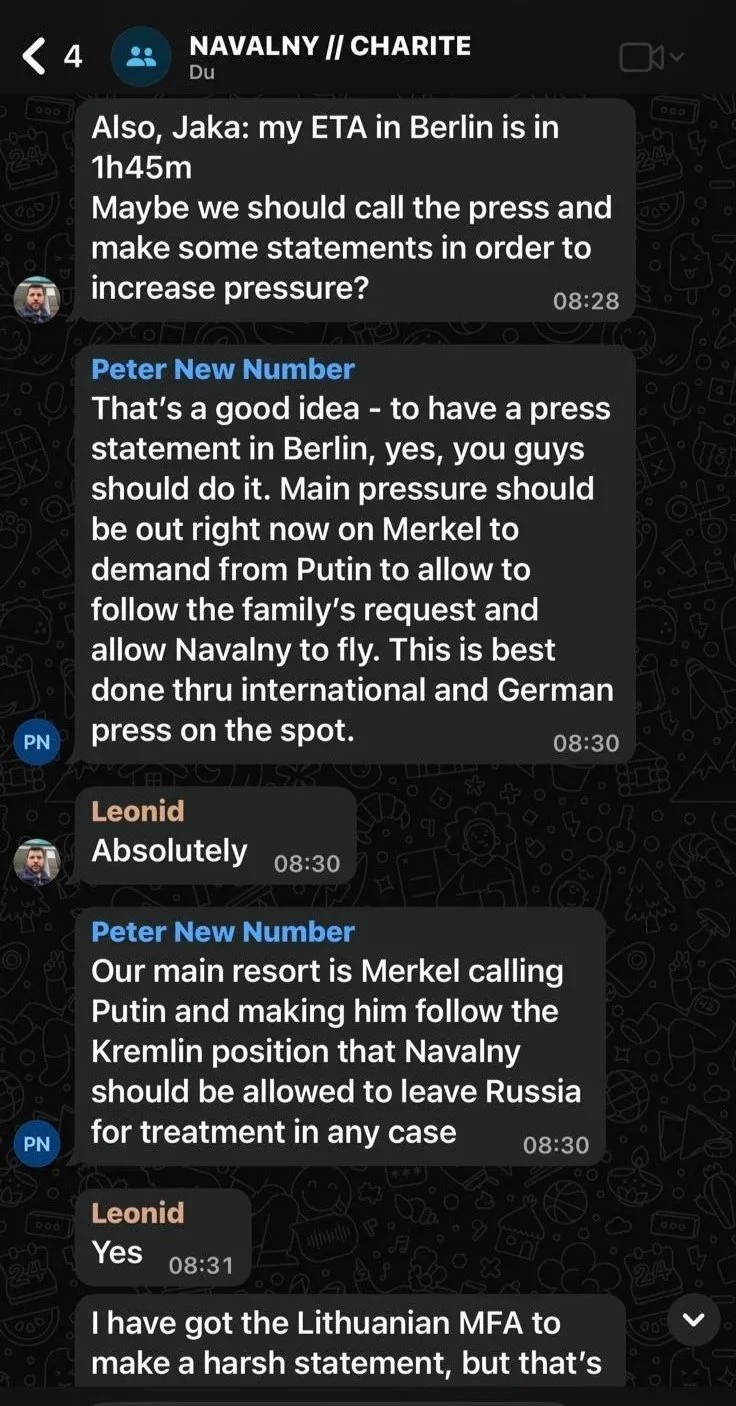
I organised an ad hoc press conference in Berlin and gave Volkov a fresh shirt at my home, as he had driven through the night from the Baltic states to Berlin. We tried to create as much media pressure as possible - to motivate politicians to act, to keep them updated, to keep the spotlight burning on Omsk so the plane would not leave empty. I told the crew of the plane and the company: under no circumstances leave without the patient - no matter what it cost. My instincts told me: once the emergency plane left without the patient, Navalny would die in Omsk.
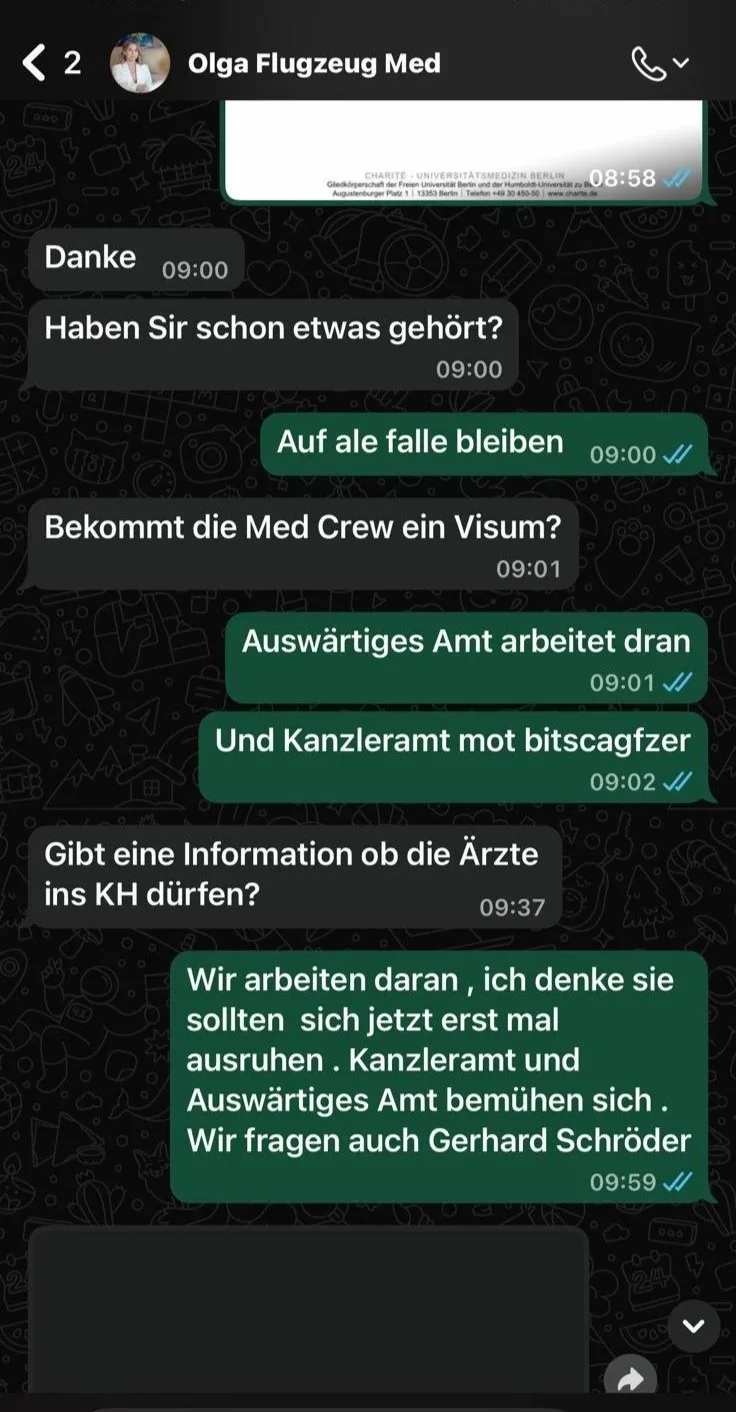
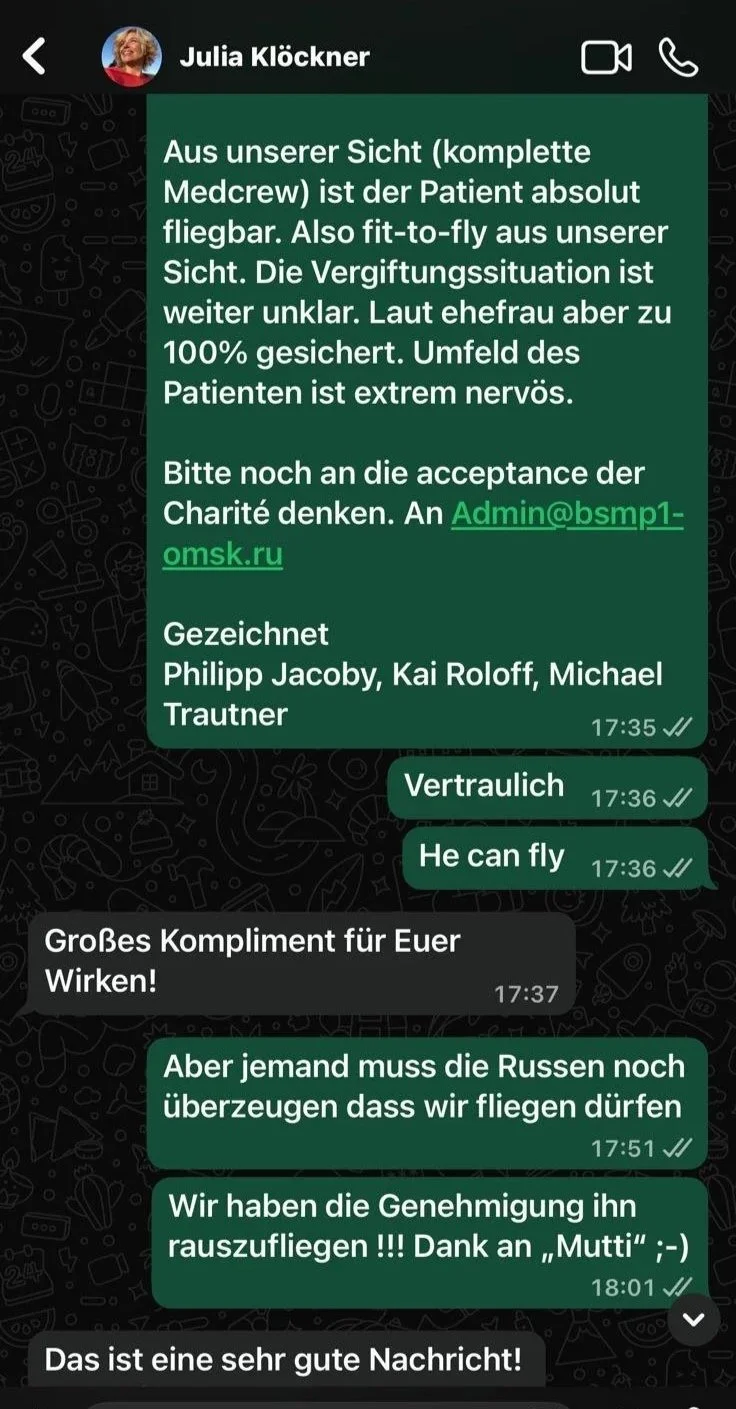
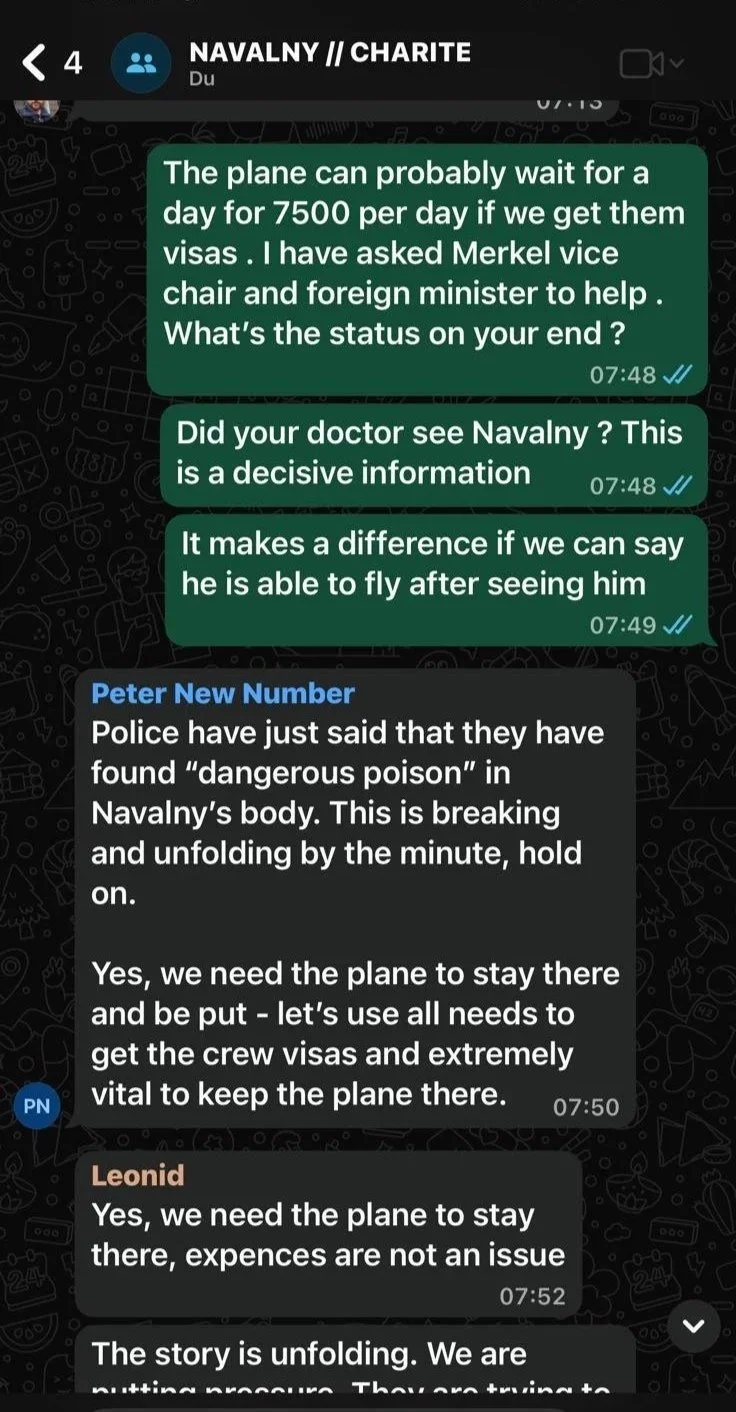
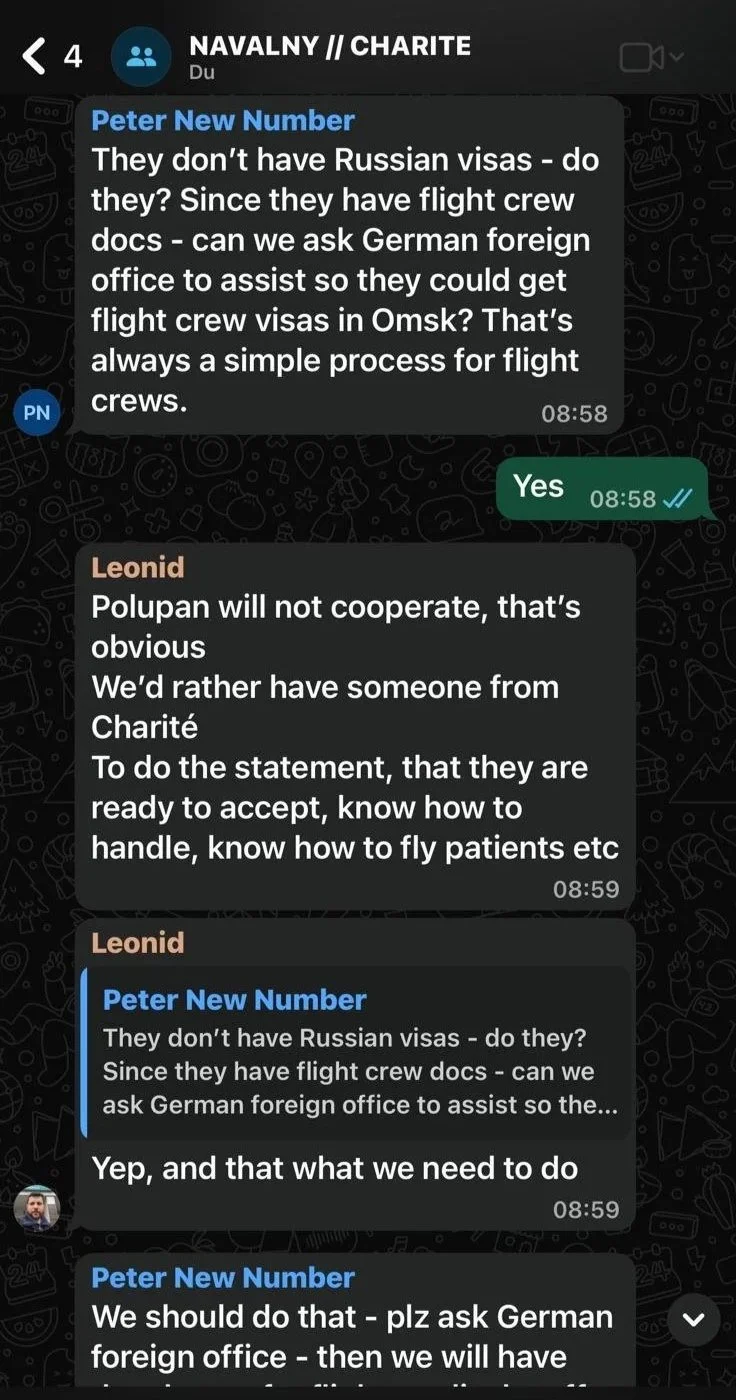
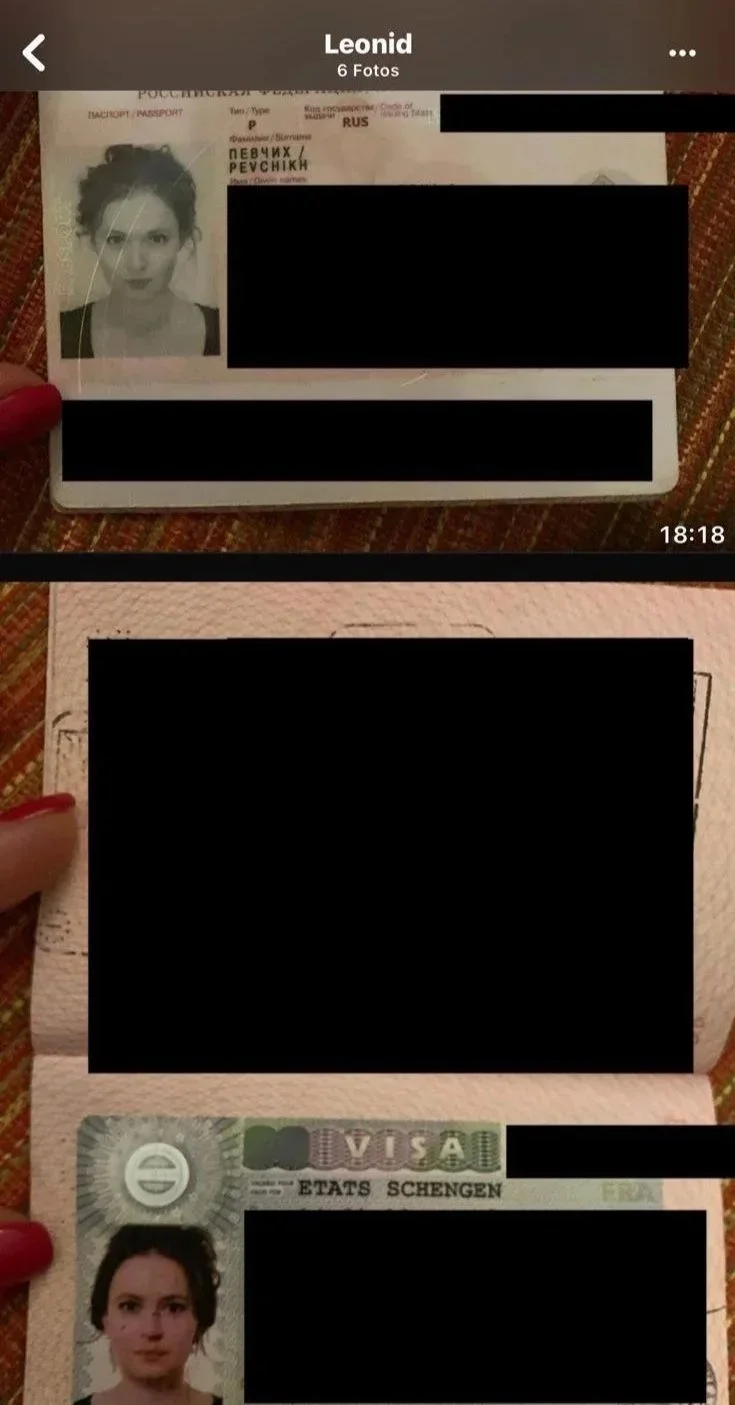
I asked the German government to intervene - to help get the medical crew's visas so that they could visit Navalny in hospital and examine him - and to apply political pressure. The communication to Merkel went through Julia Klöckner, a friend for 30 years, and the current President of the German Parliament.
Every hour the plane sat on the Omsk tarmac without Navalny on board was an hour in which the patient and the momentum could be lost.
Yulia Navalnaya was not permitted to see her husband any more. The hospital had turned from a medical facility with staff in white coats into a high-security prison with military personnel and armed officers - it was guarded like a high-security prison, with soldiers at the entrance. She could no longer get to her husband.
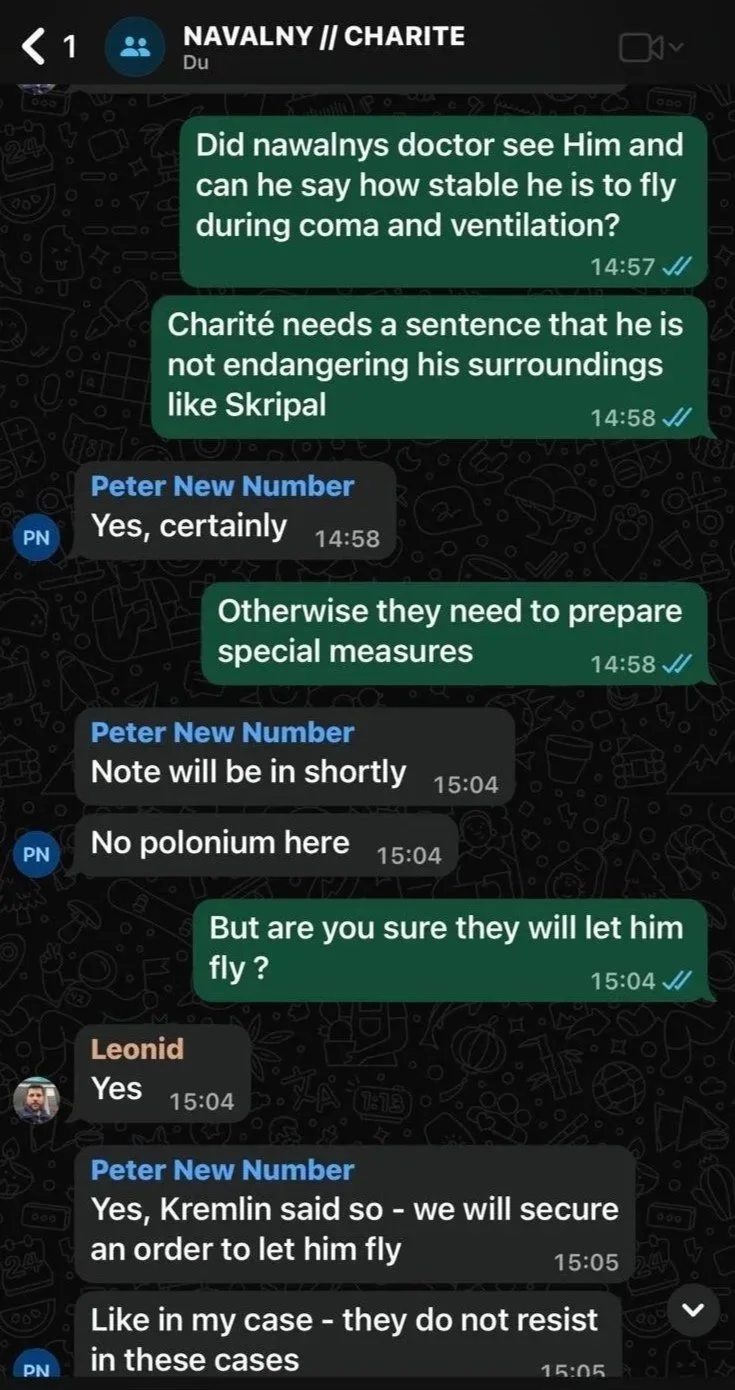
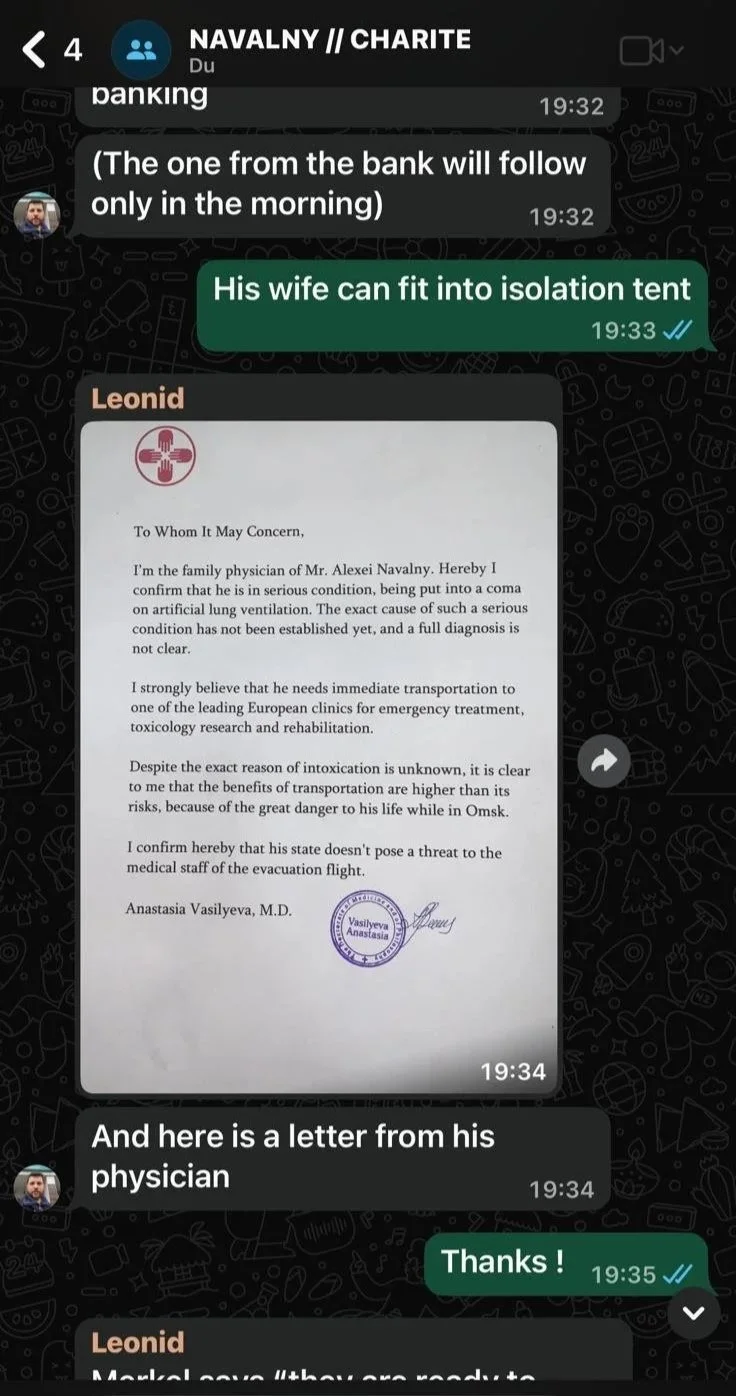
I had to secure the crucial permission for the doctors to examine the patient for a "Fit to Fly" evaluation, as the Russian doctors claimed he would die on a plane.
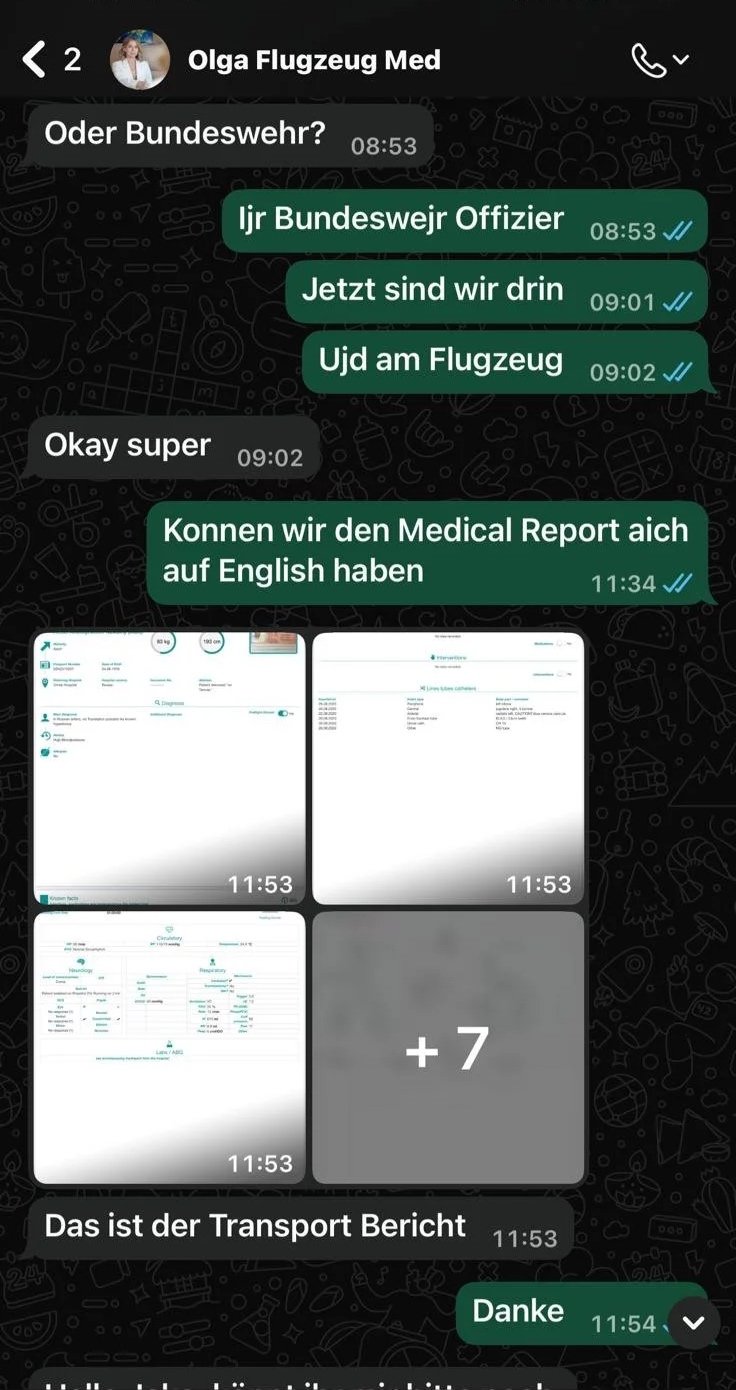
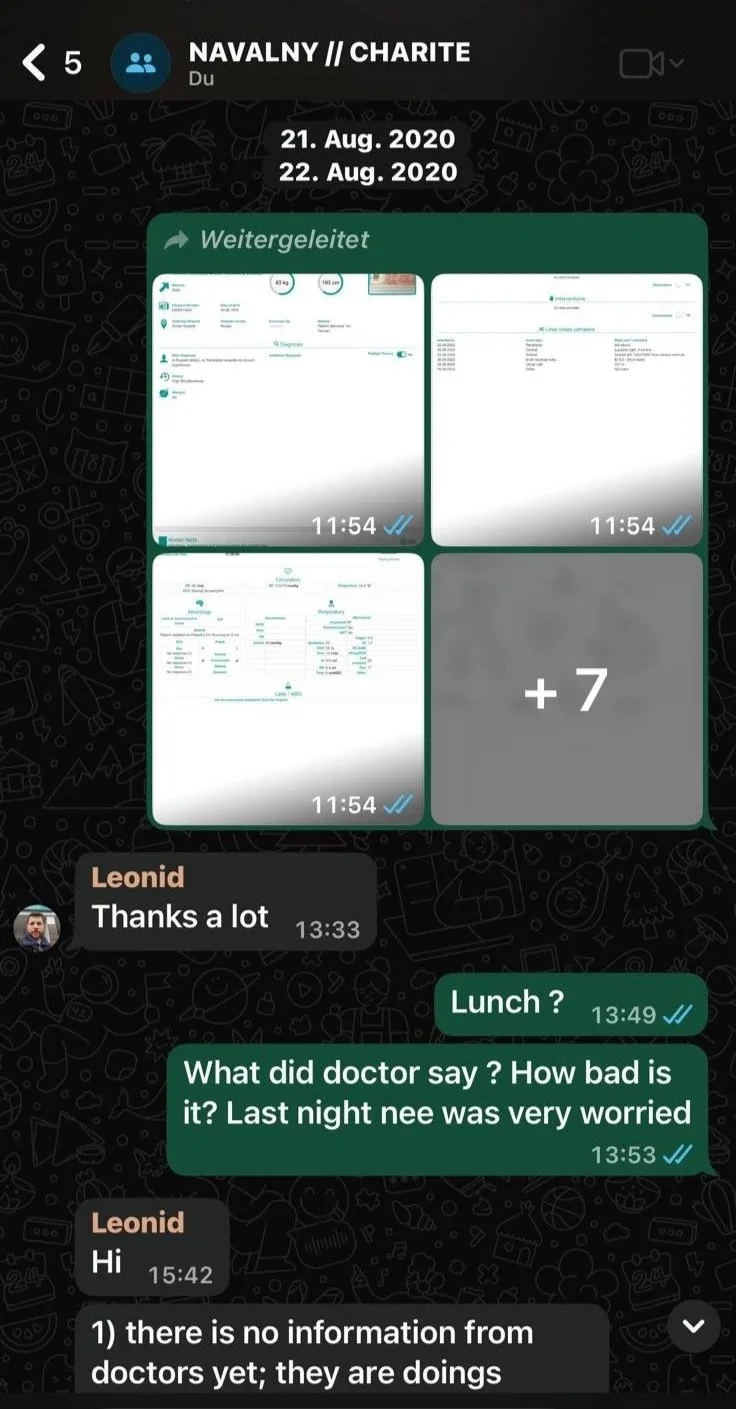
When I succeeded in getting the "Fit to Fly" evaluation conducted, I was shocked: I had never seen a human being with such a low body temperature. When they sent me the medical reports, I spoke directly with the Charité doctors. They told me: "Mr Bizilj, the patient is in a very, very, very serious condition."
I had to make a decision. If he flew, he might die on the plane. The Russian doctors were insisting on exactly that - that the flight itself would kill him. Was I to let Putin's number one enemy, the world's most famous dissident, die on my watch? Could I bear such responsibility?
I said we had to follow the wishes of his wife. Yulia had made it clear: he needed to fly out under any circumstances.
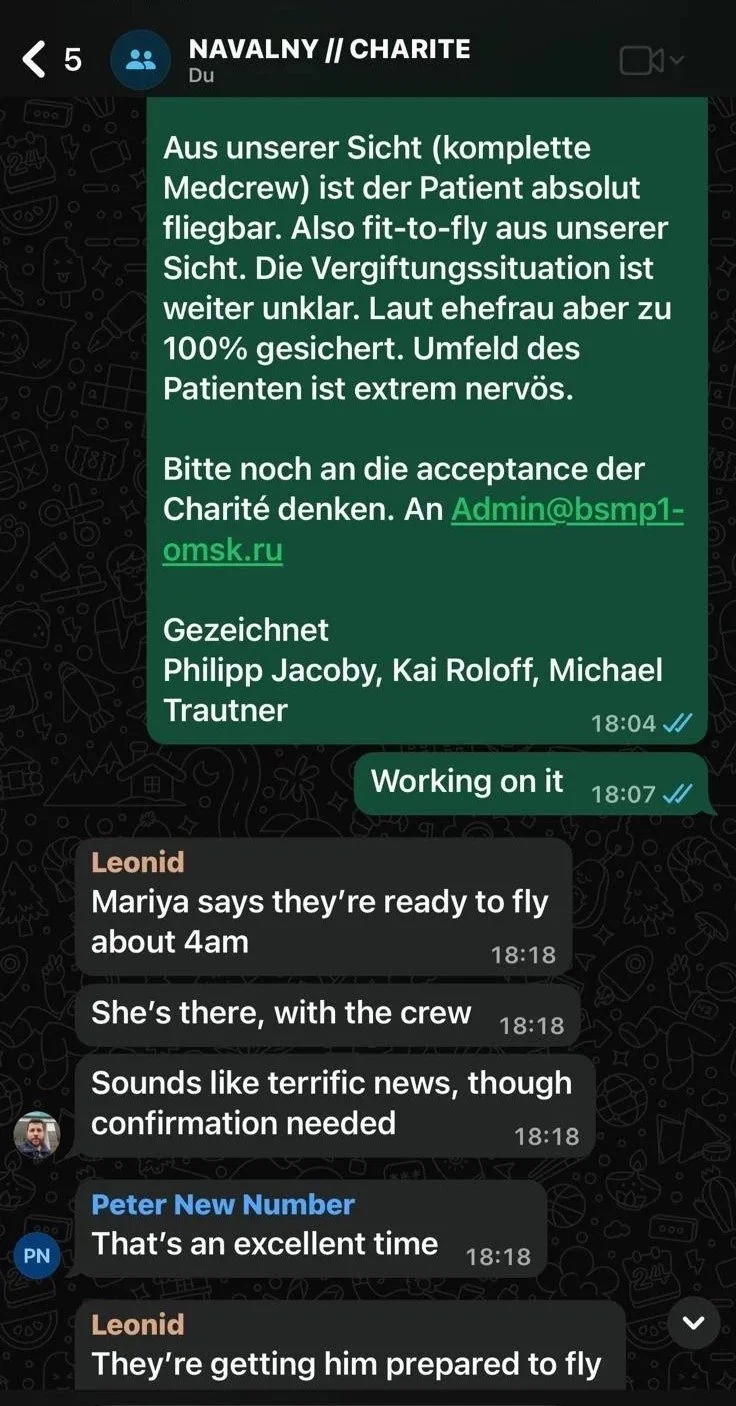
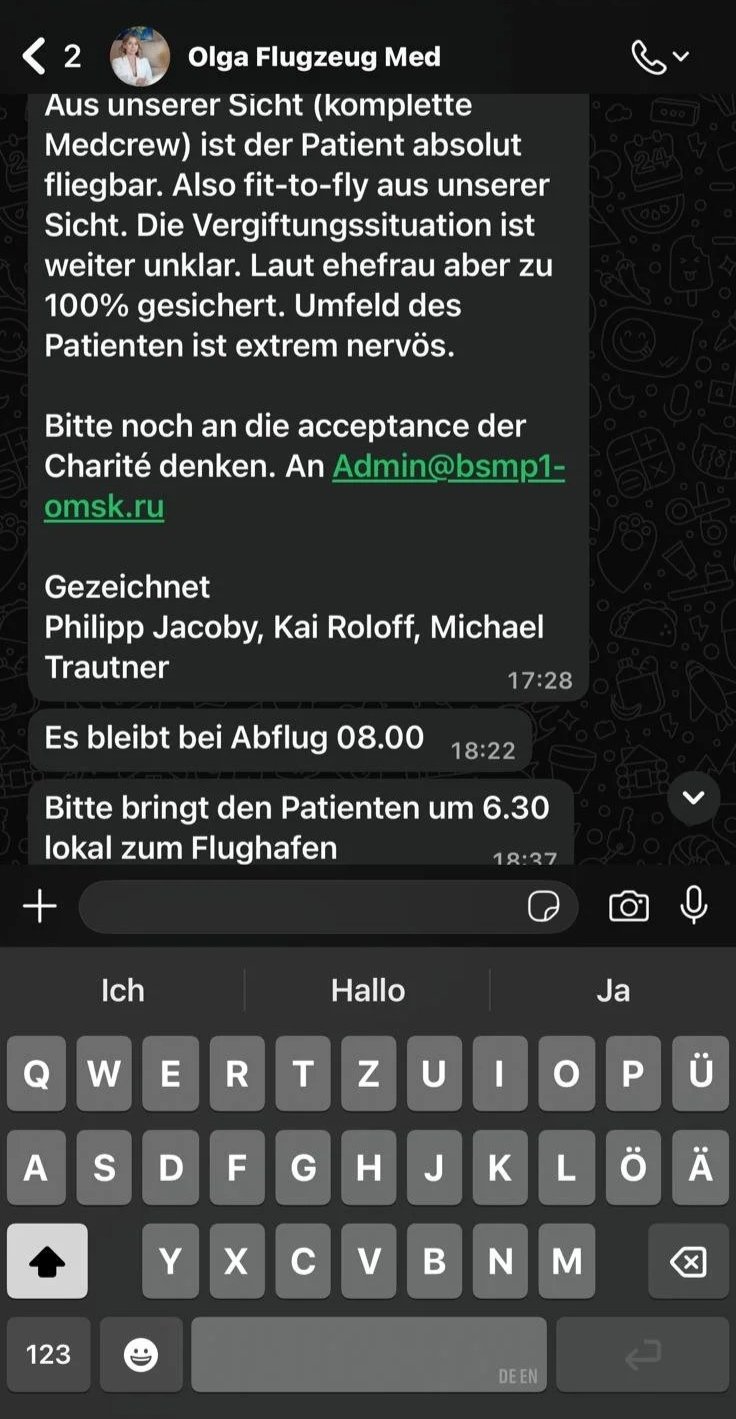
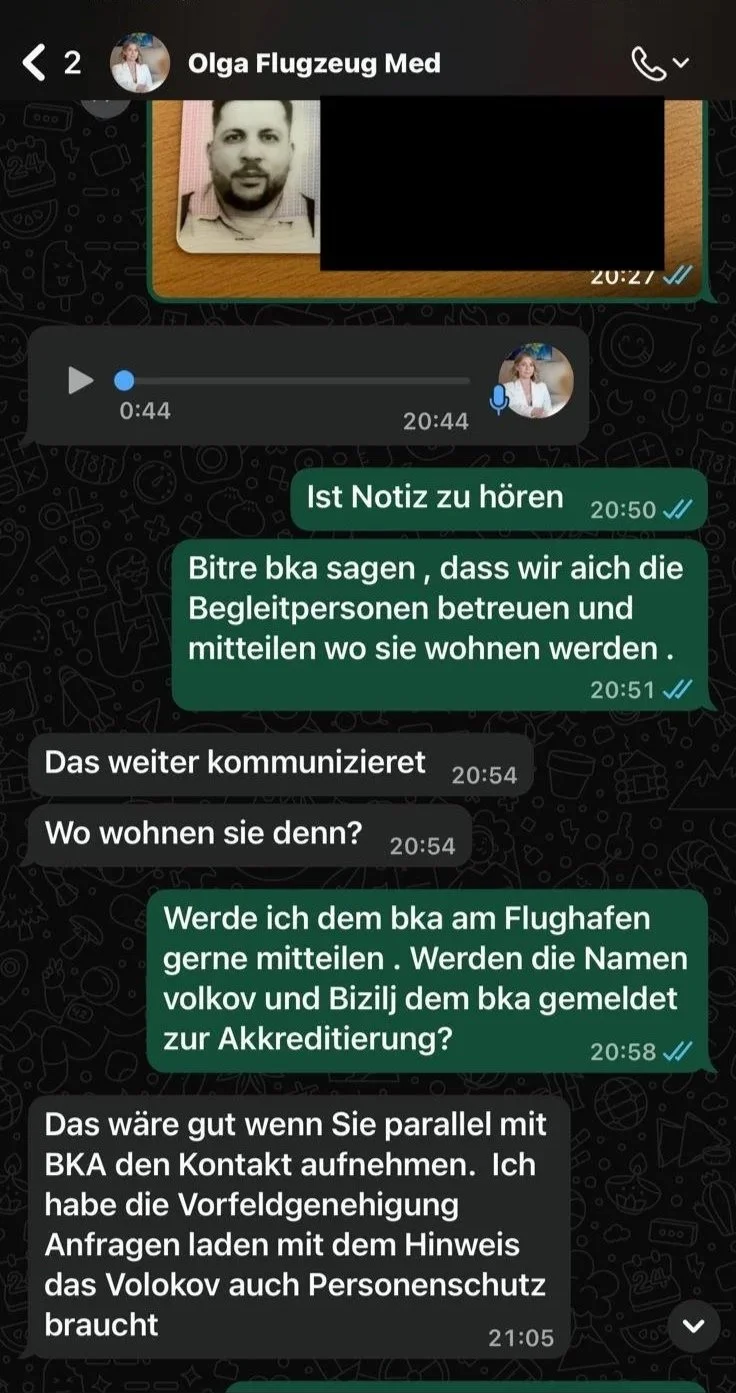
Our medical team - Dr. Philipp Jakoby, Kai-Simon Roloff, and Michael Trautner - conducted their final assessment in Omsk: "Aus unserer Sicht ist der Patient absolut fliegbar." I learned that flying does not make a huge difference if you are in a critical condition; you can die in a hospital just as easily as on a plane.
As we learned later, Russian agents were travelling at this time between Omsk and a chemical laboratory from Soviet times - probably checking whether any poison could be traced in Navalny's blood. It appeared as if they had to give the green light once no evidence existed - and so we finally received clearance to fly him out. I confirmed the flight slots and the impossible was becoming possible: the medical evacuation was bringing Navalny to Berlin!
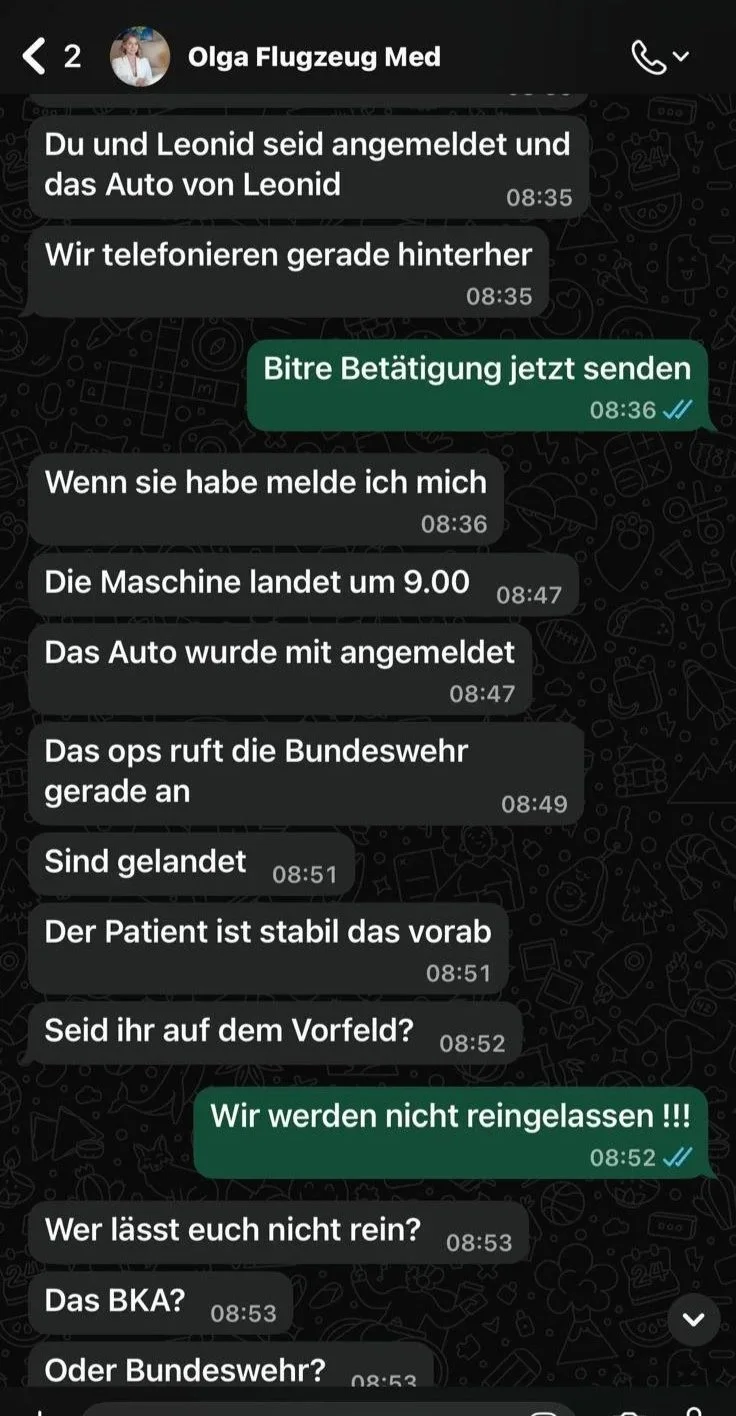
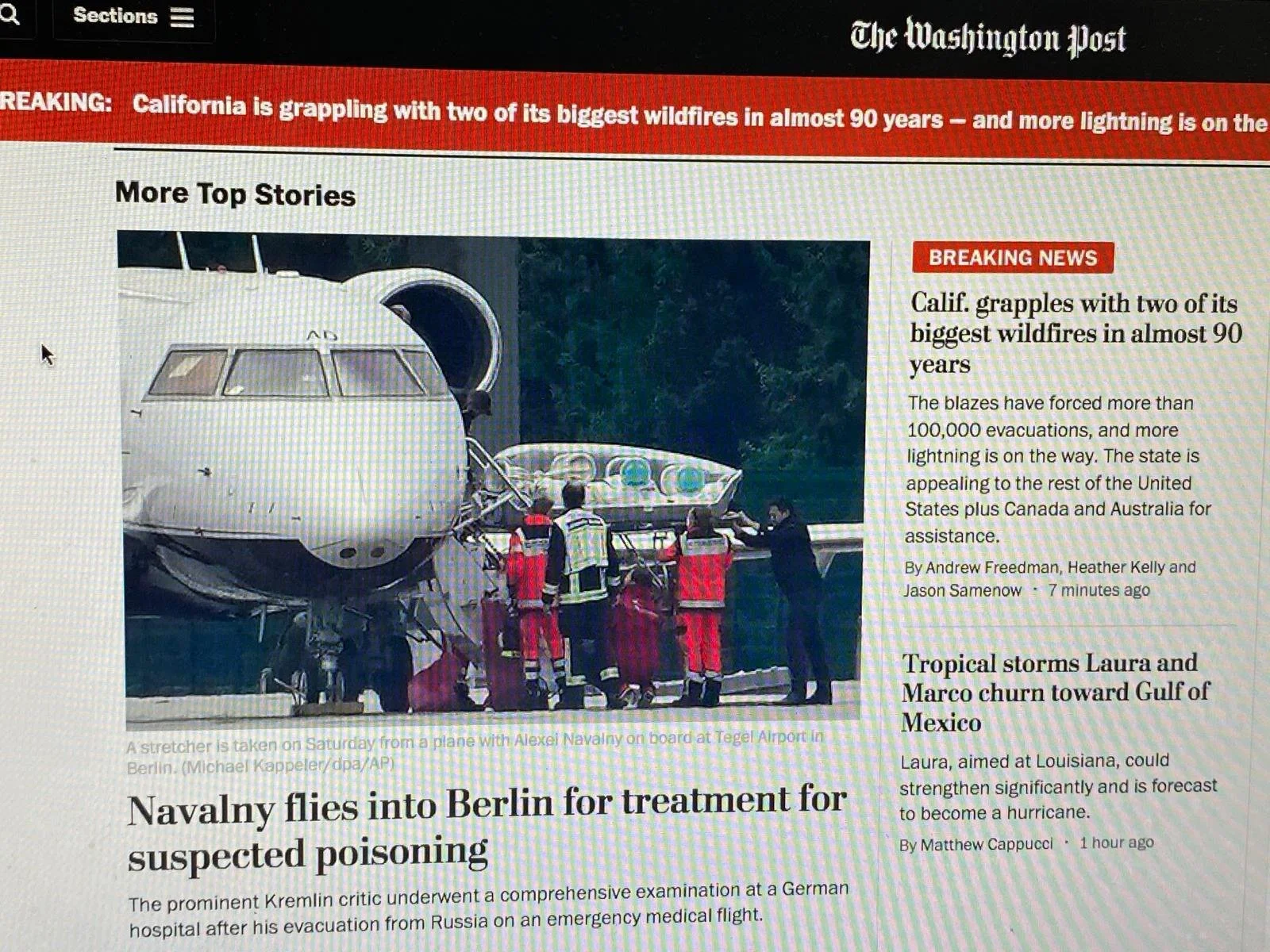
When our plane touched down on the tarmac of Tegel airport in Berlin, I felt an incredible sense of relief.
Yulia Navalnaya thanked me on the tarmac for the evacuation - and especially for ensuring the plane did not fly back empty when the patient was not transported to the airport after the arrival of the emergency plane. It was crucial that it had stayed.
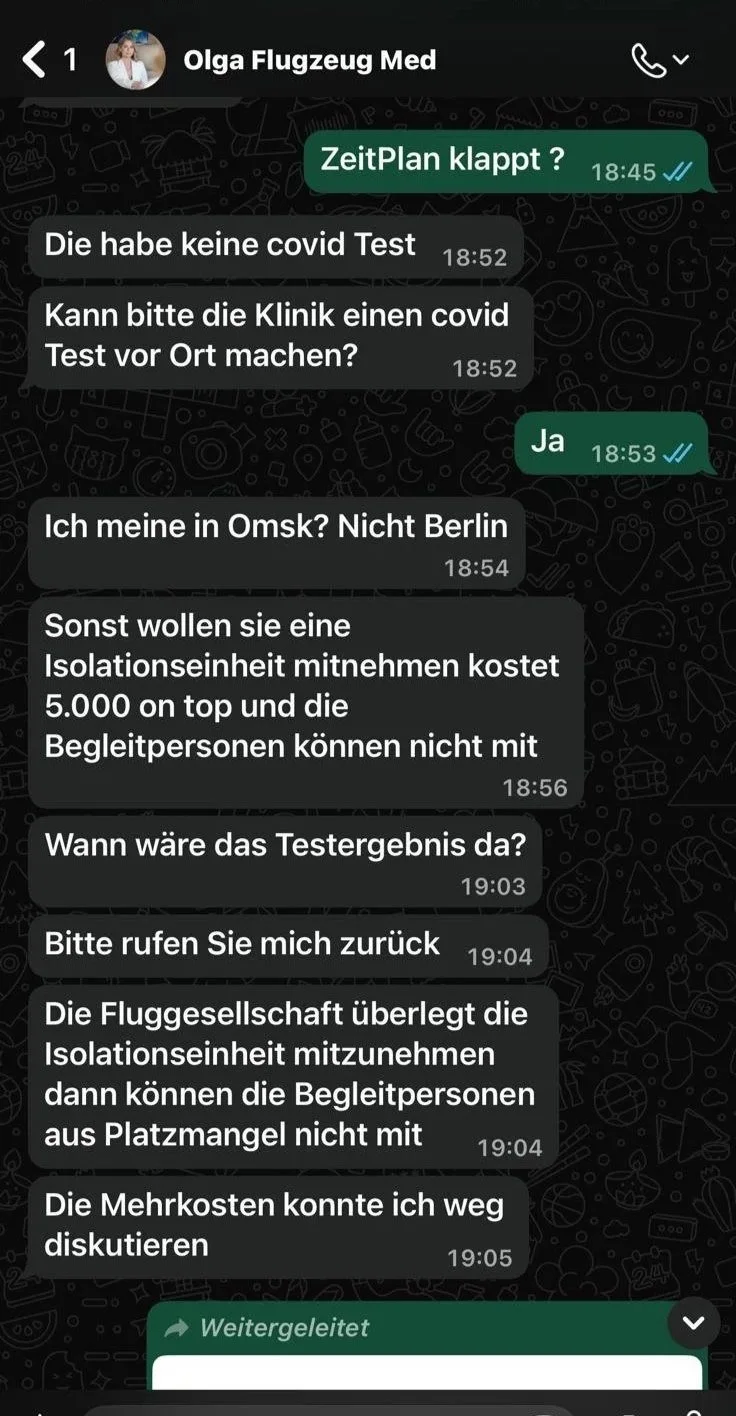
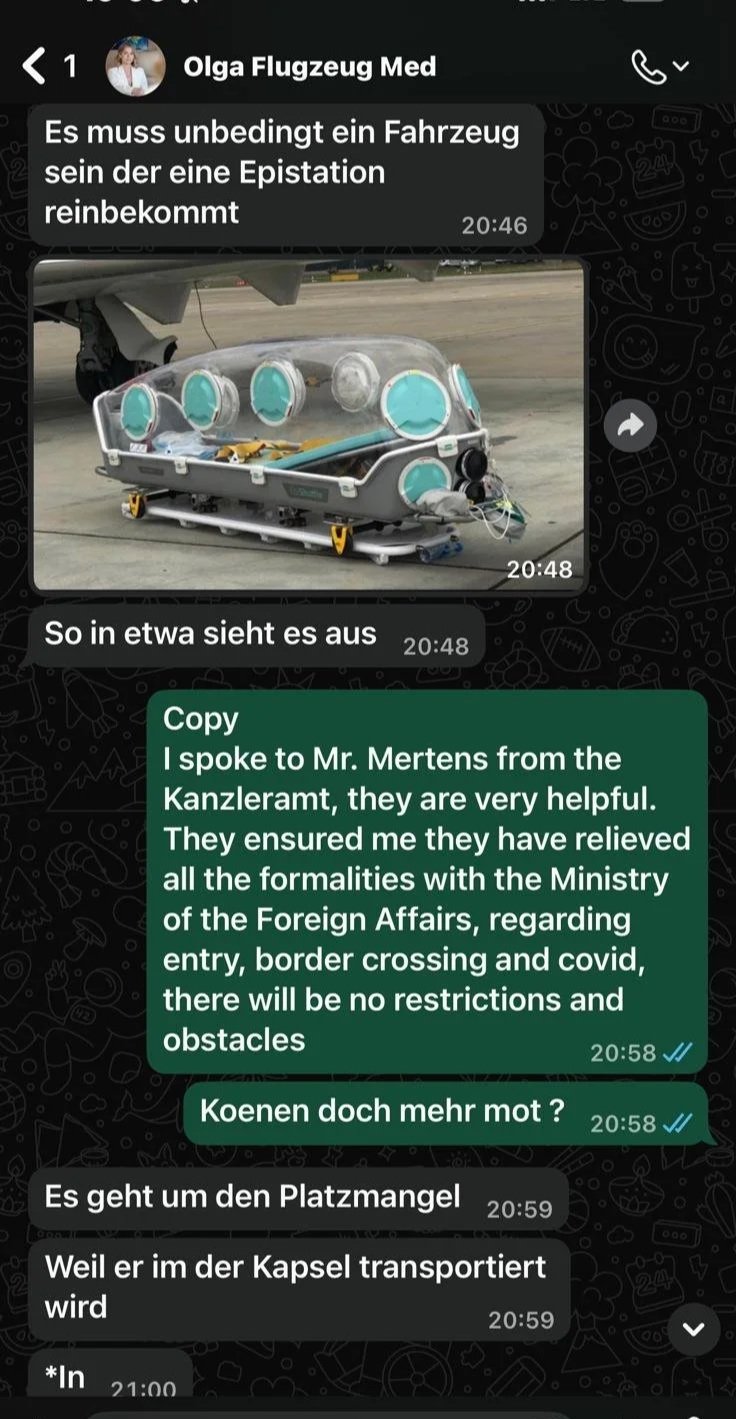
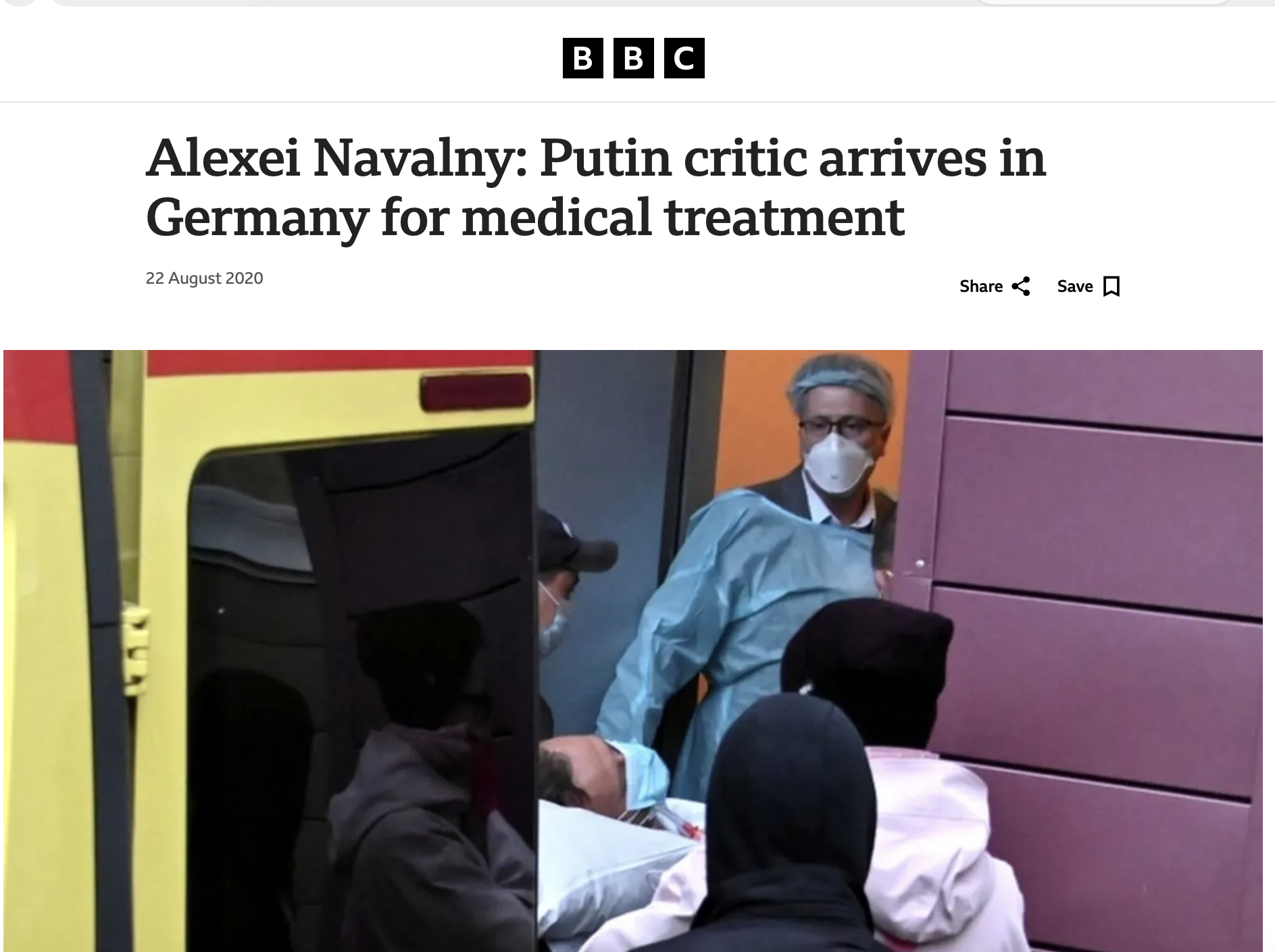
To avoid a spectacle that could affect the transfer, the landing in Berlin was directed to the military section of Tegel airport - directly adjacent to the aircraft of the German President. No cameras. No spectacle. Navalny was prepared for transportation to Charité for one hour. Because of COVID, we had placed him into a kind of transparent "Snow White coffin". After preparing him, we moved with blue lights and a motorcade of many cars to the Charité hospital.
When Alexei Navalny arrived at Charité hospital, I introduced Professor Kai-Uwe Eckardt to Yulia and the team in a special meeting room in the emergency ward.
My mission impossible had ended; the German doctors began to save the patient's life.
The Poison and the Regret
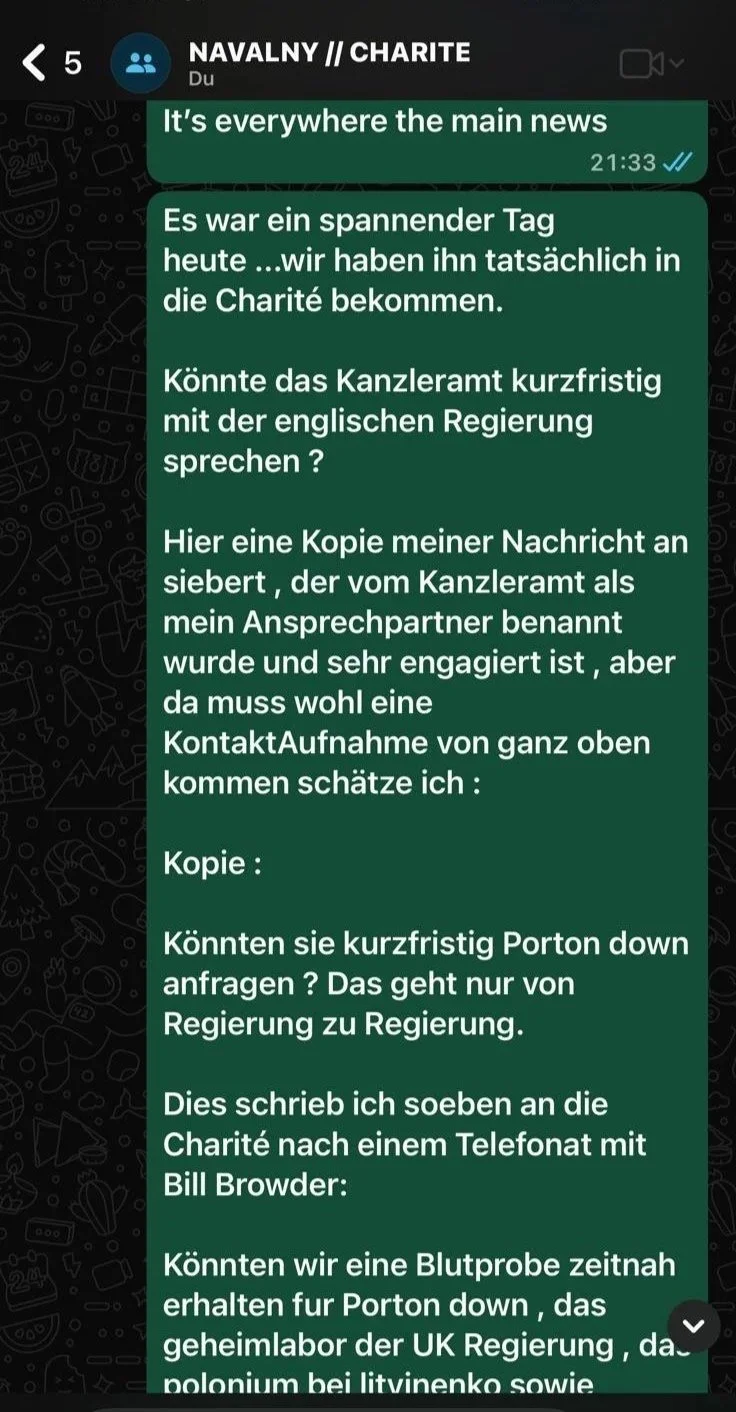
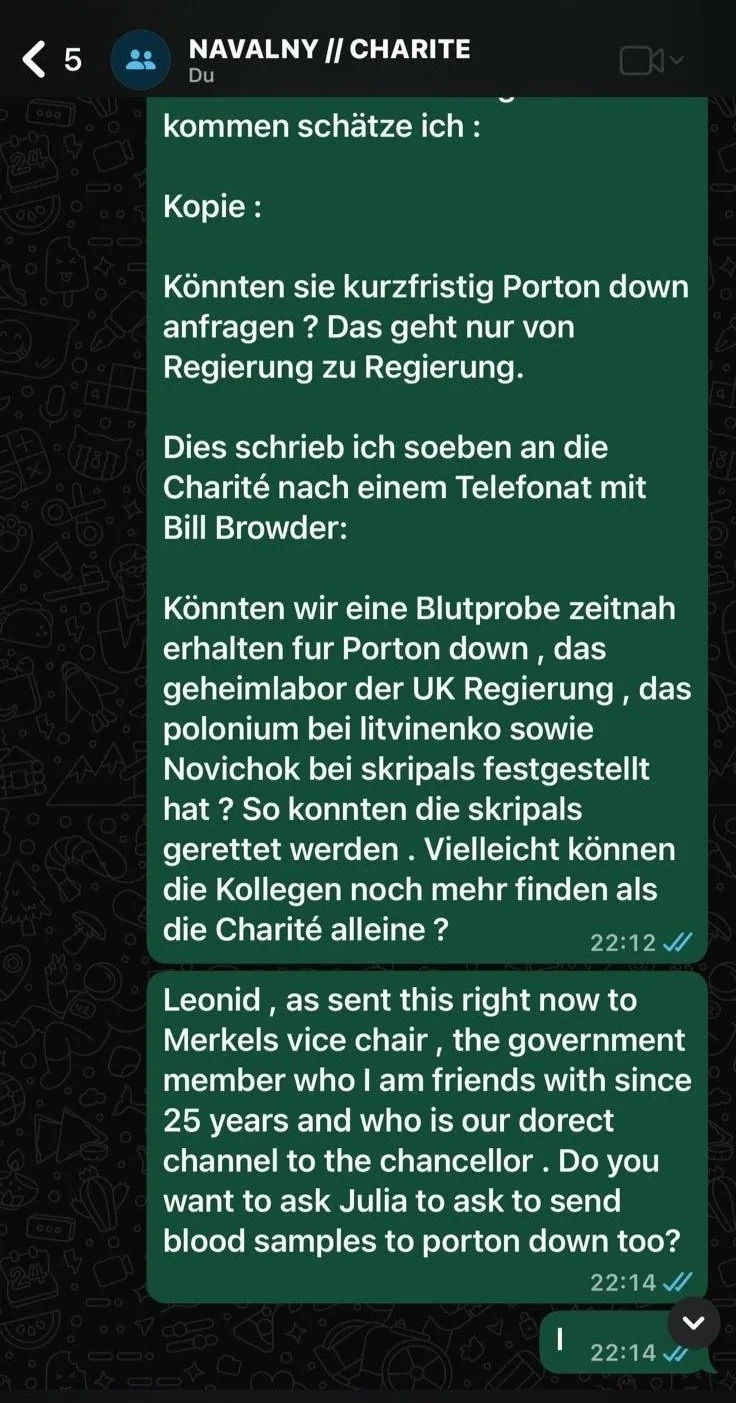
Immediately after the evacuation, I began working on identifying the substance used. In Peter Verzilov's case, it had been extremely difficult to determine the specific poison. I called my friend Bill Browder, who recommended I approach Porton Down - the UK government's secret defence laboratory, the facility that had identified polonium in the Litvinenko case and Novichok in the Skripal case, which helped save the Skripals. Perhaps Porton Down could find even more than Charité alone.
This required the German government to formally request the analysis from the UK government - a government-to-government channel. I sent the request through Merkel's vice chair that same night. For undisclosed reasons, Navalny's team, who had previously asked me to secure confidential evidence by ensuring it would be transported on our plane, subsequently asked that the process not continue and that no further activity be taken from my side.
We documented this story of my rescue mission in a film, which was produced for the public broadcaster ZDF, with a fee which I donated to Cinema for Peace: "Der Fall Navalny - The Navalny Case."
Later, Novichok was confirmed: on 2 September 2020, the German government announced "unequivocal proof" that Navalny had been poisoned with a Novichok nerve agent, with Chancellor Merkel calling it an attempted murder. On 6 October, the OPCW formally confirmed the findings, with independent laboratories in France and Sweden corroborating the results. The world knew. But what came next, none of us could control.
Unfortunately, with no security guarantees, Navalny's team let him fly back to Russia, where temperatures reached minus 20 degrees, making it impossible to ignite mass demonstrations. Alexei Navalny was arrested immediately at the airport on his return to Russia in January 2021. He was imprisoned, transferred to increasingly brutal conditions, and on 16 February 2024, he died in the Arctic penal colony IK-6 Polar Wolf. He was 47 years old.
I did not know that governments had been trying for two years to negotiate his release in a prisoner exchange; the Navalny team never told me. I feel great remorse about this. If I had known, I would have initiated the exchange from summer 2024 - not only to save Kara-Murza and the other dissidents alongside US marine Paul Whalen and journalist Gershkovich, but to save the life of Navalny a second time. We saved him once. We could have saved him again - unless Putin would have killed him in any case.
There were two more groups who gave him a few additional years of life to make an Oscar-winning film (which largely ignored the people who saved his life, but sensationally exposed his assassins in an extraordinary achievement), to prepare his legacy, and to inspire many millions with his bravery and opposition to Putin and the war in Ukraine:
the pilots and first responders at the airport in Omsk who landed and treated him with atropine despite bomb threats and commands not to let the plane land - these are the unknown heroes
the doctors at Charité first of all, but also the doctors in Omsk - two of whom died under mysterious circumstances: Dr. Sergei Maksimishin, the deputy head physician who originally confirmed Navalny had been poisoned before (forced?) backtracking; and Rustam Agishev, head of the trauma and orthopaedics department, who died in March 2021 from complications after a stroke. One doctor was fired, and chief physician Alexander Murakhovsky - who had obstructed the evacuation by blocking the transfer and declaring Navalny's condition a "metabolic disorder" - was rewarded with a promotion to regional health minister.
The Prisoner Exchange 2024
After Navalny's death, fearing for the lives of Vladimir Kara-Murza and others wrongfully held in Russian and Belarusian prisons, I acted again. All official negotiations had failed for more than a year. Diplomats were stuck. So I sent a back-channel envoy - Detlef Prinz, a confidant of former Chancellor Gerhard Schröder - to the German Chancellery and Scholz, to Moscow and Putin, and to Ankara and Erdoğan, to find the window that official channels had missed.
I knew that Putin wanted two people back: Viktor Bout - the notorious arms dealer known as "the Merchant of Death," who inspired the character in the film "Lord of War" and had already been exchanged for basketball star Brittney Griner in December 2022 - and Vadim Krasikov, the FSB assassin who had executed a Georgian-Chechen dissident, Zelimkhan Khangoshvili, in broad daylight in Berlin's Kleiner Tiergarten park in August 2019, using a false identity and a silenced pistol, and who was serving a life sentence in a German prison.
The Green Party and my friend Foreign Minister Annalena Baerbock had questioned the coalition government about whether the Tiergarten murderer would be released. I texted her that I had originally agreed with her but, after Navalny's death and fearing that the likes of Kara-Murza might die too, I changed my mind and said that I had a solution. I texted Christian Lindner, the head of the Liberal Party, and suggested that his Justice Minister Buschmann prepare an expert evaluation concluding that the Russian murderer could be transferred from a German to a Russian prison as part of a prisoner exchange - being naive again: just as I had lobbied Putin to let Navalny go the first time in order to prove that he had not tried to murder him - as proven otherwise later in the documentary film by Daniel Roher when Navalny called his own would-be murderers - I did not expect that Putin would embrace the murderer on his arrival in Moscow publicly with open arms on the front pages of newspapers. Sometimes naivety also helps.
Detlef convinced Chancellor Scholz that this was the right way to go, and also did a favour to US President Joe Biden, who later announced the prisoner exchange, which included US marine Paul Whelan and Wall Street Journal journalist Evan Gershkovich. Detlef travelled to Moscow with the letter and names suggested by Cinema for Peace and The World Forum. As we could not communicate openly, I had told him to let me know whether it would be bad or good weather - whether the exchange would happen or not. I did not reach him for four days, even though he had planned to stay for only two days. On day four, he finally answered the weather question: "Schön, aber stressig!" The exchange was happening!
I learned later that Western bureaucrats had endangered the mission, but courageous heads of state proved decisive. German Chancellor Olaf Scholz and Minister of Justice Dr. Marco Buschmann acted, and I was told that it was particularly President Recep Tayyip Erdoğan who made the parties execute the exchange. Two weeks after Detlef Prinz's mission, US President Joe Biden and Chancellor Scholz announced the largest high-level prisoner exchange since the Cold War: Vladimir Kara-Murza, Evan Gershkovich, Paul Whelan, Ilya Yashin, Andrei Pivovarov, Oleg Orlov, Lilia Chanysheva, Alsu Kurmasheva, and Sasha Skochilenko. Nine people who would otherwise still be in Russian prisons - or worse.
I thank Detlef Prinz for masterfully executing a mission impossible in a rare and small window of opportunity.
We honoured Vladimir Kara-Murza with our Noble Award as Guardian of Democracy, and he has become a board member of The World Forum - which annoyed him a little when we wishfully called him the potential "president in exile of Russia" in order to unite the Russian dissidents with a single voice, something the Council of Europe has since achieved by uniting and amplifying the voices of figures such as Kara-Murza, our former Chair from 2004, Garry Kasparov, and Mikhail Khodorkovsky. It was Hans-Dietrich Genscher who secured Khodorkovsky's release just before the Sochi Olympics, along with the release of Pussy Riot - and I had no idea during my many visits that year to Genscher's home in Pech that, after our meetings, he was calling Putin directly, a fact his friend Ulrich Bettermann disclosed to me years after Genscher's death, when he also revealed that he had lent Genscher his private plane for Khodorkovsky's evacuation - the very same plane that had once carried Raisa Gorbacheva to Germany for cancer treatment, unfortunately without success. Khodorkovsky's return to freedom was greeted at Berlin airport by Genscher himself, in scenes that made global news. When I visited with Pussy Riot after their release, for a Cinema for Peace screening, the Winter Olympics in Sochi, they were beaten by Cossacks, arrested, and harassed - yet nobody ever touched me. Just after we fled in Lada taxis through a chaotic retreat from some 100 journalists, FSB agents, police, and provocateurs in giant chicken costumes chanting slogans to mock Pussy Riot ("We like sex with chicken!"), and we were finally all safe, my phone rang literally the moment we were safe - it was "Genschman" himself, asking whether all was fine and whether I was enjoying the Winter Olympics. The 87-year-old architect of German unification seemed to know everything and acted as a guardian angel. Gorbachev's last call from the Kremlin on Christmas Day 1991, after giving his farewell address on Russian national television to the Soviet people, was to his friend Genscher, emphasizing the friendship between the Russian and German people, which had been rebuilt after WWII.
My evacuation of Navalny, with its repercussions, became unfortunately the turning point of relations between Germany, the West, and Russia: a difficult partner became an adversary.
Over the years, we supported Pussy Riot after their release in many ways: in 2014 in Los Angeles, we raised the initial funding - with the support of Roland Emmerich ("Independence Day") - for the independent Russian media platform Mediazona, introduced them in Cannes to figures such as Uma Thurman and Quentin Tarantino, and hosted screenings at the European Parliament. We supported their activism at FIFA World Cups: when they ran onto the pitch during the final between France and Croatia in Moscow to draw attention to the human rights and democracy situation in Russia; and in 2022 in Qatar, when they smuggled into the stadium the national jersey of Iran and presented to a global audience the names of women killed by the regime, among them Mahsa Amini, on the jerseys. In 2018, Pyotr Verzilov was poisoned in Moscow - possibly as revenge for the previous stunt in which he had infiltrated the World Cup final in a self-made police uniform with the Pussy Riot women. I evacuated him on a medical emergency plane to Berlin, a humanitarian act that became the blueprint for the evacuation of Navalny two years later.
I still see Peter now and then as he supports Ukraine and manufactures drones. He seems to have taken my evacuation of him for granted, as part of my natural mission; but I will never forget Vladimir Kara-Murza's expression and the emotion in his eyes when he described to me his feelings in the early morning in Siberia when he was led out of his prison cell towards a bus - "I cannot describe the feeling; it was unbelievable. I had been convinced that I would die in that prison."
These are the moments that remind me why we do such things - without anybody asking us.
Coda
Cinema for Peace was founded on the belief that film and culture can change the world; we co-produced, on Russia for example, the film "Letter to Anna" about the murdered Russian journalist Anna Politkovskaya. But sometimes the world does not wait for a film. Sometimes it requires a phone call at night, a credit card number, a contact at the Chancellery, the right doctors, and an emergency plan - and the willingness to make a decision about another person's life alone, with no guarantee of the outcome.
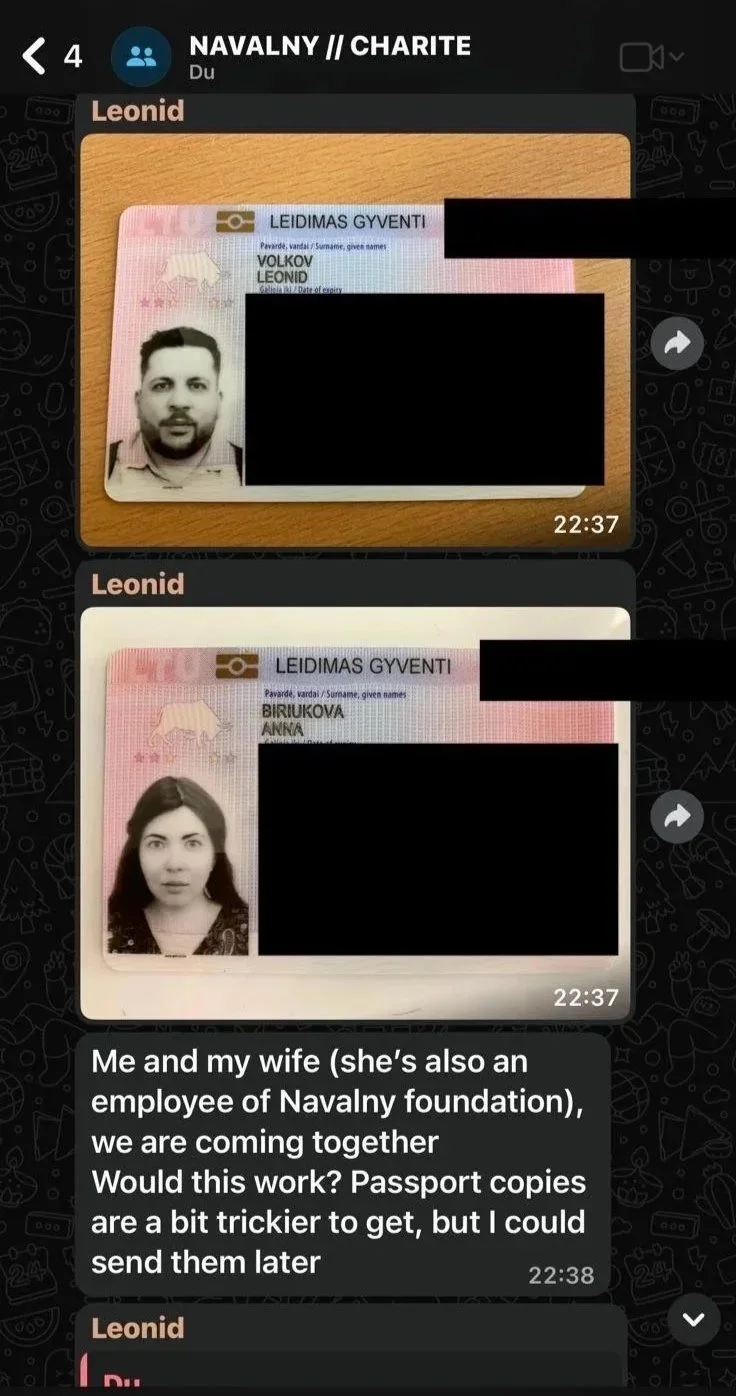
We saved Alexei Navalny's life in 2020. We could not save it in 2024. We will never stop asking what might have been different if Leonid Volkov had shown better judgement. Just recently, he shocked human rights advocates once more when his private messages became public, in which he celebrated the apparent death of Denis Kapustin - the commander of the Russian Volunteer Corps fighting on Ukraine's side - calling it "real denazification," while also attacking senior Ukrainian officials in harshly disparaging terms. Lithuanian authorities reviewed his residency permit but ultimately allowed him to stay, finding no threat to national security. Ukrainian state prosecutors confirmed they are investigating Volkov on allegations that he "justified" Russia's invasion of Ukraine. Meanwhile, voices are being raised suggesting that Volkov may be a Kremlin agent whose goal is to set all anti-Putin forces against one another. What is certain: he is a source of disinformation and tension within the Russian opposition.
The WhatsApp screenshots of the conversations have been kept confidential and are now being published to motivate other NGOs and private individuals to do the same: everybody can save somebody's life. Just do it. Follow the call to action, work through the nights, do not let anybody obstruct you, and go for the breakthrough in the window of opportunity outside official channels. When governments cannot act, you must make the difference.
When I evacuated Alexei Navalny five years ago to Berlin, the repercussions became the turning point of the relationship between Russia and the West - a "difficult partner" turned into an adversary, culminating in the invasion of Ukraine. There is no way back; Russia must not win; we must stand united against dictatorship and not allow the next invasion: China threatens its neighbours; President Xi has announced once more the forced unification of Taiwan. This is why we presented at The World Forum with the likes of Nancy Pelosi inter-parliamentary support for Taiwan with 10 measures that would guarantee no invasion. If we let China take Taiwan, the world economy will crash like never before, and China might take over the world order with semiconductor distribution and possibly artificial superintelligence. This is our other biggest dilemma of our time, alongside losing democracy through unregulated social media and fake news: how to win the race for AGI and artificial superintelligence without putting the survival of the human race at risk? Unfortunately, nobody has the answer yet.
Navalny, Ukraine, Taiwan, AI - all these topics are connected by one ideal we all long and fight for: to keep and fight for FREEDOM.
by Jaka Bizilj
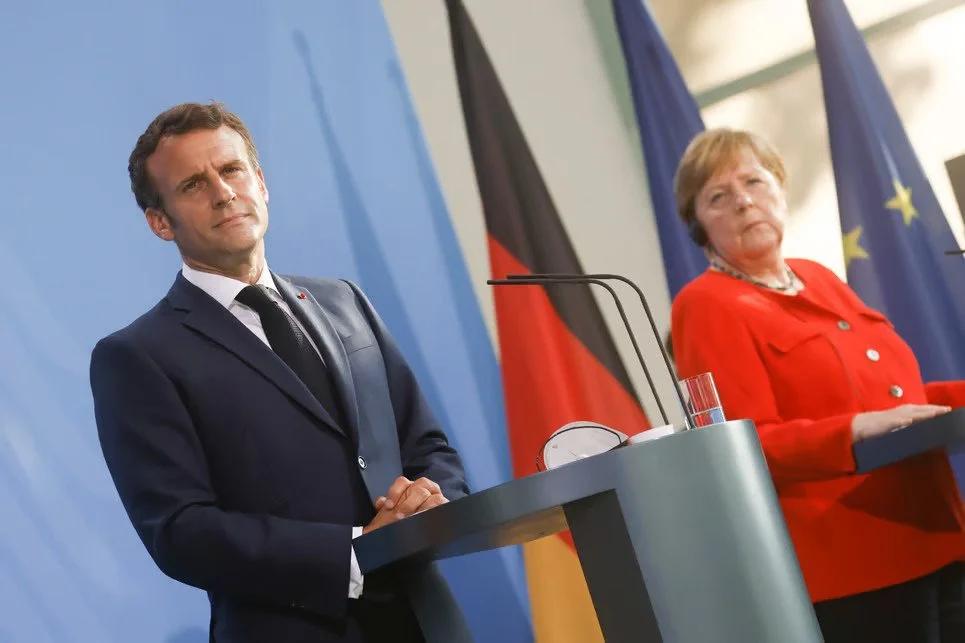
The support of President Macron & Chancellor Merkel was crucial to save Alexei Navalny’s life.